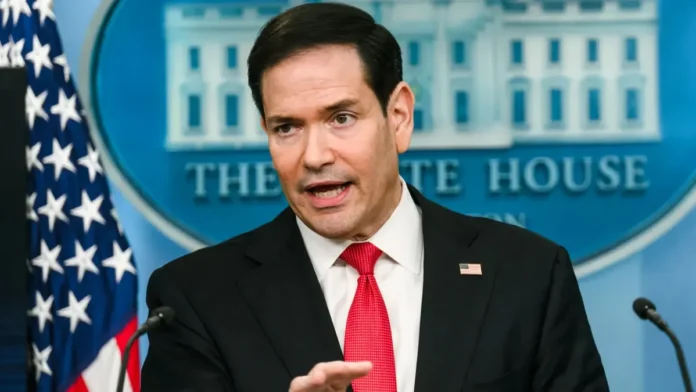
Atlanta, Georgia, November 1, 2026: US Secretary of State Marco Rubio has denied that the Trump administration helped Brazilian Senator Flávio Bolsonaro leave Brazil and travel to the United States following his defeat in the country’s presidential election. Rubio said Washington was not involved in arranging his departure and that Bolsonaro already held a valid US visa when he arrived in Miami.
The statement comes amid growing political tensions between Brazil and the United States following the election victory of Brazilian President Luiz Inácio Lula da Silva. Flávio Bolsonaro, who contested the presidential election against Lula, arrived in Miami with his family on Wednesday, October 28.
His departure from Brazil has attracted international attention because Brazilian authorities had reportedly ordered him to surrender his passport amid ongoing investigations. His arrival in the United States has also raised questions about the Trump administration’s decision to allow him and his family to enter the country.
Rubio Says Washington Did Not Arrange Bolsonaro’s Journey
Speaking to reporters in Atlanta, Georgia, on Saturday, October 31, Rubio rejected suggestions that the US government had organised or facilitated Bolsonaro’s departure from Brazil.
“We didn’t facilitate anything,” Rubio said.
He explained that US officials learned Bolsonaro had already arrived in the country. According to Rubio, the Brazilian senator previously held a valid US visa, and President Donald Trump decided to permit his entry.
“We had word that he had arrived in the United States. He had previously held a visa, and the president made a decision to allow him to enter the country,” Rubio told reporters.
The secretary of state stressed that the US government had not been directly involved in the arrangements Bolsonaro made to leave Brazil.
His remarks draw a distinction between Washington’s decision to allow Bolsonaro into the United States and any alleged involvement in organising his departure from Brazil.
Why Did Flávio Bolsonaro Leave Brazil?
Flávio Bolsonaro travelled to the United States after losing the presidential election to incumbent President Luiz Inácio Lula da Silva.
The election was closely contested, with Bolsonaro’s campaign representing a challenge to Lula’s political position. However, Bolsonaro has refused to accept the result and has alleged electoral fraud without presenting evidence to substantiate his claims.
His departure also comes amid legal scrutiny in Brazil. He is facing investigations involving allegations of corruption, money laundering and tax evasion. Brazilian authorities had reportedly considered him a potential flight risk and ordered him to surrender his passport.
According to reports, Bolsonaro left Brazil with his wife and two daughters on Tuesday, October 27. The family travelled through Argentina and Ecuador before reaching Miami the following morning.
The circumstances surrounding his departure have raised questions about how he was able to travel abroad despite the reported passport-related order.
Rubio Meets Brazilian Foreign Minister Mauro Vieira
Rubio also addressed his recent diplomatic contacts with Brazil during his remarks in Atlanta.
He confirmed that he had met Brazilian Foreign Minister Mauro Vieira on Friday and Saturday during the G20 foreign ministers’ gathering.
The two officials are expected to maintain communication, with Rubio indicating that further discussions with Brazilian representatives could take place in France during a foreign ministers’ meeting in November.
The diplomatic contacts come at a sensitive time for relations between Washington and Brasília. Flávio Bolsonaro’s arrival in the United States has become an additional point of political attention following Lula’s election victory.
Although Rubio denied direct US involvement in Bolsonaro’s departure, Washington’s decision to permit his entry has drawn attention to the administration’s position on the Brazilian political developments.
Flávio Bolsonaro Claims He Is a Victim of Political Persecution
After arriving in Miami, Flávio Bolsonaro continued to challenge the legitimacy of his election defeat.
During an Instagram livestream on Friday, he repeated his claim that he was being targeted for political reasons. He has also used public statements to question the election outcome.
In a letter published on Wednesday, Bolsonaro described himself as Brazil’s “true president-elect.” He later softened the language and referred to himself as a “leader.”
The 45-year-old senator also compared his political circumstances with those of several historical figures, including French military leader Charles de Gaulle. During the Second World War, de Gaulle led the Free French resistance movement from London against Nazi occupation.
Bolsonaro’s statements have added another dimension to the controversy surrounding his departure and his political future.
What Happens to Bolsonaro’s Political Career in Brazil?
Flávio Bolsonaro currently represents Rio de Janeiro in Brazil’s Senate. However, his parliamentary position is expected to change when the country’s new legislature begins its term on February 1.
His future political role remains uncertain as he faces investigations at home and continues to challenge the presidential election result from the United States.
His father, former Brazilian President Jair Bolsonaro, is serving a 27-year prison sentence following his conviction in a coup-related case after refusing to accept his defeat to Lula in the 2022 presidential election.
The political history of the Bolsonaro family continues to influence Brazil’s domestic debate and its relationship with the United States.
Why the US Response Matters
The Trump administration’s handling of Flávio Bolsonaro’s arrival could have implications for diplomatic relations between Washington and Brasília.
Rubio’s statement indicates that the administration wants to distinguish its immigration decision from any involvement in the senator’s departure from Brazil. At the same time, the confirmation that Trump personally authorised his entry highlights the political significance of the decision.
For Brazil, the issue involves more than the travel arrangements of a defeated presidential candidate. It touches on judicial authority, electoral legitimacy and the diplomatic relationship between two major countries in the Americas.
The Bottom Line: Marco Rubio says the Trump administration did not help Flávio Bolsonaro leave Brazil, although President Donald Trump authorised his entry into the United States because he already had a valid visa. With Bolsonaro continuing to dispute his election defeat and facing investigations in Brazil, his arrival in Miami has opened a new chapter in an already sensitive political and diplomatic dispute.