New Delhi, India | July 26, 2026
CJP Protest Global Reactions
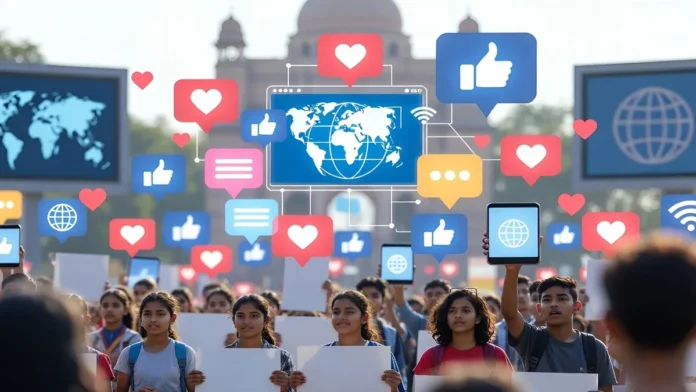
The CJP protest held at Jantar Mantar has generated significant discussion on social media beyond India, with users from Nepal, Sri Lanka, and Pakistan sharing opinions, videos, and commentary about the demonstration.
Several social media creators and users praised what they described as the determination and unity shown by Indian Generation Z (Gen Z) protesters. However, these reactions represent individual opinions shared online and do not necessarily reflect the official position or public opinion of their respective countries.
Nepali Creator Encourages Young Protesters
According to posts circulating on social media, Nepali content creator Avinash Mishra shared a video expressing support for young people participating in civic movements.
He encouraged youth to remain focused on their goals and not allow others to dismiss their concerns, describing public participation as a legitimate expression of opinion.
Sri Lankan Cartoon Draws Attention Online
A political cartoon by Sri Lankan cartoonist Awantha Artigala also gained attention on social media.
Separately, an image of a protester identified as Riya Ahir standing in front of a police vehicle during the demonstration was widely shared online. Some users compared the image to the iconic 1989 “Tank Man” photograph from Beijing. These comparisons were made by social media users and are not official characterizations of the event.
Pakistani Social Media Users React
Several Pakistani content creators and social media users also commented on the protest.
One creator used satire while discussing online allegations that the protest had received funding from Pakistan, joking that Pakistan faces its own economic challenges and therefore could not finance such movements.
Other users praised what they viewed as the organizational style and unity displayed during the protest. Some suggested that young people in Pakistan could learn from peaceful civic participation, while others emphasized common cultural and historical connections between people in both countries.
These remarks were personal opinions expressed on social media.
Political Rally Held in Mumbai
Following the resignation of Dharmendra Pradhan, a political gathering was reportedly held at Shivaji Park in Mumbai, where leaders from Shiv Sena (UBT) and the Maharashtra Navnirman Sena (MNS) addressed supporters.
The event took place separately from the online international reactions surrounding the CJP protest.
Gen Z and Political Content on Social Media
The discussion surrounding the protest has also renewed attention on how political content affects younger internet users.
According to a survey cited by the organization Collectively:
- 65% of respondents said political posts and videos on social media create mental stress.
- 63% reported that political differences have affected their personal relationships.
- The survey also found that members of Generation Z spend an average of around five hours per day on social media.
The survey highlights the growing influence of digital platforms on political engagement and public discourse among younger audiences.
Key Highlights
- The CJP protest at Jantar Mantar generated widespread discussion on social media across South Asia.
- Social media users from Nepal, Sri Lanka, and Pakistan shared supportive, critical, and satirical reactions.
- A Nepali content creator encouraged young people to remain committed to their goals.
- A Sri Lankan political cartoon and widely shared protest images gained international attention online.
- Pakistani content creators and users expressed a range of personal opinions about the demonstrations.
- A separate survey suggests many Gen Z users experience stress from political content on social media.