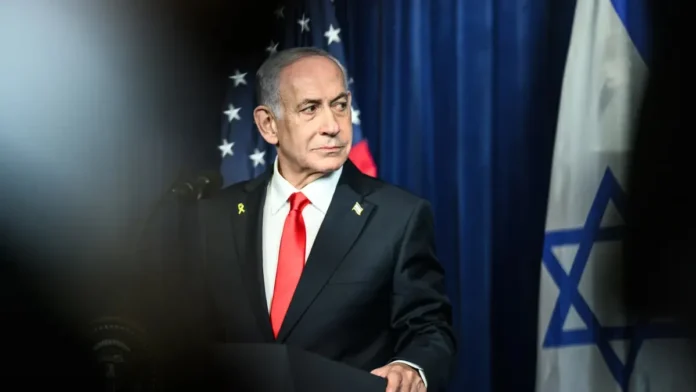
Jerusalem, November 1, 2026: A grassroots campaign led by Bedouin women in Israel’s southern Negev region has emerged as one of the significant developments in the country’s October 27 parliamentary election. By encouraging women to exercise their voting rights, campaigners helped drive a sharp rise in turnout across several Bedouin communities, strengthening Arab-led political parties and complicating Prime Minister Benjamin Netanyahu’s efforts to secure a governing majority.
The campaign gained momentum amid growing anger over home demolitions, crime, insecurity and policies associated with National Security Minister Itamar Ben-Gvir. For many Bedouin women, voting became a way to express opposition to government policies that they said had directly affected their families and communities.
The increased participation helped Arab-led parties secure a record 19 seats in Israel’s 120-member Knesset, placing them in a potentially decisive position in the negotiations over the next government.
At the same time, Israel’s opposition bloc is reportedly considering a proposal to introduce direct elections for prime minister as a possible way to overcome the post-election political deadlock.
Home Demolitions Turned Anger into Political Participation
For Umm Khalid Fatoun, the decision to campaign against Netanyahu’s governing coalition was deeply personal.
Last year, after returning from volunteering at a Jewish-Arab assistance centre supporting people affected by the war, she discovered that bulldozers were demolishing her son’s house in the Bedouin village of Azzarnug.
According to her account, the demolition team arrived under police supervision and did not give the family enough time to remove furniture or even solar panels before bringing down the house.
The experience changed her approach to politics.
When the opportunity to vote arrived during this week’s election, Fatoun decided to oppose Netanyahu’s coalition, particularly Ben-Gvir, whom she blamed for policies affecting Bedouin and Palestinian communities.
She said removing Ben-Gvir from power had become her primary political objective. According to her, very few families in the Bedouin community had remained untouched by the government’s campaigns against them.
In the weeks before the election, Fatoun began working at the grassroots level to encourage Bedouin women to understand their voting rights and recognise their collective political influence.
The campaign contributed to a dramatic increase in voter participation in some southern Negev communities.
Alnashmiat Campaign: Why Bedouin Women Mobilised
The wider mobilisation was led by Alnashmiat, a grassroots initiative headed by lawyer and activist Hanan Alsanah.
The campaign focused on women who had traditionally faced social and practical barriers to political participation. Organisers explained how voting could influence parliamentary representation and the policies affecting their daily lives.
Alsanah argued that women represented half of the community’s political strength and that their participation could not be ignored.
Her message was direct: even if every eligible man voted, the community would still be using only half of its potential electoral influence.
She encouraged women to use every available vote because of the political power held by Ben-Gvir and his allies.
The campaign also addressed practical obstacles, including the distance between some unrecognised Bedouin villages and polling stations. Organisers helped women understand their rights and arranged support to make voting more accessible.
According to campaign organisers, turnout in some villages increased threefold compared with the previous election.
Voting Turnout Reached More Than 93% in Some Bedouin Communities
The scale of participation was particularly notable in southern Israel.
According to reporting on the election, voter turnout across Bedouin communities ranged from approximately 62% to more than 93%, with some villages recording exceptionally high participation.
In Tarabin, a Bedouin village in the Negev, turnout nearly doubled compared with the previous election, while the Ra’am party secured 93% of the vote.
The wider increase in Arab voter participation also had a significant impact on the national political picture.
Nearly 840,000 voters supported Ra’am and the Joint List, representing a 64% increase compared with the 2022 election, according to final results cited by The Times of Israel.
Together, Arab-led parties secured 19 seats in the 120-member Knesset, surpassing the previous record of 15 seats.
The results exceeded several pre-election expectations and placed Arab political parties in a potentially decisive position in the government formation process.
How Did the Election Change Netanyahu’s Political Position?
Netanyahu’s Likud party emerged as the largest single party, winning 27 seats. However, the prime minister’s wider political bloc secured only 53 seats, short of the 61 required for a majority in the 120-member parliament.
The opposing bloc secured 48 seats, while Arab-led parties won the remaining 19.
This distribution has created a difficult political equation.
Although Netanyahu’s supporters have more seats than any other single political grouping, they do not have enough parliamentary support to form a majority government independently.
Arab-led parties could therefore play a crucial role in determining the next government, depending on how the opposition approaches coalition negotiations.
The election has demonstrated that increased participation among communities that have historically faced political and social barriers can influence the balance of power in a parliamentary system.
Opposition Considers Bill for Direct Election of Prime Minister
With coalition negotiations facing uncertainty, Israel’s opposition bloc is reportedly considering a proposal to introduce direct elections for prime minister.
According to The Times of Israel, citing a Channel 12 report, opposition parties are examining whether voters could elect the prime minister separately from the parliamentary parties.
The proposal is being discussed as a possible way to overcome the political deadlock without depending on the support of Arab-led parties to form a government.
The idea has been described as the ‘Netanyahu 2021 model’ because Netanyahu himself had previously promoted a similar proposal after the inconclusive March 2021 election.
Under the proposed arrangement, voters would cast a separate ballot for the prime minister, rather than leaving the choice entirely to negotiations between political parties after parliamentary elections.
However, the proposal remains under consideration and no final decision has been announced.
Why Would Direct Elections Be a Major Change?
Israel currently follows a parliamentary system in which voters elect political parties to the Knesset. The prime minister emerges through the subsequent process of forming a government that can secure parliamentary confidence.
A direct election system would fundamentally change this arrangement by giving voters a separate choice for the country’s head of government.
Israel experimented with direct elections for prime minister between 1996 and 2001. The system was eventually abandoned after it contributed to further fragmentation of parliamentary representation and complicated coalition formation.
Reintroducing the arrangement would require changes to the relevant Basic Law: The Government. The proposal would need at least 61 votes in the Knesset.
The opposition’s reported plan therefore faces both political and legislative challenges.
What Happens Next in Israel?
The immediate challenge is to determine whether any political grouping can secure enough parliamentary support to establish the next government.
Netanyahu’s bloc has emerged with the largest number of seats among the competing political camps, but it remains short of a majority. Meanwhile, the opposition must decide whether to negotiate with Arab-led parties or pursue an alternative legislative route.
President Isaac Herzog will play an important constitutional role in the government formation process after the official election results are published.
If negotiations fail, Israel could face a prolonged period of political uncertainty, with the possibility of another election.
The Bottom Line: The mobilisation of Bedouin women in the Negev has turned voter participation into a significant political force in Israel. Their increased turnout helped strengthen Arab-led parties, which now hold a record 19 Knesset seats. As Netanyahu struggles to secure a parliamentary majority, the opposition is exploring direct elections for prime minister as another possible route out of the political deadlock.