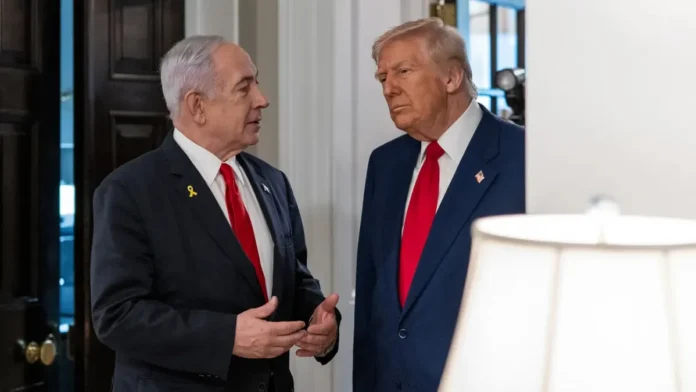
Washington, D.C., November 1, 2026: US President Donald Trump has spoken by phone with Israeli Prime Minister Benjamin Netanyahu as Washington weighs the possibility of resuming military operations against Iran. The conversation comes amid growing uncertainty over the future of the conflict, with the Trump administration keeping military options under consideration while continuing diplomatic contacts with Tehran.
According to a report by The Wall Street Journal, citing people familiar with the conversation, Trump and Netanyahu spoke on Saturday following a meeting at the White House earlier in the week. During that meeting, Trump discussed possible options for restarting large-scale military operations against Iran with senior military officials.
The latest conversation has drawn attention to the possibility of renewed US military action. However, Washington has not announced any decision to launch fresh strikes, and the administration continues to maintain that a diplomatic settlement remains possible.
Why Did Trump Speak to Netanyahu?
The phone call took place at a sensitive moment in US-Iran relations. Washington is examining different strategic options as tensions continue over Iran’s nuclear programme, regional security and maritime activities.
According to the Wall Street Journal, Trump’s earlier White House meeting focused on potential military scenarios, including the possibility of resuming a major campaign against Iran. The report did not provide details of the options discussed during the telephone conversation with Netanyahu.
The timing of the call is particularly significant because the United States and Israel have been discussing the security implications of the continuing confrontation with Tehran. Nevertheless, there has been no official confirmation that the two leaders agreed on a new military operation.
Rubio Says Diplomatic Talks With Iran Have Not Stopped
US Secretary of State Marco Rubio has stressed that diplomatic engagement with Iran remains active despite the continuing military tensions.
Speaking to reporters after the G20 foreign ministers’ meeting in Atlanta, Georgia, Rubio said discussions with Tehran were taking place through both direct communication and intermediaries.
“There are multiple talks; talks have actually never stopped,” Rubio said.
He declined to disclose the progress of the negotiations or provide a timeline for a possible agreement. Rubio also made clear that the decision on whether to resume military operations rests with President Trump.
Asked how much time Washington would allow diplomatic efforts before considering further military action, Rubio avoided setting a deadline. He said the administration remained open to a diplomatic solution if it addressed America’s fundamental security concerns.
His remarks indicate that the United States is continuing to pursue diplomatic channels while retaining the option of military action.
What Are America’s Main Concerns About Iran?
Rubio identified Iran’s nuclear ambitions and its support for armed groups across the Middle East as two of Washington’s major concerns.
The US administration has repeatedly argued that any agreement with Tehran must address issues that it considers central to regional and American security.
Rubio also accused Iran of threatening commercial shipping and engaging in activities that could disrupt maritime trade. He warned that instability in important shipping routes could have consequences beyond the Middle East, particularly for international energy supplies and global commerce.
Washington’s position is that a diplomatic agreement must go beyond a temporary reduction in tensions. It must also address the underlying security concerns that have contributed to the confrontation.
Is Trump Preparing to Order Fresh Strikes?
Rubio declined to discuss specific military contingency plans when questioned about the possibility of renewed attacks on Iran.
He said Trump preferred a peaceful resolution but emphasised that the United States retained the military capability to achieve its objectives if necessary.
“We can achieve military objectives if we seek to. He hasn’t made a decision,” Rubio said.
The statement is significant because it confirms that military action remains an option, but it does not establish that an attack has been authorised or scheduled.
For now, the White House has not publicly announced a decision to restart large-scale military operations. The timing and outcome of the diplomatic discussions could influence Washington’s next move.
Diplomatic Efforts Continue Through Regional Mediators
Diplomatic contacts have also involved regional intermediaries. A separate Reuters report on October 31 said Iranian negotiators had met Qatari mediators in Doha as efforts continued to find a way to end the Gulf conflict.
The diplomatic activity suggests that communication channels remain open even as military tensions persist. However, the two sides have yet to announce a comprehensive agreement capable of resolving their differences.
The latest developments also highlight the role of regional countries in facilitating communication between Washington and Tehran.
What Happens Next?
The immediate question is whether diplomatic engagement can produce progress before Washington considers further military action.
Trump has not announced a final decision, while Rubio has avoided setting a deadline for negotiations. Netanyahu’s conversation with Trump adds another important development to an already sensitive diplomatic and security situation.
Any renewed US military operation could have wider consequences for the Middle East, international energy markets, commercial shipping and regional security. A diplomatic breakthrough, on the other hand, could create an opportunity to reduce tensions and prevent another escalation.
The Bottom Line: Trump’s conversation with Netanyahu and Washington’s review of military options have raised fresh questions about the possibility of renewed strikes against Iran. But Rubio’s latest remarks make one point clear: the United States has not yet announced a decision to resume military operations, and diplomatic efforts remain active.