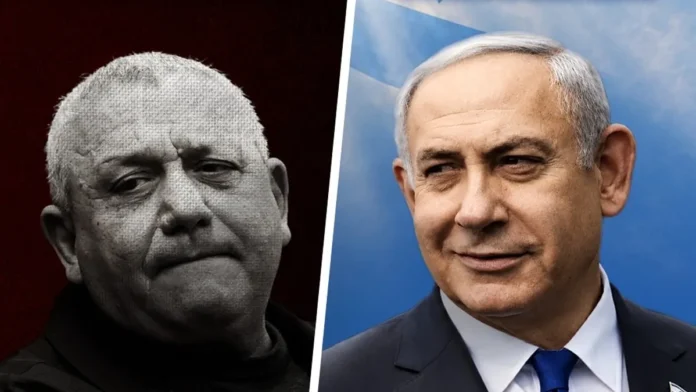
Jerusalem, October 25, 2026: Israeli Prime Minister Benjamin Netanyahu is making military strength and an aggressive security posture central to his campaign ahead of the October 27 general election. After years of conflict across the region, Netanyahu is seeking to convince voters that his approach to confronting Israel’s adversaries remains essential to the country’s security.
The election is a significant test of Netanyahu’s leadership, his handling of the wars that followed the October 7, 2023, Hamas-led attacks, and his vision for Israel’s future. The prime minister, Israel’s longest-serving leader, is presenting a more explicitly offensive security doctrine, arguing that military action and deterrence are necessary to address threats from Iran and armed groups across the region.
But the campaign also carries difficult questions about accountability for the 2023 security failures, the future of the Gaza conflict, Israel’s international standing and the consequences of prolonged military operations.
From Security and Stability to an Offensive Military Doctrine
For much of his political career, Netanyahu cultivated an image as a leader capable of protecting Israel while limiting the risks of prolonged regional confrontation. His approach often relied on deterrence, intelligence operations and military campaigns designed to weaken adversaries without committing Israel to an open-ended war.
The October 7, 2023, Hamas-led attack dealt a major blow to that reputation. About 1,200 people were killed in Israel, according to widely cited figures, and 251 people were taken hostage.
The attack raised fundamental questions about intelligence assessments, border security and the government’s preparedness. Netanyahu subsequently faced pressure to account for the failures that allowed the assault to occur.
Since then, Israel has fought Hamas in Gaza, Hezbollah in Lebanon and the Houthis in Yemen, while also conducting military operations against Iran. The regional confrontation has expanded the role of military force in Netanyahu’s security strategy.
In his campaign messaging, the prime minister has portrayed these operations as part of a broader effort to weaken threats against Israel and establish greater deterrence.
Netanyahu Says the Campaign Against Iran Is Not Finished
In a security briefing ahead of the election, Netanyahu said Israel still had important military objectives to accomplish, including confronting Iran’s leadership.
He has argued that Iran poses a major threat to Israel and that continued pressure is necessary to prevent its regional influence and military capabilities from endangering Israeli security.
His revised security doctrine places greater emphasis on offensive initiative, pre-emptive action, military superiority, intelligence capabilities and domestic weapons production. Netanyahu has also outlined plans for a substantial increase in Israel’s long-term defence investment.
The strategy is central to his effort to present himself as the candidate best equipped to manage the country’s security challenges. His political opponents, however, have questioned whether the government’s military approach has delivered lasting security or a clear resolution to the conflicts.
The distinction matters as voters weigh the military achievements claimed by the government against the continuing costs and uncertainties of regional confrontation.
West Bank Operation Adds to the Security Debate
Developments in the occupied West Bank have added another dimension to the election campaign.
Following a shooting near Hebron in which two Israeli soldiers were reportedly killed, Israeli forces launched a wider military operation in the area. Netanyahu directed security forces to pursue suspected Hamas members, conduct house-to-house operations and make arrests.
Reports cited in the supplied account said more than 1,200 Palestinians were forced to leave their homes during the operation. The circumstances and scale of displacement, as well as the military’s stated objectives, remain important details for assessing the operation’s impact on local communities.
The campaign has also drawn attention to the broader consequences of Israeli military activity in Palestinian areas, including civilian displacement, damage to homes and infrastructure, and rising tensions.
Netanyahu has defended such operations as necessary to counter armed groups and prevent attacks. Critics have raised concerns about the humanitarian consequences and the longer-term implications for stability.
These competing arguments form part of the wider debate over how Israel should balance immediate security requirements with civilian protection and the prospects for a political resolution.
The October 7 Attack Remains a Test of Netanyahu’s Leadership
Netanyahu’s record on national security remains closely tied to the Hamas-led attack of October 7, 2023.
Opposition figures have called for an independent national inquiry into the intelligence and security failures preceding the attack. Netanyahu has resisted calls for an inquiry of the kind demanded by his critics, arguing that such a process could become politically motivated.
His supporters emphasise the subsequent military campaign and the weakening of armed groups they regard as threats to Israel. Critics argue that military action alone cannot settle questions of responsibility for the original security failures or guarantee long-term safety.
The election therefore involves two competing assessments of leadership: whether Netanyahu’s response has strengthened Israel’s position and whether his government should be held accountable for the circumstances that preceded the attack.
Can Military Success Define Israel’s Next Political Chapter?
Netanyahu’s campaign places security at the centre of the election, but voters are also confronting questions about governance, political accountability, military service and Israel’s standing abroad.
His challengers have criticised aspects of his record and called for changes in how the country is governed. Yet reporting ahead of the election suggests that leading opposition figures share several of Netanyahu’s concerns about Iran and regional security, even where they disagree over methods, accountability and diplomacy.
That overlap means a change in leadership would not necessarily produce a complete reversal of Israel’s security policy. The direction of any future government would also depend on coalition negotiations, parliamentary arithmetic and the positions of the parties involved.
The election is being held under Israel’s proportional parliamentary system, in which parties compete for seats in the 120-member Knesset. A government must command the support of at least 61 members, making coalition formation a critical part of the political process.
What Is at Stake on October 27?
For Netanyahu, the election is an opportunity to defend his record and seek another term by emphasising military strength and his experience in confronting regional adversaries.
For voters, the decision involves a broader set of questions: how to prevent another attack like October 7, what accountability should follow the security failures, how to manage the conflicts involving Gaza and Iran, and what kind of political and diplomatic strategy can provide lasting security.
The outcome will determine not only the composition of Israel’s next government but also the political mandate behind its security policies. However, the result alone will not resolve the military, diplomatic and humanitarian challenges confronting the country and the wider region.
The Bottom Line: Benjamin Netanyahu is making military strength and confrontation with Israel’s adversaries central to his October 27 election campaign. His record is also being examined through the October 7 security failures, the continuing regional conflicts and questions about accountability. The election will test his political leadership and the public mandate for the security strategy he has pursued.