INVC NEWS | Bangkok, Thailand | October 18, 2026
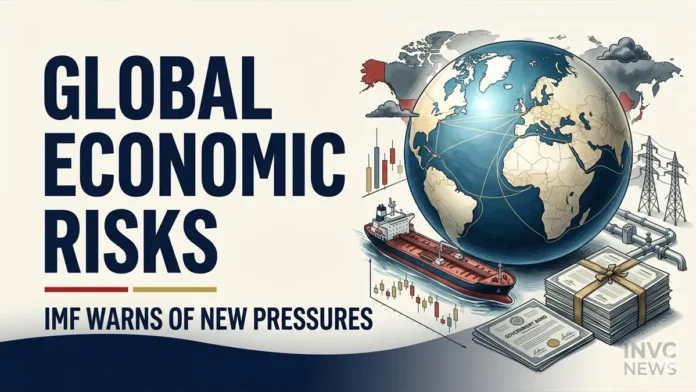
The global economy has proved more resilient than expected in the face of repeated shocks, but the risks threatening its stability remain significant, the International Monetary Fund’s policy-making committee has warned. Wars, trade tensions, energy supply disruptions, mounting public debt and rising borrowing costs continue to threaten economic growth, with low-income and financially vulnerable countries facing some of the greatest pressures.
In a statement released after its 54th meeting in Bangkok on Saturday, October 17, the International Monetary and Financial Committee (IMFC) cautioned governments against assuming that the global economy would continue to withstand crises without serious consequences.
“The global economy has weathered recent shocks better than expected, but this should not be taken for granted,” the committee said.
The statement, issued under the chairmanship of Saudi Finance Minister Mohammed Al-Jadaan, highlighted the economic and humanitarian consequences of ongoing conflicts, disruptions to international supply chains and growing pressure on countries with limited financial resources.
The warning comes as policymakers confront uncertainty over energy supplies, international trade policies and the longer-term costs of geopolitical conflicts. Although economic activity has remained relatively resilient, the committee said governments must strengthen their ability to respond to future shocks.
Wars and Trade Tensions Threaten Global Stability
The IMFC warned that escalating geopolitical tensions could disrupt international trade routes, push up commodity prices and worsen energy and food insecurity.
Conflicts impose substantial humanitarian costs while also affecting economies far beyond the countries directly involved. Disruptions to shipping routes and energy supplies can increase transport and production costs, feeding into prices paid by businesses and consumers.
Food and fuel price increases can be particularly damaging for lower-income households, which typically have less room in their budgets to absorb higher essential expenses. Countries that rely heavily on imported energy, food or fertilisers may also face pressure on their currencies, public finances and external balances.
The committee stressed that the impact of these shocks is not distributed evenly. Countries with limited fiscal resources, restricted access to international capital markets or already elevated debt burdens have fewer options for cushioning their economies.
For governments, the challenge is to contain the immediate effects of supply disruptions without creating additional financial vulnerabilities through unsustainable spending or borrowing.
Rising Government Debt and Bond Yields Raise Concerns
The committee identified higher sovereign bond yields, large public debt burdens and refinancing pressures as important risks to financial stability.
Sovereign bond yields represent the returns investors demand for holding government debt. When yields rise, governments generally face higher borrowing costs, particularly when they need to issue new debt or refinance existing obligations.
Refinancing becomes more difficult when a country must replace maturing debt at substantially higher interest rates. Governments may then have to devote a larger share of their budgets to interest payments, leaving less money available for infrastructure, healthcare, education and other public services.
The pressures can be especially severe for countries with substantial financing needs and limited access to international capital markets.
Higher borrowing costs can also affect private businesses and households by raising the cost of loans, reducing investment appetite and making major purchases more expensive. If financial conditions tighten sharply, the effects can spread across markets and weaken economic activity.
The IMFC called for credible fiscal frameworks and stronger macroeconomic policies to help governments manage these risks. It also emphasised the need to address fiscal vulnerabilities while protecting vulnerable populations and preserving investment that supports long-term growth.
AI Offers Growth Opportunities but Creates New Risks
The committee also examined the growing influence of advanced intelligence technologies on the global economy.
Rapid technological development has the potential to stimulate investment, support trade and improve productivity. Businesses may use AI tools to automate routine tasks, improve operational efficiency and develop new products and services.
However, the economic benefits are unlikely to be distributed equally across countries and industries. Economies with better infrastructure, stronger digital capabilities and greater access to capital may be better positioned to capture the gains.
The committee warned that uncertainty surrounding the economic and financial effects of these technologies could intensify existing vulnerabilities.
Large investments in emerging technologies can also create financial-market exposure if valuations rise faster than the earnings and productivity gains ultimately delivered. At the same time, countries and workers with limited access to technology or training risk falling behind.
For policymakers, the task is to encourage innovation while maintaining financial oversight, strengthening workforce capabilities and ensuring that technological advances contribute to sustainable and broadly shared growth.
Central Bank Independence Remains Critical
The IMFC stressed the importance of credible macroeconomic policies and independent central banks in maintaining financial stability.
Central bank independence helps monetary authorities make decisions based on economic conditions and their policy mandates rather than short-term political pressures. This is particularly important when inflation remains persistent or when supply disruptions push up the prices of energy, food and other essential goods.
If households and businesses begin to expect inflation to remain high, those expectations can influence wage negotiations, pricing decisions and financial contracts, making inflation more difficult to control.
The committee therefore underscored the need for policies that preserve credibility and keep inflation expectations anchored.
Governments, meanwhile, must balance fiscal discipline with the need to support vulnerable groups and maintain essential long-term investment. Poorly designed responses to economic shocks can add to public debt without adequately protecting those most affected.
The statement also called for continued cooperation among governments and international financial institutions, particularly to support countries facing acute financing pressures.
Bangkok Blueprint Targets Digital Financial Fraud
The statement welcomed the Bangkok Blueprint, an initiative aimed at strengthening the security of digital financial services, improving cybersecurity and supporting international action against digital fraud.
As digital payments and financial services expand across borders, fraud and cyber-enabled crime can create risks for consumers, financial institutions and the wider financial system.
The blueprint is designed to encourage a coordinated response involving policymakers, regulators, financial institutions and other stakeholders. Its broader objective is to help identify vulnerabilities, improve prevention and strengthen confidence in digital financial services.
The initiative reflects a growing recognition that digitalisation can improve access to finance and make transactions more efficient, but that these benefits depend on reliable security systems and cooperation across jurisdictions.
Global Imbalances and Energy Security Remain Priorities
The committee urged countries to work together to address global economic imbalances, trade tensions and distortions affecting international commerce.
It also emphasised the need for secure and resilient energy supplies, as well as the importance of keeping international transport and trade routes open. Interruptions to major shipping corridors can quickly affect energy markets, food supplies and manufacturing networks, with consequences for prices and economic activity worldwide.
The IMFC reiterated its commitment to improving sovereign debt restructuring, particularly for low-income countries and vulnerable middle-income economies.
It called on borrowers and creditors to improve transparency and make debt-restructuring arrangements more predictable. Clearer processes can help countries in financial distress negotiate solutions and reduce uncertainty for governments, investors and lenders.
For heavily indebted economies, timely and orderly restructuring can be important in restoring financial sustainability and creating room for economic recovery.
What the Warning Means for the Global Economy
The committee’s message is that stronger-than-expected growth should not be confused with an absence of risk. The global economy has absorbed repeated shocks, but governments are dealing with several pressures at the same time: geopolitical conflict, uncertain energy supplies, trade disputes, expensive borrowing and rapid technological change.
These risks can reinforce one another. A conflict can disrupt energy supplies, raising inflation and production costs. Higher inflation can complicate monetary policy, while rising interest rates can increase the cost of government debt. Countries with limited fiscal capacity may then find it harder to protect households or sustain investment.
The IMFC’s recommendations point to a combination of stronger fiscal management, credible monetary policy, international cooperation and targeted support for vulnerable groups.
The Bottom Line: The IMF’s policy committee says global growth has remained resilient, but future stability cannot be taken for granted. Managing public debt, protecting energy and food supplies, addressing trade tensions and preparing for the financial effects of emerging technologies will be central to limiting the impact of the next global shock.
Source attribution: International Monetary Fund, International Monetary and Financial Committee statement and IMF press briefing, October 17, 2026; Reuters reporting on the IMF annual meetings.