INVC NEWS | Paris, France | October 18, 2026
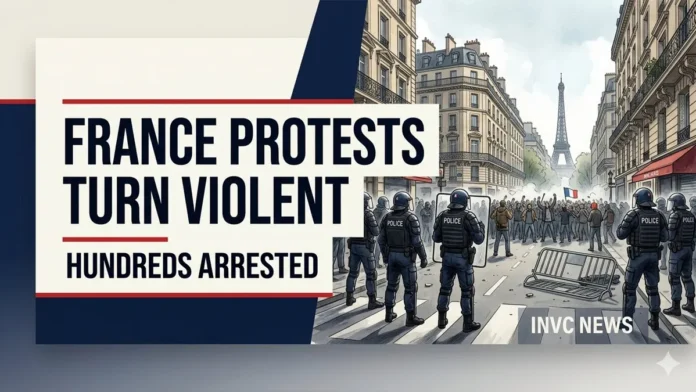
France faced a wave of nationwide demonstrations on Saturday as students, trade unionists, farmers, climate activists and other groups took to the streets to protest rising living costs, fuel prices and concerns over public services. While many participants marched peacefully, violent incidents in several cities led to arrests, injuries among security personnel, damage to public buildings and disruption to transport and cultural attractions.
French Interior Minister Laurent Nuñez said approximately 550,000 people participated in demonstrations across the country. He condemned the violence and reported that around 400 people had been arrested at the time of his statement, while 60 members of the internal security forces had been injured.
Subsequent media reports carried higher arrest totals as the situation developed, underlining that figures were changing as authorities updated their assessments. The reported numbers should therefore be understood in the context of when they were released.
The demonstrations reflected broader public concerns about the cost of living, fuel prices, education, wages and the quality of public services. The unrest also renewed debate over how authorities should respond to large-scale protests while protecting peaceful demonstrators and public safety.
Why Protesters Took to the Streets
The demonstrations brought together groups with different priorities but overlapping concerns about household finances and public services.
Rising prices have placed pressure on household budgets, making fuel, transport and other everyday expenses central issues for protesters. Students and education groups raised concerns about conditions in schools and the resources available to educational institutions, while trade unions called attention to wages and social protections.
Farmers, climate activists and other participants also joined the wider mobilisation, reflecting a range of economic and policy grievances.
The protests drew comparisons with France’s earlier Yellow Vest movement, which gained national attention in 2018 over fuel taxes and the cost of living. The latest demonstrations again brought economic pressures into the centre of public debate, although the groups involved and their individual demands were not identical.
The scale of the turnout indicated that concerns about living costs and public services extended across multiple sections of French society. However, the participation of large crowds should not be taken to mean that all demonstrators supported or took part in the violent incidents.
Clashes, Looting and Attacks on Public Buildings
Nuñez condemned attacks reported in several cities and said public buildings, police stations and businesses had been targeted during the unrest.
According to his account, attempts were made to enter municipal buildings in Marseille, Lille, Calais and Angers. Administrative offices were also targeted in Bordeaux and other locations.
Authorities reported that some individuals took advantage of the demonstrations to loot shops and damage property. The incidents added to pressure on police and other emergency services already deployed to manage crowds across the country.
The scale and nature of the violence varied by location. In some areas, demonstrators continued to march, while confrontations elsewhere involved clashes with police, property damage and disruption to normal city life.
The government condemned attacks on public institutions and businesses, while the wider protests continued to raise questions about inflation, education funding and the provision of public services.
Arrests and Injuries Among Security Personnel
Nuñez said approximately 400 people had been arrested by the time of his Saturday statement. He also reported that 60 members of the internal security forces had been injured during the demonstrations.
Reports published later described a higher number of arrests and additional injuries among police officers. The differing totals reflect updates during a fast-moving situation and should not be treated as if they were recorded at precisely the same time.
Arrests do not, by themselves, establish that every person detained participated in violence. Authorities will need to determine individual responsibility through the relevant legal procedures.
The government has said those responsible for vandalism, looting and attacks on public institutions should face legal consequences. At the same time, the scale of the demonstrations has highlighted the distinction between the right to protest peacefully and criminal acts committed during public gatherings.
Paris Metro Services Disrupted
The demonstrations also affected public transport in the French capital.
Paris public transport operator RATP announced temporary closures at numerous metro stations because of the planned demonstrations and security measures. Trains were instructed to pass through certain stations without stopping, while connections were suspended in affected areas.
These measures complicated journeys for residents, commuters and visitors moving around central Paris. Some bus routes were also expected to face diversions or restrictions because of street demonstrations.
The transport disruption illustrated how large public gatherings can affect daily life even for people who are not participating in the protests. Authorities and transport operators had to balance public access with security requirements around demonstration routes and sensitive locations.
Louvre Limits Access as Museums Adjust Entry
Cultural attractions in Paris also changed their visitor arrangements.
The Louvre Museum announced that access would be restricted during the period surrounding the October 17 demonstrations. Visitors were required to hold admission tickets, with entry managed through designated access points.
The measures affected one of France’s most prominent tourist attractions and reflected efforts to manage visitor movement during a period of heightened security.
The arrangements added another layer of disruption for tourists and cultural institutions, alongside the restrictions affecting public transport and access to parts of the city.
Macron Condemns Violence and Backs Law Enforcement
President Emmanuel Macron condemned the attacks on public buildings and businesses and said those responsible should face legal consequences.
In a post on X, Macron said people who carried out vandalism, attacked public offices and businesses, or looted municipal buildings would be held accountable.
He also expressed support for the authorities responsible for maintaining public order, arguing that those seeking to create disorder should not be allowed to prevent others from expressing their grievances peacefully.
The president’s remarks drew a clear distinction between peaceful demonstrations and violence. His government faces the challenge of responding to the security incidents while addressing the economic and social concerns that brought large numbers of people onto the streets.
What Happens Next?
The immediate priorities for French authorities include investigating incidents of violence, determining responsibility for damage and restoring normal transport and public services.
The protests also put renewed attention on the cost of living, fuel prices, education and the resources available for public services. Arrest figures and reports of property damage may dominate the immediate news cycle, but the economic grievances behind the demonstrations remain an important part of the story.
Whether the mobilisation leads to policy changes or further demonstrations will depend on how the government, unions, student groups and other participants respond in the coming days.
The Bottom Line: France’s October 17 demonstrations brought hundreds of thousands of people into public spaces to protest living costs and concerns about public services. Violence in some locations led to arrests, injuries and disruption, but the incidents should not obscure the distinction between peaceful protest and criminal acts. The government now faces both a public-order challenge and pressure to respond to the underlying economic concerns.