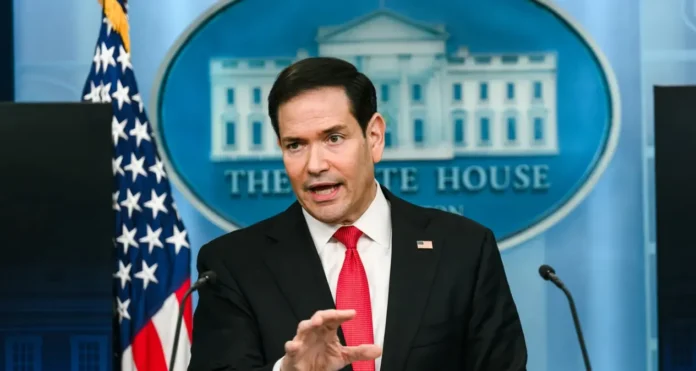
NEW DELHI, October 14, 2026: US Secretary of State Marco Rubio will visit Mumbai and Jamnagar from October 17 to 22 as Washington seeks to strengthen energy cooperation, expand commercial investment and reinforce its strategic partnership with India. The visit comes amid uncertainty over potential US tariffs on countries that continue purchasing Russian energy, putting energy security and bilateral economic ties in focus.
According to the US Department of State, Rubio will meet senior Indian government officials to discuss regional and global developments, strengthen the India-US strategic partnership and explore opportunities for enhanced energy cooperation. He is also scheduled to meet business leaders to promote commercial investment and economic collaboration.
The India leg is part of a wider diplomatic trip that includes Samarkand, Uzbekistan, where Rubio will participate in a ministerial meeting involving the United States and five Central Asian countries. The visit marks his second trip to India this year, following his participation in the Quad Foreign Ministers’ meeting in New Delhi in May.
The timing is significant because October 18 is a deadline under the Lindsey O. Graham Sanctioning Russia and Iran Act of 2026, which provides for duties on certain imports from countries that continue buying Russian crude oil or natural gas, subject to the law’s conditions and presidential action. The exact application of these measures remains dependent on the relevant US government decisions.
Why Is Marco Rubio Visiting India?
The US State Department has described energy cooperation, strategic coordination and commercial investment as key priorities for Rubio’s visit.
During his meetings with Indian officials, Rubio is expected to discuss ways to strengthen bilateral relations and exchange views on regional and international developments. The department has also highlighted opportunities for closer energy cooperation, although it has not publicly provided a detailed list of proposed agreements or specific energy-sector commitments.
India and the United States maintain a broad strategic partnership spanning defense, technology, trade, energy and regional security. Energy has become an important component of that relationship as both countries seek reliable supplies, commercial opportunities and greater resilience in international markets.
Rubio’s planned meetings with business leaders are also intended to promote investment and economic cooperation. However, the US announcement does not confirm that any specific commercial agreement will be signed during the visit.
Why Are Mumbai and Jamnagar Important?
Mumbai is one of India’s principal financial and commercial centers, making it a natural location for discussions involving investment and business cooperation.
Jamnagar, in Gujarat, is particularly important to the energy sector because it is home to Reliance Industries’ major refining complex, one of the world’s largest refinery hubs. The complex processes crude oil from different sources into petroleum products for domestic and international markets.
The US Department of State has not publicly explained why Jamnagar was included in Rubio’s itinerary. Its presence on the schedule has nevertheless drawn attention because of the city’s importance to India’s refining industry.
Refineries can process crude grades from different origins, subject to technical, commercial and operational considerations. This makes crude sourcing, price competitiveness and supply security important issues for energy companies.
The visit could provide an opportunity to discuss broader energy-sector cooperation, but there is no official confirmation that Rubio’s trip to Jamnagar is specifically intended to address purchases of Russian crude or secure a change in the sourcing policies of Indian refiners.
Russian Oil Purchases Remain a Sensitive Issue
India has been one of the largest buyers of Russian crude oil since Russia’s full-scale invasion of Ukraine in February 2022. Russian supplies became commercially attractive to Indian refiners when discounted crude offered an opportunity to reduce input costs.
India has maintained that its energy procurement decisions are guided by national interests, affordability and the need to ensure reliable supplies for its large domestic market.
Washington, meanwhile, has sought to increase economic pressure on Moscow over the war in Ukraine. Measures targeting countries that continue purchasing Russian energy have created additional uncertainty for major importers, including India.
The potential consequences extend beyond crude purchases themselves. Changes in tariff policy could affect Indian exports to the United States, business confidence and the calculations of companies operating across both markets.
For India, the challenge is to balance energy security and commercial considerations with the need to maintain stable relations with a major strategic and trading partner.
What Is the October 18 Graham Act Deadline?
The Lindsey O. Graham Sanctioning Russia and Iran Act of 2026 provides for tariffs on certain goods from Russia and on goods from qualifying third countries that continue purchasing Russian crude oil or natural gas, subject to the law’s requirements.
The deadline of October 18 falls during Rubio’s announced October 17–22 trip. The law authorizes duties of up to 100% on goods from countries covered by the relevant third-country provision. The measures are not equivalent to an automatic fine imposed directly on a country for every barrel of Russian oil it buys.
The law’s application depends on its specific eligibility requirements and the administration’s decisions, including whether applicable duties are imposed or a waiver is issued. The maximum authorized rate should therefore not be presented as a confirmed tariff rate for India.
India’s exposure is an important issue because of its position among major Russian crude buyers. However, the final consequences for Indian trade depend on the precise scope of any measures, the purchases covered by the law and decisions made by the US administration.
The timing adds significance to Rubio’s visit, but the State Department has not said that the trip is intended to negotiate an exemption for India or to secure an immediate change in Russian oil imports.
What Could Energy Cooperation Mean for India?
Stronger energy cooperation could encompass commercial investment, technology, trade in energy products and discussions about reliable supplies. The actual scope of any new initiatives will depend on what the two governments and companies agree to pursue.
For India, maintaining access to competitively priced crude remains important because oil is central to transportation, manufacturing and other parts of the economy. Refiners also need flexibility to respond to changing global prices, freight costs and supply conditions.
For the United States, energy trade and investment can create commercial opportunities while supporting its wider strategic engagement with India. However, differences over Russia policy and trade measures could complicate efforts to deepen cooperation.
The challenge for both sides is to advance areas of common interest while managing disagreements over energy sourcing and economic policy.
Rubio to Attend C5+1 Ministerial Meeting in Uzbekistan
Before travelling to India, Rubio will visit Samarkand, Uzbekistan, to participate in the C5+1 ministerial meeting.
The C5+1 platform brings together the United States and five Central Asian republics: Kazakhstan, the Kyrgyz Republic, Tajikistan, Turkmenistan and Uzbekistan.
According to the State Department, Rubio will hold bilateral meetings with senior officials from these countries and highlight how regional cooperation can support a more peaceful and prosperous future.
The US delegation will also include a commercial group of more than 200 business leaders, the department said. The initiative is intended to expand commercial cooperation between the United States and Central Asian countries.
The Central Asian portion of the trip reflects Washington’s broader effort to strengthen diplomatic and economic relationships across the region, while the India leg focuses on a major strategic partner in South Asia.
What Happens Next?
Rubio’s visit will provide an opportunity for Indian and US officials to discuss energy cooperation, trade, investment and broader strategic concerns. Whether the talks produce specific agreements will become clearer as the meetings take place and the two governments release further details.
The October 18 deadline under the Graham Act will also be closely watched by businesses and policymakers. Its potential implications for India will depend on the US administration’s decisions and the law’s application to qualifying purchases.
For now, the official agenda emphasizes stronger strategic ties, better energy cooperation and expanded commercial engagement. The visit comes at a sensitive moment for India-US relations, when shared economic and security interests must be managed alongside differences over Russian energy and trade policy.