
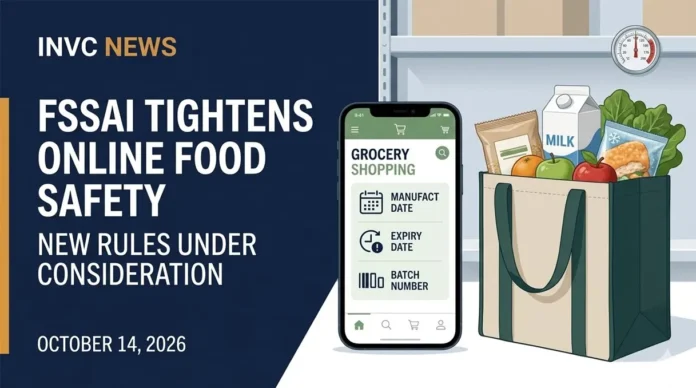
NEW DELHI, October 14, 2026 : Ordering groceries and food products through quick-commerce apps could become more transparent as India’s food safety regulator considers stricter requirements for online platforms. The Food Safety and Standards Authority of India (FSSAI) is preparing to strengthen oversight of businesses selling food online, including quick-commerce services such as Blinkit, Swiggy Instamart and Amazon Now.
The proposed changes could require more detailed product information before customers place an order, strengthen accountability for misleading claims and increase scrutiny of the facilities used to store and prepare food.
FSSAI Chief Executive Officer Rajit Punhani told media outlets that the regulator was looking to tighten requirements and make online businesses more accountable. The initiative forms part of a broader effort to improve food safety as more consumers purchase groceries and prepared meals through digital platforms.
The important distinction is that these measures are being considered or developed; they should not all be treated as finalized new rules. Some food-labeling and e-commerce obligations already exist, while the regulator is examining how requirements should be strengthened and enforced.
1. Manufacturing dates, expiry dates and batch numbers
One of the main areas under consideration is the information displayed on online product listings.
At present, shoppers can browse packaged food, milk, snacks, cooking ingredients and other groceries through an app without physically handling the product. Depending on the listing, important details on the packaging may not be immediately visible before checkout.
FSSAI is considering requirements to make manufacturing dates, expiry dates and batch numbers available to consumers before they order food products. These details can help shoppers understand a product’s age, identify the batch they are purchasing and make more informed decisions.
The change could be particularly useful for packaged foods with limited shelf lives. It could also make it easier for consumers to raise concerns if a delivered product differs from the information displayed online.
However, the final requirements will depend on the regulator’s formal rules and how the information must be displayed across different product categories.
2. Greater accountability for misleading product claims
FSSAI is also looking at the responsibility of online platforms when manufacturers or sellers make misleading claims about food products.
Product descriptions and promotional statements can influence purchasing decisions. If a listing contains inaccurate information, customers may not have an easy way to verify the claim before placing an order.
The regulator wants online platforms to play a stronger role in ensuring that information presented to consumers is accurate. This could require businesses to improve their internal checks, monitor listings and establish clearer processes for correcting inaccurate claims.
The proposal is part of a wider regulatory focus on food labeling, advertising and consumer protection. The exact allocation of responsibility between platforms, sellers and manufacturers will depend on the applicable rules.
3. Dark kitchens could face greater transparency requirements
Dark kitchens, sometimes called cloud kitchens, prepare food primarily for delivery rather than for customers dining on the premises.
Because customers cannot visit these kitchens in the same way they can visit a conventional restaurant, verifying the identity and location of a food preparation facility can be more difficult.
The proposed approach could require additional identifying information, including a photograph and address of the dark kitchen. Greater transparency could help consumers understand where their meals are prepared and make it easier for authorities to identify the relevant facility during inspections or investigations.
The details of any such requirement, including its scope and implementation, remain subject to official confirmation.
4. More inspections of dark stores and food-storage facilities
FSSAI has also increased its focus on dark stores, the warehouses and local distribution centers used by quick-commerce companies to assemble and dispatch orders.
These facilities may hold packaged foods, fresh produce, dairy products and frozen items before delivery. Safe handling and appropriate storage conditions are essential to maintaining food quality.
Inspections can examine hygiene, sanitation, pest control, stock management and temperature control. Frozen products and other temperature-sensitive foods require particular care because unsuitable storage conditions can affect their safety and quality.
The regulator has confirmed that inspections of quick-commerce dark stores and cloud kitchens are part of its wider enforcement efforts.
Stronger inspections could encourage operators to improve their storage procedures, staff training and monitoring systems. They could also help authorities identify violations and take action under the applicable food-safety framework.
5. What could change for Blinkit, Instamart and Amazon Now?
If the proposed measures are finalized, quick-commerce platforms may need to improve product-data systems, verify information supplied by sellers and ensure that required details appear clearly on their apps.
They could also face higher compliance costs as they update technology, train staff, monitor suppliers and strengthen processes for handling consumer complaints.
The effect will depend on the final rules and on how much of the proposed information is already available through existing systems. The changes would not necessarily mean that every food product becomes more expensive or that delivery times must increase.
For consumers, the central potential benefit is better access to product information and stronger oversight of the facilities involved in food preparation and storage.
6. Are online food safety requirements already in place?
Yes. The latest proposals build on an existing regulatory framework rather than creating online food safety rules from scratch.
FSSAI has previously directed e-commerce food businesses to follow applicable food safety and labeling requirements. The regulator has also emphasized shelf-life disclosures, accurate product information and the need to prevent the sale of expired food.
In September 2026, FSSAI’s enforcement plans included a stronger focus on online food businesses and the display of relevant product details. Reporting at the time also described a September 30 deadline relating to food-label and expiry information on quick-commerce platforms.
The latest developments indicate that the regulator wants to strengthen accountability and address practical gaps in how information is presented to customers. The precise legal status of each requirement should be checked against the relevant official notification.
What should customers do when ordering food online?
Consumers can take a few practical steps while the regulatory process continues:
- Check the product description and available labeling information before ordering.
- Examine the manufacturing, best-before or expiry details on delivery, as applicable.
- Check packaging for damage, leakage or signs of improper handling.
- Store dairy, frozen foods and other temperature-sensitive products according to the label.
- Report expired, damaged or inaccurately described products through the platform’s complaint process and retain the order details.
These precautions do not replace regulatory enforcement, but they can help consumers identify problems and document complaints.
What happens next?
The key next step is confirmation of the final regulatory provisions, including the information that must be shown online, the obligations of platforms and sellers, and the requirements for dark kitchens and storage facilities.
Until official details are issued, consumers should understand the proposals as part of FSSAI’s ongoing effort to strengthen online food safety rather than assume that every reported measure is already mandatory.
As online grocery shopping and rapid delivery become more common, accurate product information, safe storage and clear accountability are increasingly important. The outcome of FSSAI’s regulatory review could shape how food products are listed, stored and sold through India’s growing digital marketplace.