By Team INVC | INVC NEWS
Published: October 8, 2026 | 10 : 04 AM IST
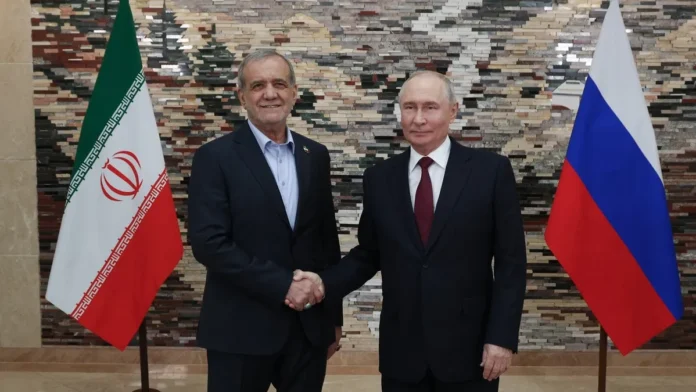
TEHRAN, Iran | October 8, 2026 — The Putin Iran call delivered two messages Wednesday: Moscow wants stronger strategic ties with Tehran, and Russia stands ready to support diplomatic efforts to ease tensions between Iran and the United States, according to the Iranian presidential office.
The October 7 telephone conversation brought together two priorities: strengthening Moscow’s partnership with Tehran and keeping a diplomatic route open in a conflict that has resisted a lasting settlement.
According to the Iranian presidential office’s account, President Masoud Pezeshkian called for broader cooperation across different sectors. Putin, meanwhile, said Russia remained ready to assist efforts aimed at easing tensions.
Pezeshkian calls for deeper cooperation
Pezeshkian told Putin that continuing and expanding bilateral cooperation served both countries’ shared interests, according to the Iranian statement reported by Xinhua.
His message focused on the direction of the relationship rather than a specific new project. The account described a commitment to strengthen cooperation across several areas without announcing a new commercial agreement, investment package or implementation timetable.
The call also coincided with Putin’s birthday. Iranian media reported that Pezeshkian congratulated the Russian president before the leaders discussed bilateral relations and regional developments.
Putin backs efforts to ease Iran-US tensions
The Iranian account said Putin supported initiatives by countries working to mediate between Iran and the United States and reduce regional tensions.
He also conveyed Moscow’s willingness to contribute to those efforts.
That expression of support gives Russia a potential diplomatic role. However, the reported conversation did not establish a new negotiating process, identify an agreed meeting date or announce a settlement between Tehran and Washington.
The distinction matters: willingness to help can support diplomacy, while an actual mediation arrangement requires agreement on participants, terms and the next steps.
Strategic partnership remains the central framework
Putin said cooperation under the countries’ comprehensive strategic partnership framework continued despite developments in the region, according to the Iranian readout.
Both presidents emphasized maintaining close communication and strengthening bilateral ties.
Their message suggests that Moscow and Tehran intend to preserve their relationship through the current instability. It also places regional diplomacy alongside their longer-term cooperation rather than treating the two as separate issues.
The account offers a statement of political intent. It does not provide details of new military commitments or operational assistance arising from Wednesday’s call.
Why the earlier diplomatic window matters
The latest conversation follows months of conflict and attempts to negotiate an end to hostilities.
US and Israeli attacks on Iran began on February 28. Iran responded with missile and drone attacks against Israel and US interests in the region, while the confrontation also affected the Strait of Hormuz.
An April ceasefire created an opening for negotiations. In June, Iran and the United States reached a memorandum of understanding that set out a maximum 60-day negotiating period for a final agreement, with an extension possible by mutual consent.
By mid-August, that initial window had reached its deadline without delivering a durable final settlement.
The sequence explains why fresh expressions of diplomatic support carry significance. Earlier arrangements created space for talks, but the parties still faced the harder task of translating a framework into an agreement they could implement.
What this means for readers in India
For Indian readers, the story extends beyond the relationship between two presidents.
Instability around Iran and the Gulf can affect energy supplies, shipping conditions and business costs. Consequently, developments in regional diplomacy deserve attention alongside reports of military activity.
Wednesday’s call does not establish that shipping risks have eased or that energy prices will fall. Instead, it provides a clearer picture of Moscow’s stated position: Russia supports efforts to reduce tensions while continuing its strategic cooperation with Iran.
What to watch next
The next meaningful development would involve concrete diplomatic action: an announced negotiating round, an agreed mediator, a revised timetable or a joint statement outlining terms.
For now, the Iranian account presents the call as a reaffirmation of partnership and an offer of diplomatic assistance. It does not announce a breakthrough in Iran-US negotiations.
That makes the central takeaway specific: Tehran and Moscow want stronger ties, and Putin has signaled support for efforts to lower regional tensions. Whether that support produces a workable negotiating process remains the next question.