By Team INVC | INVC NEWS
SEATTLE, United States | October 6, 2026 —
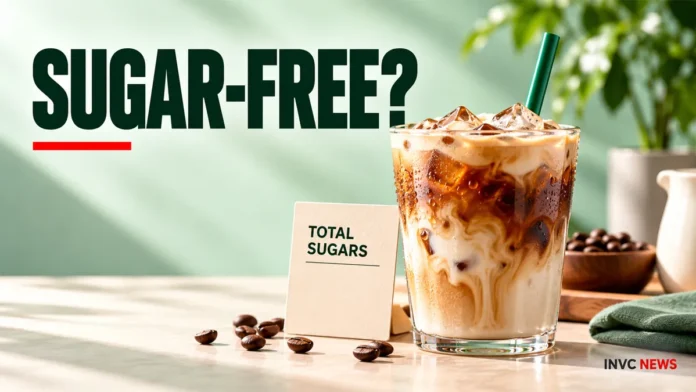
A Starbucks sugar-free lawsuit puts a familiar menu claim under scrutiny: does “sugar-free” describe the flavoring or the entire drink? Three consumers have filed a proposed class action alleging that eight Starbucks protein beverages carry misleading names because they contain lactose, the naturally occurring sugar in milk. Starbucks disputes the allegations. For customers watching their sugar intake, the case highlights why a drink’s name, syrup ingredients, and total sugar content can tell different stories.
INVC NEWS | BEYOND THE HEADLINE
THE 60-SECOND BRIEF
- Three consumers filed the lawsuit October 2 in federal court in Seattle.
- The complaint challenges eight protein beverages with “Sugar-Free” in their names.
- Plaintiffs allege that specified venti servings contain 13–21 grams of sugar, including naturally occurring lactose.
- They seek damages over alleged false advertising and violations of state consumer-protection laws.
- Starbucks says the beverages use sugar-free syrup and that the sugar comes naturally from the milk.
- The filing does not establish that Starbucks violated the law.
What Happened: Consumers Challenged the Drink Names
The proposed class action targets vanilla and caramel protein lattes and protein matcha drinks, including hot and iced versions.
According to the plaintiffs’ attorneys at Hagens Berman, the consumers filed the complaint in the US District Court for the Western District of Washington.
Their central argument concerns how customers interpret the menu names. They contend that “sugar-free” leads a reasonable buyer to expect the finished beverage to contain no sugar, rather than merely sugar-free flavoring.
However, that interpretation remains a disputed allegation. A complaint presents the plaintiffs’ case; it does not establish liability.
What Each Side Says
The consumers argue that the drinks’ names misrepresent their sugar content. Their complaint seeks unspecified damages and challenges the marketing under state consumer-protection laws.
Starbucks, meanwhile, rejects wrongdoing and says it communicates nutritional information to customers. According to its response reported by The Associated Press, the drinks contain naturally occurring sugar from protein-boosted milk and use sugar-free syrup.
The disagreement therefore goes beyond whether lactose exists in the drinks. It concerns whether the product names adequately communicate what customers receive.
The court will need to assess the claims and Starbucks’ response through the legal process.
Why It Matters: Sugar-Free Syrup Does Not Describe Every Ingredient
A drink combines several ingredients. Consequently, a claim about one component does not necessarily explain the nutritional content of the finished beverage.
Sugar-free syrup can flavor a drink that still contains sugar from milk. Likewise, protein content does not determine whether a beverage contains sugar.
For customers, the useful distinction is between the ingredient-level claim and the total shown for the selected drink.
That becomes especially important when someone orders based on a short menu description without reviewing the nutritional information.
Total Sugars and Added Sugars: The Difference
FDA guidance explains that total sugars include naturally occurring sugars, such as those in milk, plus any added sugars.
By contrast, added sugars generally refer to sugars introduced during processing or preparation. Naturally occurring milk sugar does not fall into that category.
Therefore, a drink can contain total sugar even when its nutritional information lists no added sugar.
These terms answer different questions. “No added sugar” concerns the addition of sugar; it does not mean the finished product contains none.
| Term | What Customers Should Understand |
| Total sugars | Includes naturally occurring and added sugars |
| Added sugars | A component of total sugars; excludes naturally occurring milk sugar |
| Sugar-free syrup | Describes the syrup, not necessarily the finished drink |
| Protein beverage | Does not, by itself, establish the drink’s sugar content |
Numbers That Matter—and Their Limits
The complaint alleges 13–21 grams of sugar in the specified venti servings.
Readers should not apply that range to every size, recipe, or customized order. The selected beverage and serving size matter.
Similarly, a nutritional listing for one drink does not establish the content of all eight products. Customers should check the information for the exact item they plan to order.
The lawsuit challenges eight beverages. It does not establish a finding against Starbucks’ entire menu.
What Customers Can Check Before Ordering
First, review total sugars for the selected drink and size.
Next, examine added sugars separately. A zero in that field does not automatically mean zero total sugar.
Also, check the milk, flavoring, and other ingredients. Customizations may change the finished beverage’s nutritional content, so confirm which version the displayed figures describe.
Finally, avoid treating “protein,” “sugar-free,” and “low-calorie” as interchangeable descriptions. Each concerns a different feature.
These checks help customers compare drinks more accurately without drawing conclusions about a product from its name alone.
What Happens Next
The next developments will concern Starbucks’ formal response and the court’s handling of the complaint.
The case seeks class-action treatment, but the filing alone does not establish that a court has certified a class. Nor does it guarantee compensation for customers.
Any ruling or settlement would need to establish its own scope and conditions.
INVC NEWS Bottom Line
The Starbucks dispute centers on whether “sugar-free” drink names adequately explain beverages that contain naturally occurring milk sugar.
For customers, the immediate takeaway is practical: check the total sugar content of the complete drink. Sugar-free flavoring and a sugar-free beverage do not necessarily mean the same thing.