NEW DELHI, India | August 27, 2026 —
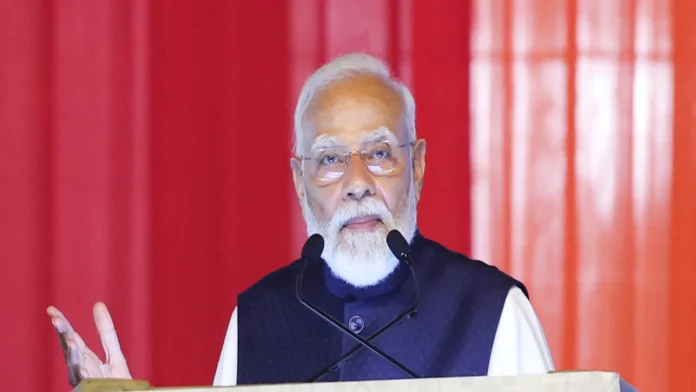
BJP meeting today is set to put Prime Minister Narendra Modi’s political legacy and the party’s next electoral cycle in focus as the Bharatiya Janata Party’s newly appointed national general secretaries hold their first formal meeting as a team at the party headquarters in New Delhi.
The meeting, scheduled for Thursday afternoon under BJP national president Nitin Nabin, is expected to focus on organisational priorities, coordination with state units, grassroots expansion and preparations for the nationwide Modi@25 campaign marking Narendra Modi’s 25 years in public office.
The session also comes as the BJP begins sharpening its organisation well ahead of major state elections in 2027.
No formal decisions from the meeting had been announced at the time of publication.
Why Today’s BJP Meeting Matters
This is the first formal meeting of the newly constituted group of national general secretaries following the BJP’s organisational reshuffle.
That gives the meeting more significance than a routine party discussion.
The new team is expected to define how responsibilities are divided, how the central organisation coordinates with state units and which political campaigns receive priority over the coming months.
The immediate agenda is likely to include:
- Modi@25 programmes
- Coordination with state BJP units
- Grassroots organisation
- Youth outreach
- Upcoming political campaigns
- Preparation for 2027 Assembly elections
The meeting is expected to begin at around 2 PM in New Delhi.
Modi@25 Campaign Likely to Be a Major Focus
One of the central political themes is expected to be the BJP’s Modi@25 campaign.
The campaign marks Narendra Modi completing 25 years in public office, covering his tenure as Gujarat Chief Minister and later as Prime Minister.
The party is preparing nationwide programmes designed to highlight Modi’s governance record and political journey.
The organisational challenge will be translating a national campaign into programmes at:
- State level
- District level
- Constituency level
- Booth level
- Youth and student networks
That makes coordination among national general secretaries particularly important.
BJP Is Already Focusing on Gen Z Voters
Youth outreach has become a much bigger organisational priority for the BJP.
The party has already assembled a dedicated strategy aimed at connecting with younger voters as issues such as jobs, competitive examinations, education, technology and future opportunities become politically important.
Also Read – : BJP vs Congress Battle for Gen Z: New Youth Team Takes on Rahul Gandhi’s Student Outreach
The Modi@25 campaign could provide another vehicle for that outreach, particularly through universities, digital platforms and youth organisations.
For the BJP, the challenge is not simply mobilising its existing support base.
It is also building relationships with voters who may participate in the 2027 state elections and the 2029 Lok Sabha election.
2027 Assembly Elections Are Already Coming Into View
Although the next Lok Sabha election remains several years away, national parties are already preparing for the next major cycle of state contests.
For the BJP, politically important states approaching elections include Uttar Pradesh, where the party has already begun strengthening its organisational machinery.
Also Read – : Nitin Nabin Begins Uttar Pradesh Push as BJP Reviews Mission 2027 Election Strategy
Uttar Pradesh remains particularly significant because of its size, Assembly strength and 80 Lok Sabha constituencies.
The national general secretaries are likely to play an important role in connecting the party’s central strategy with state-level campaign structures.
Modi Had Already Asked BJP Leaders to Stay Connected With People
The new organisational team has recently interacted with Prime Minister Modi.
During that earlier meeting, Modi urged party office-bearers to maintain a strong connection with ordinary people and avoid complacency despite recent electoral victories.
That message provides useful context for today’s session.
The party’s central challenge is likely to be converting electoral success into a durable grassroots organisation while responding to changing voter concerns.
Issues such as employment, youth aspirations, urban governance and economic pressures are increasingly shaping political conversations.
Why Grassroots Organisation Matters Before Elections
National personalities can dominate campaign headlines, but elections are ultimately fought through local organisation.
Political parties rely on district units, local leaders, volunteers and booth-level workers to:
- Contact voters
- Communicate welfare programmes
- Identify local issues
- Organise rallies and meetings
- Mobilise supporters on polling day
- Respond to opposition campaigns
The general secretaries therefore operate as important links between national leadership and state organisations.
Today’s meeting is expected to help establish that working framework for the newly appointed team.
Nitin Nabin Faces His First Big Organisational Test
For BJP president Nitin Nabin, the meeting is also an early test of his leadership of the party’s reorganised national structure.
The BJP’s new team combines experienced organisational figures with leaders expected to strengthen outreach among newer voter groups.
Nabin will need to coordinate political priorities across states with very different electoral environments.
A strategy that works in Uttar Pradesh may not work identically in Punjab, Uttarakhand or other states approaching elections.
That makes regional flexibility important.
Will BJP Announce a New Election Strategy Today?
Possibly, but nothing should be treated as confirmed until the meeting concludes.
The current information indicates that organisational priorities and election preparations will be discussed.
That does not mean the party has already approved:
- Candidate lists
- Election manifestos
- Chief ministerial faces
- Seat-sharing agreements
- Final campaign schedules
Any such claims would require an official announcement.
The most credible approach is to separate the expected agenda from the actual decisions that emerge after the meeting.