CHANDIGARH, INDIA | AUGUST 25, 2026 —
The Bharatiya Janata Party has sharpened its Punjab election 2027 strategy, declaring that it intends to contest all 117 Assembly seats on its own and publicly pushing back against speculation of a reunion with its former ally, the Shiromani Akali Dal.
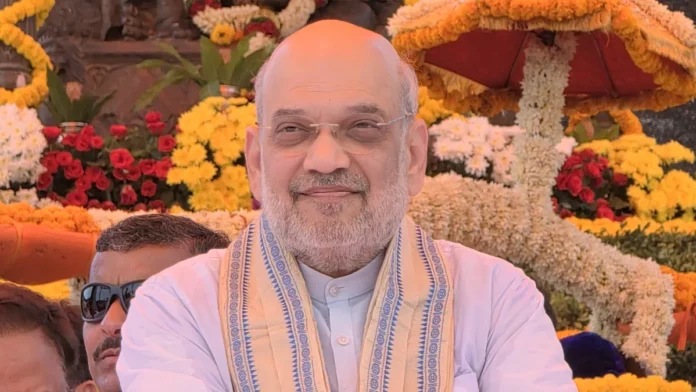
BJP national general secretary (organisation) B.L. Santosh set out the position during a two-day organisational visit to Punjab, telling party workers that the BJP was preparing for a statewide contest and aimed to form the next government. Punjab BJP president Kewal Singh Dhillon has separately taken the same line.
The declaration is significant because it comes amid renewed talk of a possible BJP-SAD rapprochement after SAD president Sukhbir Singh Badal met Prime Minister Narendra Modi on August 8.
For now, the BJP’s message is clear: its organisation has been told to prepare for all 117 constituencies, not for a seat-sharing arrangement.
Why the BJP-SAD Question Returned
The BJP and SAD were partners for more than two decades and governed Punjab together before their alliance collapsed in 2020 during the confrontation over the now-repealed central farm laws.
Their political relationship has remained one of the most closely watched variables ahead of the 2027 election.
Badal’s recent meeting with Modi revived speculation because both parties face a very different Punjab electoral landscape from the one they dominated together.
The meeting itself did not produce an announced alliance. But it was enough to reopen debate over whether electoral arithmetic could eventually bring the former partners back together.
Santosh’s intervention is therefore important not simply because the BJP says it will contest 117 seats. It signals that the party wants its Punjab cadre to prepare for an independent expansion strategy rather than wait for an alliance decision.
A Solo Fight Would Be BJP’s Biggest Punjab Test
The scale of that challenge is considerable.
Punjab’s 117-member Assembly has a majority mark of 59 seats.
In the 2022 election, AAP won 92 seats, Congress secured 18, SAD won three and the BJP finished with two. The BJP received about 6.6% of the statewide vote.
That result makes the party’s current ambition striking.
Going from a limited presence to contesting every constituency requires substantially more than a high-profile campaign. The BJP needs credible local candidates, booth-level workers and social coalitions in parts of Punjab where it historically relied on the Akali Dal.
Punjab 2022: The Starting Point
| Party | Seats |
|---|---|
| AAP | 92 |
| Congress | 18 |
| SAD | 3 |
| BJP | 2 |
| BSP | 1 |
| Independent | 1 |
For the BJP, the central question is whether organisational growth since 2022 can translate into votes outside its traditional urban pockets.
BJP Is Trying to Build a Statewide Organisation
Santosh’s Punjab tour is focused heavily on organisation.
His meetings with party functionaries across different regions are designed to assess election preparedness, strengthen district and booth structures and resolve internal issues well before polling begins.
That work matters because a solo election would force the BJP to compete directly in rural and semi-rural constituencies where it previously benefited from SAD’s network.
The party would need to broaden its appeal among farmers, Sikh voters, Dalits, younger voters and economically weaker communities while retaining its existing urban support.
That is a much more demanding political project than fighting a limited number of seats as the junior partner in an alliance.
Modi Has Already Put Punjab Development Into the BJP Campaign
The BJP is also trying to build its Punjab argument around development, infrastructure and central government investment.
Prime Minister Narendra Modi’s July visit to Punjab combined the launch of projects worth more than ₹6,600 crore with sharp attacks on the AAP government and Congress.
Also Read – : PM Modi Targets AAP and Congress During Punjab Visit, Launches ₹6,600 Crore Projects and New Rail Services
That combination is likely to remain central to the BJP campaign: highlight Union government projects while portraying AAP as vulnerable on governance, law and order, debt and drugs.
AAP Still Starts From a Position of Strength
For the ruling Aam Aadmi Party, the BJP’s declaration is also an opportunity.
AAP can point to the enormous mandate it received in 2022 and portray the BJP as attempting to manufacture a statewide contest from a very small Assembly base.
But 2027 will not be a replay of 2022.
AAP will have to defend nearly five years of government under Chief Minister Bhagwant Mann, meaning the campaign will increasingly turn toward its record on public services, jobs, debt, law and order, agriculture and welfare.
The ruling party’s challenge will be to persuade voters that its 2022 mandate still carries political momentum.
The BJP’s challenge is harder: it must persuade them that it has become a credible alternative.
Congress Could Benefit From a Fragmented Opposition
Congress remains impossible to ignore.
It won 18 seats in 2022 and remains one of Punjab’s largest opposition forces.
A four-cornered election involving AAP, Congress, BJP and SAD could produce very different constituency-level results from a contest in which BJP and SAD combine their votes.
Punjab Congress president Amarinder Singh Raja Warring has already challenged the BJP’s claims of going alone, reflecting Congress’s interest in keeping the possibility of a BJP-SAD reunion politically alive.
For Congress, a divided opposition vote could create opportunities.
For BJP and SAD, it creates the opposite risk.
Farmers Remain the BJP’s Most Difficult Political Test
No analysis of BJP’s Punjab strategy is complete without agriculture.
The 2020 BJP-SAD rupture occurred during the farm-law confrontation, and the political impact of that period still shapes the BJP’s relationship with sections of Punjab’s rural electorate.
A genuine statewide expansion will require the party to address issues including:
MSP, procurement, crop diversification, farm incomes, debt, water and rural employment.
This is where organisational expansion will meet its toughest political test.
Punjab’s rural vote cannot be built only through national leadership or infrastructure announcements.
Youth Politics Could Become Another Battlefield
Jobs, migration, competitive examinations and education are likely to play a prominent role in the 2027 campaign.
Punjab’s younger voters are particularly important because concerns about employment and opportunities abroad intersect directly with the state’s economic debate.
The BJP and Congress are already expanding youth-focused political outreach nationally.
Also Read – : BJP vs Congress Battle for Gen Z: Jobs, Exams and Student Outreach Become New Political Battleground
For BJP, converting national youth outreach into Punjab votes will require a credible state-specific jobs and opportunity narrative.
Is a BJP-SAD Reunion Really Dead?
Not necessarily.
What can be stated factually today is that the BJP says it will contest all 117 seats independently and its organisation is being prepared accordingly.
That is a stronger position than vague pre-election signalling.
But elections are still months away, and political alliances can change.
Just days before Santosh’s remarks, other BJP figures had been more cautious about whether a final alliance decision had been made. Meanwhile, SAD leaders have continued to fuel discussion about the merits of reuniting the former partners.
That makes “no alliance for now” more precise than claiming the door can never reopen.