Washington, United States | August 22, 2026 —
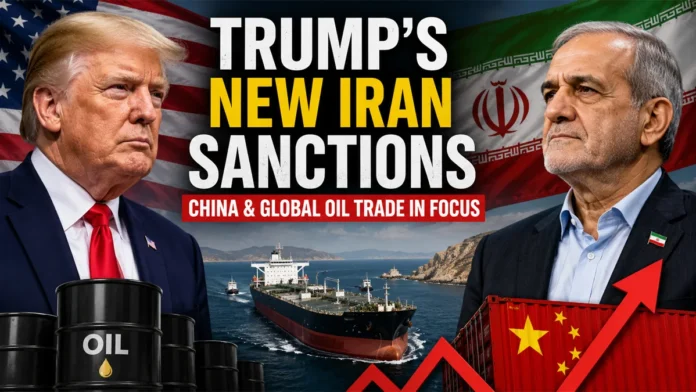
US sanctions on Iran are set to enter a potentially far more aggressive phase as President Donald Trump’s administration prepares to unveil sweeping new economic measures against Tehran on Monday, raising fresh concerns over Iranian oil exports, China’s energy purchases and already-disrupted shipping through the Strait of Hormuz.
US Treasury Secretary Scott Bessent has described the coming measures as the toughest sanctions Washington has imposed on Iran. President Trump has meanwhile warned that countries providing an economic “lifeline” to Tehran could face consequences of their own.
Iran has responded defiantly, rejecting Washington’s pressure campaign and warning against further US threats.
The escalating confrontation is increasingly extending beyond Washington and Tehran. China, the dominant buyer of Iranian oil, could become central to whether the new sanctions can significantly restrict Iran’s remaining energy revenues.
US Prepares New Iran Sanctions for Monday
The Trump administration has signaled that economic pressure will become a major part of its strategy against Iran.
Bessent is expected to provide details of the new sanctions at a press conference Monday.
The Treasury secretary has suggested that intensified economic measures could increase pressure on Tehran while reducing the need for another major expansion of US military operations.
Washington has already pursued a broad maximum-pressure campaign against Iran’s petroleum sector, shipping networks and financial channels.
The US Treasury’s Office of Foreign Assets Control maintains extensive sanctions targeting Iran and has repeatedly warned companies and financial institutions about the risks associated with transactions involving Iranian petroleum.
Trump Warns Countries Providing Iran an Economic Lifeline
The potential international impact could be even more significant.
Trump has warned of economic consequences for countries that provide Iran with any form of economic lifeline.
That raises questions about how Washington will treat companies and financial institutions in countries that continue conducting substantial business with Tehran.
The administration’s approach could therefore extend the economic pressure campaign beyond Iranian entities themselves and increase the risks facing foreign businesses involved in Iranian trade.
China Becomes Critical to Iran Oil Sanctions
China is particularly important.
It currently purchases more than 80% of Iran’s shipped oil exports, making Chinese demand one of Tehran’s most important remaining sources of petroleum revenue.
Washington has already targeted independent Chinese refiners — commonly known as “teapot” refineries — over their role in purchasing and processing Iranian crude.
Earlier this year, OFAC warned financial institutions about sanctions risks associated with Chinese independent refineries importing Iranian oil.
China, however, has opposed unilateral US sanctions and has continued to advocate diplomatic solutions to the confrontation.
That sets up a potentially significant test of Washington’s new strategy: whether the coming measures can persuade Chinese buyers to further reduce their exposure to Iranian crude.
Iranian Oil Supplies to China Already Under Pressure
Signs of disruption are already emerging.
Offers of Iranian crude to Chinese buyers have declined sharply amid tighter restrictions on shipments, while some Chinese refiners have begun looking toward alternative supplies.
Iranian oil shipments have fallen significantly compared with their 2025 levels.
The reduction is particularly important for independent refiners in China’s Shandong province that have historically purchased discounted Iranian crude.
With supplies tightening, some buyers have explored alternatives including crude from Brazil and Iraq.
If Monday’s sanctions substantially increase the financial or commercial risks surrounding Iranian petroleum, the pressure on those refiners could intensify.
Strait of Hormuz Crisis Adds to Global Energy Risk
The sanctions confrontation comes as the Strait of Hormuz remains at the center of the wider US-Iran conflict.
The strategic waterway is one of the world’s most important energy corridors, connecting major Gulf oil and gas producers with global markets.
Oil flows through the strait have fallen dramatically during the conflict. Shipments that previously exceeded 20 million barrels per day have dropped to roughly 8 million barrels per day amid severe disruption.
Thousands of seafarers have also been affected as commercial shipping faces heightened risks.
Any further escalation between Washington and Tehran could therefore have consequences well beyond Iran itself.
Oil Markets Closely Watching Washington and Tehran
Energy markets have already reacted to the escalating rhetoric.
Oil prices climbed more than 2% on Thursday after Trump warned countries against supporting Iran, highlighting investor concerns that additional economic pressure could further disrupt Middle Eastern energy supplies.
The combination of tighter Iranian sanctions and reduced traffic through the Strait of Hormuz creates a particularly sensitive environment for global crude markets.
For major oil-importing economies, including India, prolonged disruption could increase import costs and add pressure to inflation.
Tehran Sends Defiant Message
Iran has responded forcefully to Washington’s latest warnings.
Iranian officials have warned that the country could deliver a severe response to additional US threats, while Tehran continues to insist that external economic pressure will not determine its policies.
At the same time, divisions in tone have emerged within Iran’s leadership.
Some military figures have emphasized retaliation and resistance, while President Masoud Pezeshkian and other political leaders have increasingly acknowledged the economic damage caused by the prolonged conflict and emphasized diplomacy.
That contrast could become increasingly important if the new sanctions substantially deepen pressure on Iran’s economy.
Can Sanctions Replace Further Military Escalation?
One of the biggest questions surrounding Monday’s announcement is whether Washington sees intensified sanctions as an alternative to a major new military escalation.
The Trump administration has combined military pressure, restrictions on Iranian oil shipments and financial sanctions in its campaign against Tehran.
However, Iran retains missile and drone capabilities capable of threatening regional targets and maritime traffic.
That means economic pressure does not eliminate the possibility of renewed military confrontation.
For now, attention is turning to Washington.
The scope of the measures announced Monday — particularly whether they aggressively target foreign companies, banks, shipping networks and buyers of Iranian oil — could determine how dramatically the next phase of the US-Iran confrontation affects China, global energy markets and the Strait of Hormuz.