
MUMBAI, India | August 21, 2026
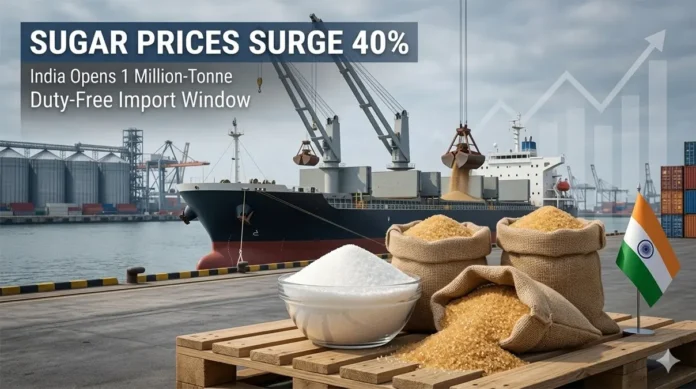
India sugar import 2026 rules have opened the door to 1 million metric tons of duty-free raw sugar as the government moves to contain a sharp rise in domestic prices ahead of the country’s crucial festival season.
The decision marks a major shift for one of the world’s largest sugar producers and consumers, with India turning to overseas supplies after lower production tightened the domestic market.
Sugar prices in India have risen sharply over the past two months, increasing pressure on households as well as food and beverage manufacturers that use sugar as a major input.
The government has now permitted imports without the normal customs duty until October 31.
India Turns to Sugar Imports After Nearly a Decade
The decision is particularly significant because India has not needed large-scale sugar imports for nearly a decade.
The country is normally among the world’s major sugar producers and can become an important exporter when domestic production is strong.
However, weaker output has changed the supply situation.
Domestic sugar prices have climbed by nearly 40% over approximately two months, increasing concerns about availability ahead of the festive period.
The government is now attempting to increase supply before seasonal demand strengthens further.
1 Million Tonnes Can Be Imported at Zero Duty
Under the new arrangement, up to 1 million metric tons of raw sugar can enter India without import duty.
India normally maintains a steep customs duty on sugar imports to protect domestic producers from cheaper overseas supplies.
Temporarily removing that barrier substantially changes the economics of importing raw sugar.
Eligible mills and refiners can apply for allocations under the zero-duty quota between August 21 and August 28.
Preference is expected to be given to participants capable of bringing shipments into the country quickly.
The import authorization runs through October 31.
Why Sugar Prices Have Risen So Sharply
The central problem is reduced domestic production.
When sugar output declines while consumption remains strong, available inventories tighten and prices rise.
India’s massive food-processing industry also creates substantial industrial demand for sugar.
Confectionery companies, beverage manufacturers, bakeries, restaurants, sweet makers and packaged-food businesses all depend on the commodity.
That means a sharp rise in sugar prices can eventually affect a much broader range of products than household sugar alone.
Festival Season Makes Timing Crucial
The timing of the government’s decision is especially important.
India’s major festival season traditionally produces strong demand for sweets and packaged foods.
Businesses begin preparing supplies well before peak consumer demand arrives.
If sugar remains expensive during that period, higher raw-material costs could affect sweet shops, bakeries, restaurants and food manufacturers.
Increasing supply before the festival season could therefore help reduce some of that pressure.
Brazil Could Become an Important Supplier
Brazil, the world’s largest sugar producer and exporter, is expected to be among the potential suppliers.
However, international shipping takes time.
Cargoes purchased from Brazil may not arrive immediately, meaning a significant portion of imported sugar could reach India closer to October.
That makes the government’s allocation timetable important.
Authorities are encouraging importers capable of securing and delivering supplies quickly.
Port-Based Refineries Could Provide Faster Relief
India also has port-based refineries that traditionally import raw sugar, process it and export the refined product.
Under the latest arrangement, eligible refiners can help increase supplies available to India’s domestic market.
This mechanism could potentially bring hundreds of thousands of tonnes into domestic circulation relatively quickly.
Such supplies could provide a bridge while larger international shipments make their way to Indian ports.
Global Sugar Prices React
India’s decision has implications beyond the domestic market.
Because India is such a large sugar producer and consumer, a shift from potential exporter to importer can alter expectations about global supply and demand.
International sugar futures jumped following news of India’s import decision.
The reaction illustrates the country’s influence over the global sugar market.
If India ultimately purchases the full quota, international exporters will need to supply an additional 1 million tonnes to the Indian market.
Will Sugar Become Cheaper Immediately?
Consumers should not assume that retail sugar prices will fall immediately.
Import authorization is only the first stage.
Traders and refiners must secure cargoes, arrange shipping, bring the sugar into India, refine raw sugar where necessary and distribute it through domestic supply chains.
The impact on prices will therefore depend on how quickly imports arrive and whether domestic production and inventories remain tight.
However, additional supply can reduce upward pressure and discourage expectations of further shortages.
Why This Matters Beyond Household Sugar
Sugar is an important input across India’s food economy.
Higher sugar prices can increase production costs for beverages, biscuits, chocolates, confectionery, ice cream, bakery products and traditional sweets.
Businesses can either absorb those costs, reduce margins or pass part of the increase to consumers.
Consequently, stabilizing sugar prices ahead of the festival season can have broader implications for food inflation.
What Consumers Should Watch Next
The next important indicator will be how much of the 1-million-tonne quota is actually contracted and how quickly shipments arrive.
Domestic sugar prices will also be closely monitored after the government’s announcement.
If imports combine with improved domestic availability, price pressure could ease.
However, if global sugar prices rise significantly because of India’s additional demand, some of the benefit from removing the import duty could be offset.
For now, the government’s message is clear: with sugar prices surging ahead of the festival season, India is prepared to turn to the global market to increase supplies and prevent the domestic shortage from worsening.











Comments are closed.