NEW DELHI, August 14, 2026
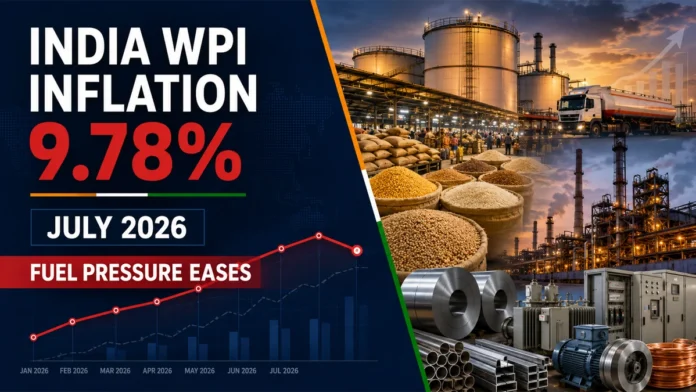
India wholesale inflation eased marginally to 9.78% in July 2026 as fuel and power price pressures moderated sharply, but higher inflation in food, primary articles and manufactured products showed that underlying input costs remained elevated.
Wholesale Price Index-based inflation declined by nine basis points from 9.87% in June, according to provisional data released Friday by the Ministry of Commerce and Industry.
Fuel inflation drops sharply
Fuel and power inflation declined to 20.05% in July from 27.41% in June, providing the biggest source of relief to the headline WPI rate.
The category had recorded inflation of 30.33% in May, meaning the pace of fuel-price increases has now moderated for two consecutive months.
Within the group, mineral oil inflation cooled to 32.40% from 46.48% in June. Inflation in crude petroleum and natural gas declined to 26.99% from 34.75%.
Electricity inflation, however, turned positive at 1.09% after registering a 0.76% contraction in June.
The moderation does not mean fuel prices fell compared with July 2025. Instead, it means they continued rising year over year, but at a slower rate.
Manufacturing inflation accelerates
Inflation in manufactured products increased to 8.29% in July from 7.48% in June, indicating continued pressure from industrial raw materials and production costs.
Chemicals, basic metals, food products, textiles and electrical equipment were among the categories contributing to higher factory-level inflation.
Inflation in the manufacture of chemicals and chemical products reached 13.12%, up from 12.78% in June. Basic-metal inflation increased to 12.56% from 12.31%.
Electrical-equipment inflation was recorded at 12.34%, while manufactured food-product inflation rose to 8.89% from 7.20%.
Textile inflation increased to 12.80% from 10.85% in the previous month.
Persistently high manufacturing inflation can affect consumer prices with a delay if companies pass higher raw-material, energy and transportation expenses on to retailers and households.
Primary-article inflation rises to 8.52%
Inflation in primary articles climbed to 8.52% in July from 7% in June.
Food-article inflation eased slightly to 5.44% from 5.49%. However, sharp increases in non-food articles and minerals kept the overall primary-article rate elevated.
Non-food article inflation rose to 17.66% from 11.07%, while mineral inflation increased to 13.28% from 9.45%.
The index for primary articles rose from 116.1 in June to 117.2 in July, showing an increase in wholesale prices on a month-over-month basis.
Wholesale food inflation increases
The broader WPI Food Index recorded inflation of 6.65% in July, up from 6.14% in June.
This index combines food articles included under primary articles with manufactured food products. It therefore provides a wider assessment of food-price pressures at the wholesale and production levels.
The increase suggests that food-related inflation remained a significant concern despite the modest decline in the overall WPI rate.
Food articles, manufactured food products, mineral oils, basic metals, non-food articles and chemical products were among the principal contributors to wholesale inflation in July, the government said in its official WPI release.
July WPI inflation snapshot
| Category | July 2026 | June 2026 | Direction |
|---|---|---|---|
| Overall WPI inflation | 9.78% | 9.87% | Lower |
| Primary articles | 8.52% | 7.00% | Higher |
| Fuel and power | 20.05% | 27.41% | Lower |
| Manufactured products | 8.29% | 7.48% | Higher |
| WPI Food Index | 6.65% | 6.14% | Higher |
| Food articles | 5.44% | 5.49% | Slightly lower |
| Non-food articles | 17.66% | 11.07% | Higher |
| Chemicals and chemical products | 13.12% | 12.78% | Higher |
| Basic metals | 12.56% | 12.31% | Higher |
May inflation revised upward
The government also revised its final WPI estimate for May 2026.
The index was increased to 110.1 from the provisional estimate of 109.9. As a result, May’s wholesale inflation rate was revised upward to 9.88% from the previously reported 9.68%.
The provisional July estimate was compiled with a weighted response rate of 78.55%, meaning the figure may be revised when more complete information becomes available.
What does the latest WPI data mean?
The July report provides limited relief because the decline in headline inflation came almost entirely from a slower increase in fuel and power prices.
Inflation accelerated in manufactured products, primary articles and the broader food index. This suggests that producers continue to face high costs for raw materials, food inputs and industrial goods.
Wholesale inflation does not directly measure the prices households pay in retail stores. Consumer inflation is measured separately through the Consumer Price Index.
However, WPI trends remain important because sustained increases in wholesale and manufacturing costs can eventually influence retail prices, company profit margins and business investment.
The Reserve Bank of India formally targets consumer inflation rather than WPI inflation. Still, elevated wholesale prices can affect its assessment of future inflation risks, particularly when food and manufacturing costs are rising simultaneously.
The near-term inflation outlook will depend on global energy prices, agricultural production, food supplies, transportation costs and the extent to which businesses pass higher input expenses on to consumers.