Mumbai | August 7, 2026
Mohan Bhagwat on Gen Z Protest: RSS Chief Says Youth Movements Are Part of Democracy as ‘Clock It’ Gesture Goes Viral
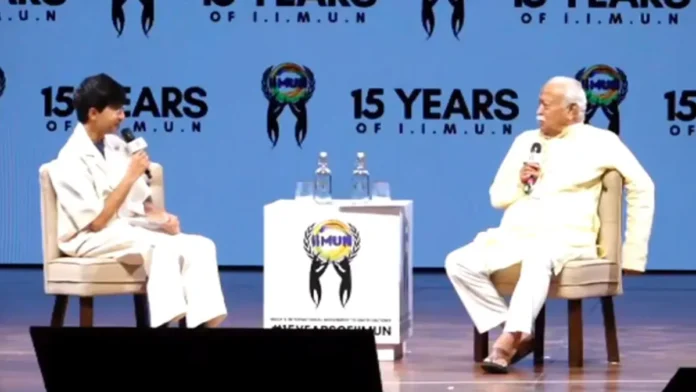
Mohan Bhagwat on Gen Z Protest became one of the most talked-about moments from the India International Movement to Unite Nations (IIMUN) conference in Mumbai after the RSS chief defended democratic dialogue and ended the session with a viral “Clock It” gesture alongside IIMUN founder Rishabh Shah.
The interaction, held at the Nita Mukesh Ambani Cultural Centre, combined a serious discussion on democracy, youth engagement, and constitutional values with a lighthearted conclusion that quickly gained attention on social media.
Viral ‘Clock It’ Gesture Captures Audience Attention
As the session concluded, Bhagwat and Shah exchanged the now-popular “Clock It” gesture, drawing applause and smiles from the audience.
The unexpected moment quickly became one of the conference’s highlights, with attendees and online users widely sharing clips of the interaction.
Youth Protests Are Not Anti-National, Bhagwat Says
During the discussion, Bhagwat emphasized that young people participating in protests should not automatically be labeled anti-national.
He said that those raising public concerns are citizens of India and represent the country’s future. According to him, peaceful protest is a legitimate democratic tool that allows citizens to express their views, encourage dialogue, and build consensus.
Bhagwat added that disagreements should be resolved through discussion and mutual respect rather than confrontation.
Constitution Should Guide Democratic Solutions
The RSS chief stressed that solutions to public issues should always be sought within the framework of the Indian Constitution.
Referring to Dr. B.R. Ambedkar’s constitutional vision, Bhagwat said democratic institutions become stronger when citizens pursue dialogue and resolve differences through constitutional processes.
Gen Z Asks Questions—and That Is Positive
Bhagwat also reflected on the changing mindset of younger generations, describing Generation Z and Generation Alpha as more inquisitive than previous generations.
He said today’s youth rarely accept ideas without questioning them and expect logical, evidence-based explanations before forming opinions.
According to Bhagwat, this shift should be viewed positively because it reflects greater responsibility, honesty, and commitment toward the nation.
India’s Tradition of Open Debate
Drawing on India’s intellectual heritage, Bhagwat referred to the tradition of Shastrartha—structured philosophical debate—where opposing viewpoints are heard before reaching conclusions.
He said modern society would benefit from embracing the same spirit of respectful dialogue and open discussion.