Washington, D.C., United States | July 17, 2026
Trump 2020 Election Claims have reignited political tensions across the United States just months before the country’s crucial 2026 midterm elections, prompting a wave of criticism from leading Democratic figures, including former Vice President Kamala Harris, former House Speaker Nancy Pelosi, Senator Elizabeth Warren, and other senior party leaders.
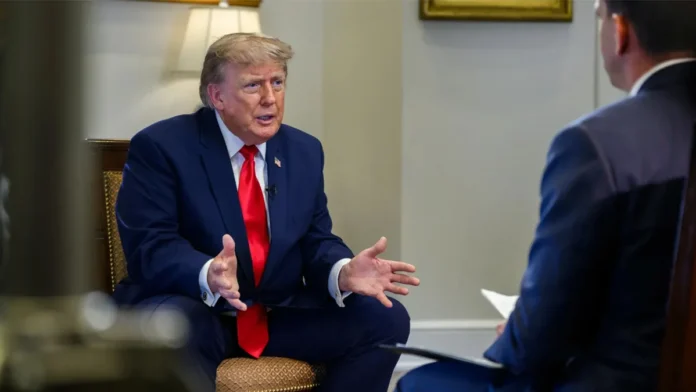
President Donald Trump once again questioned aspects of the 2020 presidential election, alleging foreign interference involving China, Russia, and Iran. His renewed assertions immediately drew sharp responses from Democratic leaders, who rejected the allegations and accused the president of attempting to divert public attention from current political and economic issues.
The exchange has intensified an already polarized political climate as both major parties prepare for one of the most closely watched midterm elections in recent years.
Kamala Harris Rejects Trump’s Election Narrative
Former Vice President Kamala Harris strongly disputed Trump’s latest claims in a post on X (formerly Twitter).
Harris wrote that the 2020 presidential election “was not stolen,” adding that Democrats won the election while Trump lost.
She also criticized the proposed SAVE Act, arguing that it would suppress voter participation and form part of a broader conservative effort to weaken voting rights.
Harris further accused the Trump administration of failing to address major concerns affecting American families, including housing affordability, healthcare costs, childcare expenses, food prices, and fuel costs.
She also argued that the administration was attempting to distract voters from those issues by revisiting disputed claims about the 2020 election.
Harris Calls on Americans to Vote
Harris urged Americans to participate in the upcoming elections, arguing that voting remains one of the strongest ways citizens can influence government policy.
She claimed President Trump wanted voters to lose confidence in the electoral system and suggested that reduced voter turnout would benefit Republicans in the upcoming midterm elections.
Calling the current political climate difficult, Harris encouraged supporters to remain engaged and use the ballot box to hold elected officials accountable.
Democratic Leaders Join the Criticism
Several senior Democratic leaders echoed Harris’ criticism.
Former House Speaker Nancy Pelosi described Trump’s renewed election claims as another example of his refusal to accept the outcome of the 2020 election.
Senator Elizabeth Warren argued that rather than focusing on reducing costs for American families, Trump was once again revisiting allegations about an election held six years ago.
House Democratic Leader Hakeem Jeffries accused the president of promoting conspiracy theories while arguing that Americans remained concerned about the country’s economic challenges.
Newsom Questions Trump Over Epstein Files
California Governor Gavin Newsom also criticized the president, shifting attention to the ongoing controversy surrounding the Jeffrey Epstein files.
Newsom questioned when the remaining Epstein-related documents would be released, arguing that the administration should focus on transparency rather than revisiting disputed election claims.
He further accused Trump of posing a threat to democratic institutions, remarks that reflected broader Democratic criticism following the president’s latest statements.
Senators Kelly, Ossoff and Warnock Respond
Arizona Senator Mark Kelly criticized Trump’s repeated focus on the 2020 election, arguing that if Trump wins elections they are considered legitimate, but if he loses they are described as fraudulent.
Kelly also noted that the election Trump referenced took place while he was serving as president.
Georgia Senator Jon Ossoff said Trump’s latest remarks reflected political frustration rather than leadership, accusing the president of concentrating on past grievances instead of addressing current national challenges.
Meanwhile, Georgia Senator Raphael Warnock commented that Trump continued to revisit an election he lost years ago, suggesting that Americans should instead focus on issues directly affecting their daily lives.
Midterm Elections Raise Political Stakes
The renewed debate comes as both Republicans and Democrats intensify campaigning ahead of the 2026 U.S. midterm elections, which will determine control of Congress and significantly influence the remainder of President Trump’s term.
Election integrity, voting rights, immigration, inflation, national security, and foreign policy are expected to dominate campaign messaging throughout the election season.
Political analysts say renewed arguments over the 2020 election are likely to energize supporters on both sides while reinforcing existing political divisions.
Trump’s Allegations Continue to Divide Washington
Trump has repeatedly maintained that irregularities affected the 2020 presidential election.
Numerous courts, election officials, and previous investigations have examined various allegations related to the election. Democratic leaders continue to reject Trump’s claims and maintain that the election results were legitimate.
The latest exchange highlights how the events of 2020 continue to influence American political discourse nearly six years later.
With campaigning accelerating nationwide, both parties are expected to continue emphasizing sharply contrasting narratives as voters prepare to head to the polls.