WASHINGTON | August 8, 2026
US Russia Sanctions Bill Clears Senate 86-11 in Major Victory for Lindsey Graham’s Legacy; What It Means for Ukraine
US Russia Sanctions Bill: The U.S. Senate has overwhelmingly approved sweeping legislation aimed at squeezing Russia’s energy revenues and increasing economic pressure on President Vladimir Putin, delivering a major posthumous victory for late Republican Sen. Lindsey Graham, one of Ukraine’s most vocal supporters in Congress.
The Senate passed the Lindsey O. Graham Sanctioning Russia and Iran Act of 2026 by an 86-11 vote on Friday, August 7. The official Senate roll call confirms 86 senators voted in favor, 11 opposed the measure and three did not vote. The legislation now faces the House of Representatives and is not yet U.S. law.
The bipartisan measure is designed to target not only Russian officials, banks and energy projects but also countries that remain among the biggest purchasers of Russian oil and natural gas. India and China could be directly affected by its tariff provisions if the bill completes the legislative process and those authorities are used.
What Exactly Did the US Senate Approve?
The legislation represents more than a year of negotiations involving Graham, Democratic Sen. Richard Blumenthal, other bipartisan Senate supporters and the Trump administration.
It would impose primary and secondary sanctions targeting Russian officials, oligarchs and their family members, financial institutions, foreign actors supporting Russia’s war effort and vessels associated with Moscow’s so-called shadow fleet. It also provides authority for targeted tariffs against countries that are among the largest buyers of Russian energy or are significant facilitators of sanctions evasion.
The legislation also contains provisions designed to maintain U.S. sanctions authority restricting funding for Iran’s energy and weapons sectors, explaining why the final bill’s title references both Russia and Iran.
Could India and China Face Tariffs of Up to 100%?
This is one of the most consequential provisions of the bill.
Under the negotiated version, the president would be able to impose tariffs of up to 100% on imported goods from countries that rank among the world’s five largest purchasers of Russian crude oil or natural gas, as well as major countries assisting Russian energy sanctions evasion.
India and China are among the major buyers potentially exposed under the measure. Reuters reported that earlier versions of the legislation contemplated tariffs as high as 500%, but after months of negotiation, the maximum tariff in the revised measure was cut to 100%.
The bill does not mean that a 100% tariff on Indian goods automatically takes effect now. First, the House would have to approve the legislation and President Donald Trump would have to sign it. Even then, implementation would depend on how the tariff provisions and available waivers are applied.
What Exemptions Are Included?
The revised legislation includes exceptions for certain countries that import less than 15% of Russia’s natural gas exports while also taking meaningful steps to reduce their reliance on Russian supplies.
It also provides the president with waiver authority. The White House could waive certain sanctions or restrictions if the president certifies to Congress that doing so is in the U.S. national interest.
That flexibility is significant because the United States would have to balance pressure on Moscow against its broader trade relationships with countries in Asia and Europe.
How Could the Sanctions Help Ukraine?
The potential benefit to Ukraine is primarily economic and strategic rather than direct military assistance.
Russia continues to generate substantial revenue through exports of crude oil, natural gas and other commodities. Supporters of the legislation argue that reducing those revenues would make it more difficult for Moscow to finance its war effort and could give Washington additional leverage to pressure Putin toward negotiations.
The measure would also strengthen sanctions against Russia’s financial sector, energy projects and the shadow fleet of tankers used to move Russian oil outside conventional Western maritime systems.
Ukraine welcomed the Senate vote. Its embassy in Washington described passage as a significant step that increases pressure on Russia. Ukrainian President Volodymyr Zelenskyy had also personally urged U.S. lawmakers to move ahead with tougher economic measures against Moscow.
Still, sanctions do not guarantee a particular military or diplomatic outcome. Their ultimate effect would depend on enforcement, international compliance, changes in Russian trade flows and decisions by large energy-importing nations.
Lindsey Graham’s Long Campaign Ends in a Major Senate Victory
The vote carried particular significance because Graham, a longtime Republican senator from South Carolina, had spent more than a year pushing the Russia sanctions proposal through Congress.
Graham and Blumenthal had worked across party lines on the legislation, arguing that countries buying discounted Russian oil and gas were providing Moscow with revenue that helped sustain the war.
On July 10, Graham and several Senate colleagues announced that they had reached an agreement with the Trump administration on revised legislation. Graham died suddenly the following day, July 11.
The bill was subsequently named in his honor.
Zelenskyy Came to Capitol Hill After Graham’s Funeral
Graham’s death also gave the bill an unusual emotional dimension in Washington.
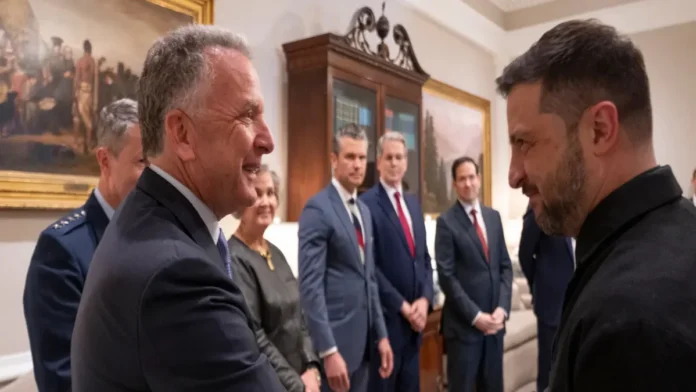
Zelenskyy visited Capitol Hill after Graham’s funeral, met senators from both parties and watched from the Senate gallery as lawmakers took an earlier procedural vote on the sanctions measure.
Blumenthal and other supporters portrayed passage as both a show of support for Ukraine and a continuation of Graham’s foreign-policy legacy.
Darline Graham Takes Her Brother’s Senate Seat
Following Lindsey Graham’s death, South Carolina Gov. Henry McMaster appointed Graham’s sister, Darline Graham, to temporarily fill the vacant Senate seat.
Official Senate records show she was appointed on July 13 and sworn in on July 14.
Darline Graham voted for the legislation and read out the final 86-11 tally in the chamber, drawing applause from senators. She has said continuing work on the sanctions package is part of carrying forward her brother’s effort to help end the Ukraine war.
Why Did 11 Senators Vote Against the Bill?
The opposition was driven largely by concerns over the legislation’s tariff powers rather than opposition to sanctions on Russia itself.
Some Democrats and Republicans argued that giving the president additional power to impose steep tariffs could increase import costs, contribute to inflation and ultimately raise prices for American consumers.
Republican Sen. Rand Paul of Kentucky was the only Republican to vote against final passage. Most of the other opponents were progressive or Democratic-aligned senators, according to the official Senate roll call.
An amendment backed by Paul and Democratic Sen. Ron Wyden that would have removed the tariff authority was rejected. Democratic Sen. Raphael Warnock had also raised concerns over the tariff language but said he received a written commitment from U.S. Trade Representative Jamieson Greer concerning guardrails around the authority.
Importantly, the bill’s tariff authority rests with the president; it would not simply allow the U.S. trade representative to independently set the sanctions tariffs.
Why Was the Original 500% Tariff Plan Reduced?
The tariff provision was one of the biggest obstacles during negotiations.
Earlier iterations of Graham’s proposal envisioned penalties as high as 500% against countries continuing major purchases of Russian energy. The revised version narrowed the mechanism and capped potential tariffs at 100%, focusing them on the largest Russian oil and gas buyers and major sanctions evaders.
The changes were intended to maintain economic pressure on Russia while addressing concerns that sweeping tariffs could damage relations with U.S. partners and increase prices at home.
What Sanctions Could Russia Face?
If enacted and implemented, the legislation could expand pressure across several parts of Russia’s economy. It covers senior Russian officials, including Putin and other political and military figures; Russian banks and financial institutions; major energy projects; oligarchs and other sanctioned actors; Russia’s shadow tanker fleet; and foreign entities supporting sanctions evasion.
The package also seeks to pressure Moscow indirectly by making continued large-scale purchases of Russian energy potentially more costly for other countries.
What Happens to the Russia Sanctions Bill Now?
Senate approval is a major legislative milestone, but it is not the final step.
The measure must now clear the House of Representatives. The House is on its summer recess and is expected to return on August 31, when supporters hope to secure a vote. If the House passes the same legislation, it would then go to President Trump for his signature before becoming law.
The size of the Senate vote gives the bill significant bipartisan momentum. However, resistance remains in the House, particularly over the tariff authority. Democratic Reps. Gregory Meeks and Don Beyer, among others, have raised concerns that the measure could grant the president overly broad trade powers and increase costs for U.S. businesses and consumers.
What Was Lindsey Graham’s Cause of Death?
Graham died at age 71 after what his office initially described as a brief and sudden illness.
Preliminary findings from the District of Columbia medical examiner said he died from an aortic dissection related to arteriosclerotic cardiovascular disease. Reports noted that further testing was part of the medical examiner’s process.
The verified medical findings are important because Graham’s unexpected death generated unsupported speculation online. There has been no credible evidence cited by authorities establishing foul play.
What the Vote Means for Putin, Ukraine and India
For Putin, the Senate vote signals strong bipartisan support in Washington for attacking the energy revenue that helps underpin Russia’s economy and war effort.
For Ukraine, the bill could create additional economic leverage against Moscow if it becomes law and is aggressively enforced.
For India, the legislation warrants particularly close attention because its provisions could affect major purchasers of Russian crude. But Senate passage alone does not mean India has been hit with a new 100% tariff. The bill must still clear the House, receive presidential approval and then be implemented under its statutory provisions.
That distinction will be crucial as Washington, New Delhi, Moscow and other major energy capitals assess what could become one of the most consequential U.S. sanctions measures of the Russia-Ukraine war.