By Team INVC | INVC NEWS
WASHINGTON, United States | September 11, 2026 —
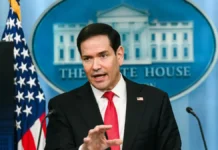
Trump Saudi Houthi Strikes have become the latest flashpoint in the widening Middle East crisis after a report said Saudi Crown Prince Mohammed bin Salman urged US President Donald Trump to launch direct military strikes against Yemen’s Houthis — and Trump declined.
The reported exchange reveals a widening strategic gap between Washington and Riyadh over how aggressively to respond to the Iran-aligned group as the Houthis intensify pressure on Saudi Arabia and expand their position along Yemen’s Red Sea coast.
Reuters, citing an Axios report based on two US officials, said Crown Prince Mohammed bin Salman called Trump twice on Thursday and pressed for military action.
Trump rejected the request, according to the report.
Reuters said it could not independently verify the reported calls, while neither the White House nor the Saudi embassy immediately commented.
The reported decision is nevertheless significant because Washington is already deeply involved in a confrontation with Iran and appears reluctant to open another direct military front in Yemen.
Why Saudi Arabia Reportedly Asked Trump to Strike the Houthis
Saudi Arabia faces a rapidly worsening security situation on its southern border.
Iran-aligned Houthi forces have stepped up attacks against Saudi territory and energy infrastructure while also making important gains inside Yemen.
Those attacks have increased pressure on Riyadh to respond more forcefully.
The Houthis recently seized the strategically important Yemeni port city of Mokha, strengthening their presence close to the Bab el-Mandeb Strait.
That waterway connects the Red Sea with the Gulf of Aden and serves as one of the world’s most important maritime trade routes.
Control over areas surrounding the strait could give the Houthis greater ability to threaten shipping and Saudi economic interests.
Trump Does Not Want Another Military Front
The reported refusal points to a clear US concern.
Washington is already focused on Iran and the Strait of Hormuz.
Opening a second major theater against the Houthis could require additional aircraft, ships, intelligence assets and logistical resources.
US officials have reportedly told Saudi counterparts that Trump’s priority is to keep American forces concentrated on Iran while protecting shipping through the Strait of Hormuz.
That does not mean Washington is abandoning Saudi Arabia.
Instead, the United States appears to be considering increased support for Riyadh while stopping short of launching a new direct military campaign.
CENTCOM Commander Travels to Saudi Arabia
The situation has become serious enough to trigger high-level military coordination.
Admiral Brad Cooper, commander of US Central Command, traveled to Saudi Arabia on Thursday for urgent discussions, according to the report cited by Reuters.
CENTCOM oversees American military operations across the Middle East.
His visit highlights the extent to which the Houthi escalation has become a wider regional-security concern.
Washington now faces a difficult balancing act.
It wants to deter further attacks on Saudi Arabia.
It also wants to protect international shipping.
However, it does not want those objectives to pull US forces into another open-ended conflict.
Houthi Capture of Mokha Changes the Equation
The Houthis’ advance into Mokha has raised the stakes dramatically.
The port sits roughly 80 kilometers from the Bab el-Mandeb Strait.
That strait is essential for ships moving between the Indian Ocean, Red Sea and Suez Canal.
A significant share of global commerce normally passes through the route.
If Houthi forces consolidate their grip along Yemen’s Red Sea coast, they could gain additional leverage over maritime traffic.
That threat matters even more because shipping through the Strait of Hormuz has already faced serious disruption.
Global energy markets are therefore dealing with pressure at two critical chokepoints at the same time.
Why Bab el-Mandeb Matters to the World
The Bab el-Mandeb Strait is only about 29 kilometers wide at its narrowest point.
Yet its economic importance is enormous.
Oil tankers, container ships and other commercial vessels use the corridor to move between Asia and Europe.
Around 7% of global oil output normally passes through the waterway.
Broader estimates suggest roughly 12% of global goods trade uses the route.
Any sustained disruption would force some ships to travel around Africa instead.
That would increase voyage times, freight costs and insurance expenses.
Consumers could ultimately feel those costs through higher prices.
Houthis Have Declared Pressure on Saudi Arabia
The Houthis have increasingly turned their attention toward Saudi Arabia.
The group has declared a naval blockade against the kingdom and launched attacks on Saudi targets.
Recent strikes hit areas including Jazan, Abha, Najran and Khamis Mushait.
Those attacks injured dozens of people and affected energy-related infrastructure.
Saudi Arabia has responded with military action against Houthi positions inside Yemen.
The escalation threatens to unravel years of efforts to prevent Yemen’s conflict from returning to full-scale regional war.
Why MBS Wants Stronger US Action
For Crown Prince Mohammed bin Salman, the current situation creates several risks at once.
Saudi Arabia must protect oil facilities.
It must defend southern cities.
It must secure Red Sea trade routes.
It must also prevent the Houthis from transforming territorial gains in Yemen into a stronger military threat.
Direct US strikes could potentially weaken Houthi infrastructure and reduce pressure on Saudi forces.
American military power would also send a strong deterrent message.
However, that approach carries major risks.
A US bombing campaign could trigger further Houthi retaliation against Saudi Arabia, American bases or commercial shipping.
Iran could also respond.
That is one reason Washington appears cautious.
Iran Factor Makes Any Strike More Dangerous
The Houthis are closely aligned with Iran.
Tehran rejects claims that it directly controls every Houthi decision, but the group forms part of a broader network of Iran-aligned armed forces across the region.
That relationship makes a US attack on the Houthis difficult to isolate from the wider Iran conflict.
Washington could launch strikes intended only to weaken Houthi military capabilities.
Tehran might still interpret those attacks as another stage of the confrontation with Iran.
The result could be escalation rather than deterrence.
Trump Is Already Managing the Iran War
The broader Iran conflict explains much of Washington’s caution.
US forces have been trying to restore shipping through the Strait of Hormuz while applying severe economic and military pressure on Tehran.
The United States has made some progress in improving tanker movement through the strait.
However, the conflict remains unresolved.
Oil exports from Iran have fallen sharply.
Fighting continues.
Diplomatic progress remains limited.
The possibility of further Iranian retaliation therefore remains high.
Opening another major campaign in Yemen could stretch American resources and make the wider conflict harder to control.
Oil Prices Show Why Washington Is Worried
Energy markets are already responding to the regional escalation.
Brent crude settled above $107 a barrel on Thursday after jumping more than 6%.
US crude also climbed above $100.
The rally reflected growing fears about tanker attacks, restrictions around Hormuz and the Houthis’ advance near the Red Sea.
That creates a political problem for Trump.
Higher oil prices can push up gasoline and transportation costs in the United States.
They can also increase inflation.
A new military campaign that sends oil prices even higher would carry economic consequences far beyond Yemen.
Saudi Oil Infrastructure Remains a Major Risk
Saudi Arabia is one of the world’s most important crude exporters.
Attacks on its oil infrastructure can quickly influence global prices.
Recent Houthi strikes have therefore raised particular concern.
The danger does not come only from direct damage.
Even unsuccessful attacks can increase insurance costs and create uncertainty around supply.
Markets typically add a geopolitical risk premium when traders believe major producers or shipping lanes could face disruption.
That premium is already visible in crude prices.
Red Sea Crisis Could Return in Full Force
Shipping companies have experienced severe Red Sea disruption before.
Houthi attacks beginning in late 2023 caused major carriers to reroute vessels around the Cape of Good Hope.
That added thousands of kilometers to some journeys.
Longer voyages increased fuel consumption, shipping times and freight costs.
If the current Houthi expansion leads to another sustained wave of attacks, those pressures could return.
The impact would not remain limited to Saudi Arabia.
European and Asian trade could also suffer.
Saudi Arabia Wants an International Maritime Coalition
Riyadh has already been seeking international support.
Saudi Arabia has pushed for a coalition designed to protect commercial shipping in the Red Sea.
That effort reflects growing concern that the kingdom cannot treat the Houthi threat as a purely domestic or Yemeni security problem.
The Red Sea is a global trade artery.
Saudi officials therefore want more countries to share responsibility for protecting it.
Washington may find maritime security cooperation easier to support than a direct offensive campaign against Houthi territory.
Could the US Still Strike Later?
Trump’s reported rejection does not necessarily rule out future military action.
The security environment is changing quickly.
A major Houthi attack on US forces, American citizens or strategically important shipping could alter Washington’s calculation.
Another large attack on Saudi energy infrastructure could also increase pressure for intervention.
For now, however, the administration appears to prefer containment and support over a new direct military campaign.
That distinction remains important.
Pakistan and the Regional Defense Question
Another complication involves Saudi Arabia’s regional security partnerships.
Pakistan said this week that no military response had been discussed under its defense arrangement with Saudi Arabia and Turkey in relation to Houthi attacks.
The clarification shows how cautious regional governments remain.
Saudi Arabia wants stronger protection.
Yet its partners do not necessarily want to become directly involved in Yemen’s renewed conflict.
That leaves Riyadh searching for a balance between deterrence and escalation.
What Does This Mean for Iran?
From Tehran’s perspective, Houthi pressure creates strategic leverage.
The Houthis can threaten Saudi territory and Red Sea shipping while Iran faces pressure elsewhere.
That forces Washington and its allies to divide attention across multiple fronts.
However, the strategy also carries risks for Iran.
If Houthi attacks trigger a major US or Saudi response, Tehran could face even greater military pressure.
Iran therefore has reasons both to benefit from Houthi leverage and to avoid uncontrolled escalation.
What Does This Mean for Saudi Arabia?
Saudi Arabia faces an uncomfortable situation.
The kingdom wants to prevent the Houthis from gaining enough power to threaten its borders and energy infrastructure.
At the same time, Riyadh has spent years trying to reduce its exposure to the Yemen war.
A renewed ground-heavy or air-heavy military campaign would carry financial, political and humanitarian costs.
Saudi Arabia therefore appears to want greater American military pressure without necessarily returning to a full-scale war of its own.
Trump’s reported refusal complicates that strategy.
What Does This Mean for the United States?
Washington now has to reassure a close security partner while limiting its own exposure.
That will likely mean more intelligence sharing, defensive assistance, maritime coordination and military planning.
The US could also strengthen Saudi air and missile defenses.
Those measures would support Riyadh without immediately committing American forces to a new bombing campaign.
However, such a strategy only works if Houthi escalation remains manageable.
A major attack could quickly change the debate.
Why This Story Matters for India
The consequences extend to India as well.
India depends heavily on imported crude.
Higher oil prices increase the country’s import bill and can put pressure on inflation and the rupee.
The Red Sea also forms a critical part of India’s trade route toward Europe.
Disruption around Bab el-Mandeb can increase freight costs and delivery times for Indian exporters and importers.
Therefore, a Saudi-Houthi confrontation combined with continued tension around Hormuz creates a double risk for India’s energy and trade security.
A Two-Chokepoint Crisis Is the Bigger Danger
The most serious global risk is not simply Yemen.
It is the possibility of simultaneous disruption at both Hormuz and Bab el-Mandeb.
Hormuz is critical for oil leaving the Persian Gulf.
Bab el-Mandeb connects the Red Sea with the Gulf of Aden.
Together, the two waterways form vital links in global energy and merchandise trade.
Pressure on both routes at the same time would create an unusually dangerous situation.
That explains why Washington is trying to prevent the Yemen crisis from becoming another uncontrolled front.
Trump’s Refusal Sends a Political Signal
The reported decision also says something about Trump’s current Middle East strategy.
The US president has repeatedly used military force or threatened escalation against Iran.
However, his reported rejection of the Saudi request suggests he is not willing to expand direct American combat operations automatically every time a regional ally faces pressure.
Washington appears to be drawing a distinction between defending strategic routes and entering another war.
Whether that restraint can survive further Houthi escalation remains uncertain.
What Happens Next?
Several developments will determine whether the crisis worsens.
Watch the outcome of US-Saudi military coordination.
The next Houthi moves around Mokha and the Bab el-Mandeb Strait will matter enormously.
Any fresh missile or drone attack on Saudi oil infrastructure could shift Washington’s position.
Changes in Red Sea shipping patterns will also provide an early indication of how seriously commercial companies view the threat.
Oil prices will remain another critical signal.
A sustained move higher would indicate markets expect prolonged disruption.
Final Word
Trump Saudi Houthi Strikes are now at the center of a larger strategic question facing Washington.
Saudi Arabia reportedly wants the United States to strike the Houthis directly.
President Donald Trump has so far said no, according to the Axios report cited by Reuters.
That does not mean the United States is stepping away from Saudi security.
Instead, Washington appears determined to support Riyadh while avoiding another direct military front.
The reason is straightforward.
The United States is already managing a costly confrontation with Iran.
The Strait of Hormuz remains unstable.
Oil prices have climbed above $100.
Houthi advances around the Red Sea threaten another critical shipping route.
Opening a new American campaign in Yemen could connect all of those crises into one much larger war.
For Crown Prince Mohammed bin Salman, however, restraint carries its own danger.
The Houthis are gaining territory, threatening Saudi infrastructure and increasing their ability to pressure Red Sea shipping.
That leaves Washington and Riyadh confronting the same threat with different ideas about how far to go.
For now, Trump has reportedly chosen containment over another war.
The next major Houthi strike could determine how long that decision lasts.