NEW DELHI, India | August 27, 2026 —
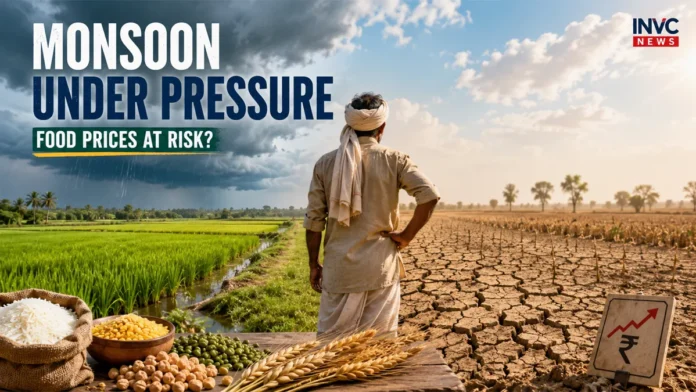
India Monsoon 2026 is emerging as a major economic risk as rainfall remains well below normal and a strengthening El Niño raises the possibility that the June-September season could finish with a deficit of around 15%, potentially making it India’s weakest southwest monsoon since 2009.
The 15% figure is not yet an official final seasonal outcome.
As of August 24, India had received approximately 13% less rainfall than the long-period average since the monsoon season began on June 1.
Rainfall was 35.4% below normal in June, recovered to a small 1% surplus in July, and weakened again in August, where rainfall was running about 15% below normal.
Senior weather officials have indicated that September could remain dry across large parts of the country if El Niño strengthens further.
The India Meteorological Department is expected to issue its official September rainfall outlook around the end of August.
For households, the issue is no longer simply whether it rains.
The bigger question is what a weak monsoon could do to food prices, farm incomes and eventually RBI interest-rate decisions.
Could India Really End the Monsoon 15% Below Normal?
It is possible, but not confirmed.
Current projections suggest seasonal rainfall could finish at roughly 85% of the long-term average, equivalent to a deficit of around 15%.
If that happens, it would represent the lowest monsoon rainfall since 2009.
However, rainfall during September can still materially change the final number.
A fresh weather system or better-than-expected rainfall could reduce the deficit.
Conversely, a stronger El Niño and early monsoon withdrawal could make the shortage worse.
That is why the correct description today is:
India is at risk of a roughly 15% monsoon deficit—not that a 15% deficit has already been officially recorded.
Latest IMD monsoon information:
https://mausam.imd.gov.in/responsive/monsooninformation.php
Why September Rain Matters So Much for Farmers
September is not simply the last month of the southwest monsoon.
It is a crucial crop-development period.
Many kharif crops planted during June and July need adequate soil moisture as they mature.
Poor September rainfall can reduce yields even when the crop was planted successfully earlier in the season.
The crops considered particularly vulnerable include:
- Pulses
- Corn
- Soybean
- Cotton
The problem can then continue into the winter season.
Low rainfall can leave less moisture in agricultural soil and reduce reservoir recharge, potentially affecting rabi crops such as:
- Wheat
- Rapeseed and mustard
- Other winter crops
This means the impact of a weak 2026 monsoon could potentially extend well beyond September.
What Could Happen to Pulses and Dal Prices?
Pulses are one of the most important categories to watch.
India is both a major producer and consumer of pulses, and dal is a staple source of protein for millions of households.
A reduction in yields could tighten domestic supply and increase dependence on imports.
That can put pressure on prices of products such as:
- Tur or arhar dal
- Urad
- Moong
- Other pulses
Pulses are particularly important for inflation because even relatively small price increases are quickly noticed in household food budgets.
If September rainfall remains weak in major producing regions, dal prices could therefore become one of the clearest consumer impacts of the monsoon deficit.
Will Rice Prices Rise?
Rice deserves a more nuanced answer.
Not every rice-producing area is facing the same rainfall situation.
Some eastern regions could receive relatively better rainfall in September, and substantial areas of Indian paddy cultivation also have access to irrigation.
That provides some protection.
However, monsoon distribution matters as much as the national headline rainfall number.
Poor rainfall at critical crop stages can reduce yields or crop quality in affected districts.
A weak monsoon can also increase irrigation costs if farmers need to rely more heavily on groundwater and pumps.
So a 15% national deficit would not automatically mean a nationwide rice shortage.
But it would increase the importance of crop yields, government stocks and regional rainfall distribution when determining prices later in the year.
Wheat Risk May Appear Later
Wheat is not a southwest-monsoon crop, but that does not mean it is immune.
India’s main wheat crop is planted during the rabi season after the monsoon ends.
Farmers rely partly on:
- Soil moisture left by monsoon rainfall
- Reservoir levels
- Irrigation availability
- Winter weather
If the monsoon ends sharply below normal, dry soils and weaker reservoir recharge could complicate winter planting in some areas.
That does not guarantee lower wheat output.
But it adds another weather risk at a time when global food and energy markets are already volatile.
Food Inflation Is Already Rising
The monsoon concern is becoming more important because food inflation has already accelerated.
India’s Consumer Price Index rose 4.45% year over year in July 2026, according to official government data.
Food inflation measured by the Consumer Food Price Index reached 5.52%.
The figures were:
Headline CPI: 4.45%
Food inflation: 5.52%
Rural inflation: 4.84%
Urban inflation: 3.96%
Official July CPI data:
https://www.pib.gov.in/PressReleasePage.aspx?PRID=2298247&lang=2®=48
This means India is entering the final phase of the monsoon with food prices already moving higher.
Also Read – : India Retail Inflation Rises to 3.93% as Food Prices Climb and RBI Faces Fresh Policy Challenge
Sugar Shows How Weather Can Reach Household Budgets
Sugar is already providing a useful example of the link between weather and consumer prices.
Domestic sugar supplies have tightened and prices have risen sharply, prompting India to permit duty-free raw-sugar imports.
Also Read – : Sugar Prices Surge 40%: India Allows 1 Million Tonnes of Duty-Free Imports Ahead of Festival Season
Poor weather does not affect every commodity in the same way.
But when several food categories experience supply pressure simultaneously, the impact becomes much more visible in headline inflation.
El Niño Is the Big Weather Risk
El Niño develops when parts of the central and eastern equatorial Pacific become unusually warm.
It can disrupt atmospheric circulation around the world and has historically been associated with weaker rainfall over India during many years.
The current El Niño is strengthening.
That is important because the second half of the monsoon is often when El Niño’s influence becomes more visible.
INVC NEWS had already highlighted this risk earlier in the season.
Also Read – : Monsoon 2026 Super El Niño Warning: Forecast Models Signal Potential Threat to India’s Rainfall
The concern now is that the risk discussed earlier in the year is beginning to appear in actual rainfall data.
Could Food Prices Force RBI to Raise Interest Rates?
Possibly—but not automatically.
The Reserve Bank of India does not change interest rates because one crop fails or one month of food prices rises.
It looks at whether inflation is becoming persistent and spreading across the economy.
But food carries a large weight in India’s consumer inflation basket.
If weak monsoon conditions push prices of pulses, vegetables, cereals and edible oils higher at the same time, headline inflation could remain elevated for longer.
That could make it harder for the RBI to consider rate cuts and could eventually strengthen the case for tighter monetary policy if inflation becomes persistent.
At present, however, no rate increase should be described as inevitable.
The RBI will still be watching:
- Food inflation
- Core inflation
- Crude-oil prices
- Economic growth
- Rupee movement
- Future crop output
Rural India Could Feel the Impact Twice
A weak monsoon can hurt rural households in two different ways.
First, lower crop yields can reduce farm income.
Second, higher food prices can increase household expenses.
That double impact matters because rural consumption plays an important role in demand for:
- Two-wheelers
- Tractors
- FMCG products
- Consumer durables
- Building materials
- Financial services
A severe agricultural slowdown can therefore spill beyond farmers and influence corporate earnings and India’s broader economic growth.
What Consumers Should Watch Next
Four indicators will tell us whether the risk is becoming more serious.
September Rainfall Forecast
IMD’s official September outlook will be the next major weather signal.
Actual Rainfall Deficit
A final deficit closer to 8% would be materially different from one around 15%.
Crop Yield Estimates
Planting acreage alone does not tell investors or consumers how much food will eventually be harvested.
Food Prices
Pulses, vegetables, cereals, sugar and edible oils deserve particularly close attention.
Does a Weak Monsoon Mean Food Prices Will Definitely Surge?
No.
India has several buffers.
Government food stocks, imports, irrigation, state-level rainfall differences and policy intervention can reduce the impact of poor weather.
The government can also respond through measures such as:
- Duty-free imports
- Release of buffer stocks
- Export restrictions
- Stockholding limits
- Open-market sales
That is why a poor monsoon does not automatically translate into a food crisis.
But it increases the probability of supply pressure—and reduces the margin for further weather shocks.
The Biggest Question Is Now September
India has already experienced a highly uneven monsoon.
June was exceptionally weak.
July provided temporary relief.
August has again disappointed.
The next few weeks may therefore determine whether 2026 becomes merely a below-normal monsoon year or the country’s weakest rainfall season since 2009.
For households, the outcome could eventually show up not on a weather map—but at the grocery counter.
Dal, vegetables, edible oil, cereals and later wheat prices could all become part of the story if September rainfall fails again.
For the RBI, that would turn a weather problem into an inflation problem.
And for India’s economy, it would make the final month of the monsoon one of the most important economic events of the year.