By Team INVC | INVC NEWS
Published: October 9, 2026 | 07 : 08 AM IST
NEW DELHI, India | October 9, 2026 — Govardhan Puja 2026 has created a practical question for families preparing their Diwali celebrations: should they perform the worship on November 9 or November 10? The answer requires a location-specific calendar check, because the published panchang listings do not assign the same observance date to every city.
Drik Panchang lists Tuesday, November 10, for New Delhi, with a morning worship window. However, its Mumbai and Jaipur listings place Govardhan Puja on Monday, November 9, with afternoon-to-evening timings.
The distinction matters when arranging family worship, preparing Annakut offerings or planning a temple visit. Before choosing a date from a general festival graphic, check the city and tradition that the calendar follows.
Govardhan Puja 2026: Dates and Timings at a Glance
| City | Listed Observance Date | Puja Muhurat |
| New Delhi | Tuesday, November 10 | 6:40 AM–8:50 AM |
| Mumbai | Monday, November 9 | 3:46 PM–6:02 PM |
| Jaipur | Monday, November 9 | 3:28 PM–5:39 PM |
All timings above are in Indian Standard Time and follow Drik Panchang’s city-specific listings.
These examples should not serve as a substitute for another city’s calendar. Families elsewhere should consult their local panchang or the temple where they intend to worship.
Why Both November 9 and November 10 Appear
The festival follows Kartik Shukla Pratipada, the first lunar day of the bright fortnight of Kartik.
For the Indian locations checked, Drik Panchang gives the following tithi period:
- Pratipada begins: November 9, 2026, at 12:31 PM IST.
- Pratipada ends: November 10, 2026, at 2:00 PM IST.
The lunar date therefore extends across parts of two civil-calendar days. Meanwhile, the city listings identify different worship windows within that period.
This is why a tithi’s starting date alone does not settle every family’s observance. Equally, the familiar description of Govardhan Puja as the day after Diwali does not replace a proper panchang check.
For Delhi readers following the cited calendar, the relevant entry is November 10. For Mumbai and Jaipur readers following the same provider, the listed date is November 9.
The Story Behind Govardhan Puja
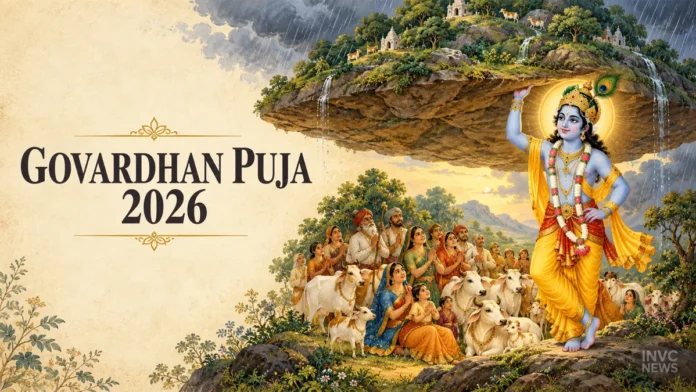
In the traditional Krishna narrative, the people of Braj prepare to worship Indra, the deity associated with rain. Krishna encourages them instead to honor Govardhan Hill, which supports their cattle and pastoral lives.
According to the sacred story, Indra responds with a fierce storm. Krishna then lifts Govardhan Hill on his little finger, creating shelter for the villagers and their cattle.
Tradition describes him holding the hill for seven days as the storm continues. Eventually, Indra recognizes Krishna’s divine power and brings the rain to an end.
Devotees remember this episode through Govardhan worship. The story emphasizes protection, humility and gratitude for the natural surroundings that sustain a community.
Why the Festival Is Also Called Annakut
Govardhan Puja also carries the name Annakut, commonly understood as a mountain of food.
Devotees prepare food offerings for Lord Krishna, often arranging a variety of dishes together. Grains, vegetables and other preparations form part of the observance, with details varying among households and temples.
The offering connects the celebration with nourishment and gratitude. After worship, devotees share the food as prasad.
However, families need not assume that every temple follows an identical menu or ceremony. Local customs shape the preparation and presentation of the offerings.
How Families Can Prepare
Start by confirming the date and worship window for your location. Then check your family’s established practice or speak with the temple priest.
In households that follow the custom, devotees prepare a symbolic representation of Govardhan using cow dung and decorate it before worship. Others participate through temple ceremonies and Annakut offerings.
Plan the food preparation around the confirmed schedule. If you intend to visit a temple, verify its Annakut program separately, since its public ceremony may follow a particular timetable.
A little advance checking can prevent confusion between the beginning of Pratipada, the recommended puja window and the temple’s event time.
Which Date Should You Mark?
Use the date that matches your local panchang and worship tradition.
The city listings checked for this report place New Delhi’s Govardhan Puja on November 10 and Mumbai’s and Jaipur’s on November 9. Sharing the city name alongside the date makes the information more useful for relatives planning their celebrations.
Beyond the calendar question, the festival’s central message remains the same: devotion to Krishna, gratitude for food and nature, and care for the community.
Calendar note: Dates and muhurats follow the Drik Panchang listings checked for the specified cities. Confirm local temple arrangements before making final plans.