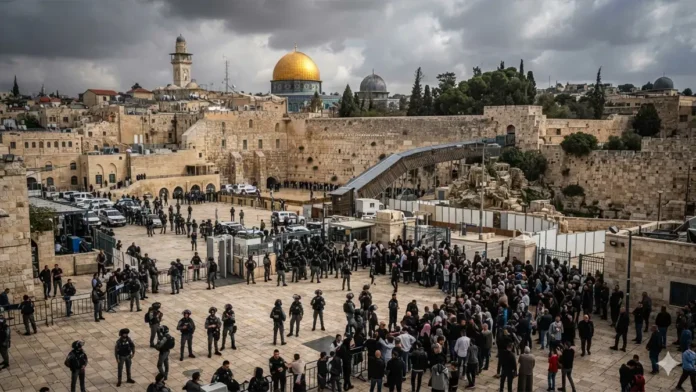
Jerusalem | August 5, 2026
Tensions in Jerusalem have intensified once again as concerns grow over developments at the Al-Aqsa Mosque compound, one of Islam’s holiest sites. Amid the ongoing Iran-Israel conflict, Jordan has convened an emergency meeting of Arab and Islamic foreign ministers, warning that any attempt to alter the historic status quo at the site could trigger a wider religious conflict across the Middle East.
Jordan has accused Israel of allowing actions that threaten the long-standing arrangements governing the Al-Aqsa compound, also known to Jews as the Temple Mount.
Jordan Warns of a Wider Regional Crisis
Jordan, which serves as the official custodian of the Islamic holy sites in Jerusalem under longstanding international agreements, described the situation as extremely serious.
Jordanian Foreign Minister Ayman Safadi warned that any change to the historical and legal status of Al-Aqsa could ignite widespread religious tensions across the region.
He stressed that Jerusalem had become “a powder keg” and urged the international community to intervene before the situation escalates further.
Emergency Meeting of Muslim Nations
Jordan has called an emergency meeting of foreign ministers from Arab League and Islamic countries to discuss the crisis.
According to officials, representatives from the following countries are expected to participate:
- Turkey
- Indonesia
- Malaysia
- Pakistan
- Arab League member states
The meeting aims to coordinate diplomatic efforts and increase international pressure to preserve the historical status of the Al-Aqsa Mosque compound.
Why Is the Al-Aqsa Mosque So Sensitive?
The Al-Aqsa Mosque and the Dome of the Rock are among Islam’s holiest religious sites.
Under the current status quo:
- Jordan oversees the administration of the Islamic holy sites.
- Muslims are permitted to pray inside the compound.
- Non-Muslim visitors, including Jews, may visit during designated hours but are generally not permitted to conduct religious prayers under existing arrangements.
The site is also revered by Jews as the location of the ancient Temple Mount, making it one of the most sensitive religious locations in the world.
Israeli Visit Sparks Fresh Controversy
According to Jordanian officials, tensions escalated after Israeli National Security Minister Itamar Ben-Gvir reportedly entered the compound on July 23 along with more than 2,000 Israeli visitors, where religious rituals were performed.
Jordan views such visits as a violation of the long-standing arrangements governing the holy site and argues that repeated incursions risk destabilizing the entire region.
Jordan Raises Concerns Over West Bank
Jordan also expressed concern over the possibility of increased instability in the West Bank.
Officials warned that any large-scale displacement of Palestinians could result in a significant refugee influx into Jordan, placing additional pressure on the country’s economy, infrastructure, and social stability.
Jordan reiterated that any attempt to forcibly displace Palestinians from their homeland would cross a “red line.”
Water Dispute Adds to Diplomatic Tensions
The diplomatic dispute has also extended beyond Jerusalem.
Jordan claims that Israel has reduced water supplies to the country following Amman’s criticism of Israeli military operations in Gaza. For Jordan, one of the world’s most water-scarce nations, any reduction in water supply presents a significant challenge.
The issue has further strained bilateral relations and fueled domestic criticism of Jordan’s ties with both Israel and the United States.
Israel’s Position
Israeli authorities have consistently maintained that they are committed to preserving freedom of access to Jerusalem’s holy sites while ensuring security.
Israel considers the Temple Mount to be Judaism’s holiest site and has stated that visits by Jewish worshippers are conducted under security arrangements. However, disputes over access, prayer rights, and administrative control remain among the most sensitive issues in the Israeli-Palestinian conflict.
Regional Outlook
With tensions already elevated due to the broader Iran-Israel conflict, developments at the Al-Aqsa Mosque have added another layer of complexity to an already volatile regional situation. Diplomatic efforts by Jordan and other Muslim-majority nations are expected to focus on preventing further escalation while preserving the site’s historic religious arrangements.