
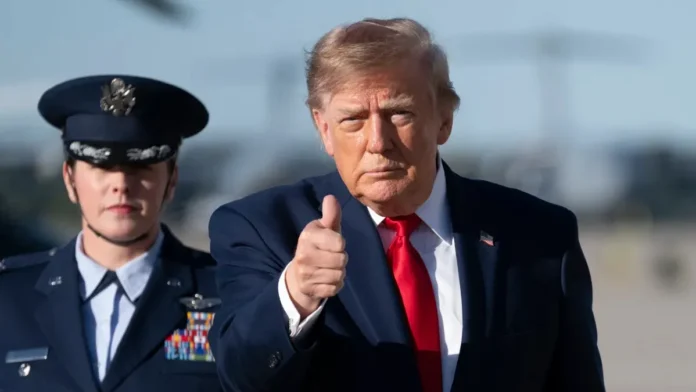
WASHINGTON, November 3, 2026 — American voters are heading to the polls on Tuesday in a crucial midterm election that could reshape the balance of power in Washington and deliver a significant verdict on President Donald Trump’s second term. With economic dissatisfaction, tariffs and the ongoing conflict with Iran dominating the campaign, the election has become a test of how voters view the administration’s performance after nearly 21 months in office.
The outcome will determine control of the 435-member House of Representatives and the 100-member Senate. Democrats are seeking to regain control of Congress, while Republicans are fighting to preserve their majorities and prevent a shift in Washington that could constrain Trump’s legislative agenda.
More than 57 million Americans had already cast their ballots through early voting and mail-in voting by Monday, according to the Associated Press. Millions more are expected to vote on Election Day.
Why the 2026 Midterms Matter for Donald Trump
Midterm elections take place halfway through a president’s four-year term. Although Trump is not personally on the ballot, the results will be widely viewed as a referendum on his leadership, economic policies and handling of international affairs.
Historically, the party holding the White House often loses congressional seats in midterm elections. Trump acknowledged that challenge during his final campaign appearances, noting that sitting presidents frequently struggle to win midterm elections.
The president spent the final weeks campaigning across several states, urging Republican supporters to turn out. At one rally, he asked voters to behave as though he himself were on the ballot.
Trump also used his final campaign appearances to defend his record and criticize Democrats. During a speech near Washington’s Reflecting Pool, he attacked Democratic leaders and argued that their policies would undermine his administration’s achievements.
However, the campaign’s central challenge has been the gap between the administration’s claims of economic progress and voters’ concerns about the cost of everyday life.
Economic Pressure Becomes a Major Election Issue
The economy has emerged as one of the defining issues of the 2026 midterms. While the US economy recorded annualized growth of 3.4% in the latest quarter, many households remain concerned about inflation, fuel prices, groceries, housing and borrowing costs.
According to Reuters, the US unemployment rate stood at 4.2% in September, while economic growth remained relatively strong. Yet consumer sentiment has weakened, reflecting the pressure people continue to experience when paying for essential goods and services.
Inflation has remained above the Federal Reserve’s 2% target. Tariffs imposed by the Trump administration have contributed to concerns about import costs, while the US-Israeli conflict with Iran has pushed up energy prices and added pressure to household budgets.
Reuters reported that consumer prices and average hourly earnings had both increased by approximately 5.5% since Trump returned to office in January 2025. This means that, in broad purchasing-power terms, workers have seen little overall improvement.
The political consequences are significant. Voters who expected rapid relief from rising prices are now assessing whether the administration’s economic policies have delivered the results they were promised.
Democrats Lead in the National Congressional Poll
National polling has indicated a challenging environment for Republicans.
The RealClearPolitics average for the generic congressional ballot, covering polls conducted from October 9 to November 1, showed Democrats with 52.1% support, compared with 43.3% for Republicans. That represented an 8.8-point Democratic advantage in the polling average.
A generic ballot measures voters’ preferences for the two parties in congressional elections. It does not directly predict the number of seats either party will win, because individual district contests, candidate strength and turnout can produce different results.
The Associated Press also reported that a recent AP-NORC poll found only 35% of US adults approving of Trump’s performance as president. Approval of his handling of the economy was even lower, at 25%.
These figures underline the political pressure facing Republicans, although the final outcome will depend on turnout and the results in closely contested districts and states.
House of Representatives: Democrats Need Three Seats
The House of Representatives is one of the main battlegrounds. Republicans currently hold a narrow majority, and Democrats need a net gain of just three seats to take control.
A Democratic victory in the House would give the party greater influence over legislation, federal spending and congressional investigations. It would also allow Democratic leaders to shape the chamber’s agenda and challenge the administration through oversight hearings.
The Associated Press reported that Democrats were cautiously optimistic about their prospects, while Republicans were directing substantial campaign spending toward competitive districts in states that Trump carried in 2024.
The House contest is particularly important because even a relatively small number of seat changes can alter control of the chamber.
Senate Race: Seven Contests Could Decide Control
The Senate presents a more complicated challenge. Republicans currently hold 53 seats, while Democrats hold 47. Democrats need a net gain of four seats to reach a majority.
Several closely contested races could determine which party controls the upper chamber. Key battlegrounds include Alaska, Iowa, Kansas, Maine, Michigan, Ohio and Texas.
According to reporting by The Washington Post, Democrats had been polling ahead in several of these contests, although many of the races remained close and within the margin of error.
A Democratic Senate majority would give the party greater influence over presidential appointments, judicial confirmations and legislation. If Republicans retain control, Trump would have a more supportive Senate to advance his priorities.
Michigan: Haley Stevens Endorses Republican Mike Rogers
One of the most closely watched developments came in Michigan, where former Democratic primary contender Haley Stevens endorsed Republican Senate candidate Mike Rogers.
Stevens had competed against Abdul El-Sayed in the Democratic primary. After El-Sayed secured the nomination, Stevens’ decision to support Rogers became a significant political development, particularly because the endorsement highlighted divisions within the Democratic Party over Israel and the party’s political direction.
Rogers is facing El-Sayed in the general election for an open Senate seat. The seat became open after Democratic Senator Gary Peters decided not to seek reelection.
The endorsement has added another layer of uncertainty to an already competitive race.
Alaska: Confusion Over Two Candidates With the Same Name
Alaska has also attracted attention because two candidates named Dan Sullivan appear on the ballot. Republican Senator Dan Sullivan is seeking reelection, while another candidate with the same name has created concerns about possible voter confusion.
The Trump administration filed a lawsuit seeking to block certification of Alaska’s Senate results if the Republican incumbent loses, citing the presence of the second candidate with the same name. The legal challenge was rejected by a judge, according to reports.
The case has added a legal dimension to a race that could influence control of the Senate.
Maine: Susan Collins Faces a Democratic Challenge
In Maine, Republican Senator Susan Collins is seeking another term after serving in the Senate for decades.
Democrats selected Troy Jackson as their nominee after Graham Platner withdrew from the race following controversy over allegations involving sexual misconduct.
Collins has previously survived competitive reelection campaigns, but Democrats see the state as an opportunity to gain a seat and strengthen their chances of taking control of the Senate.
Early Voting Shows Strong Participation
More than 57 million Americans had already voted by Monday, according to the Associated Press. Early voting has become an increasingly important feature of US elections, allowing voters to cast ballots before Election Day through mail or designated polling locations.
Early voting figures can offer clues about turnout, but they do not automatically predict the final result. Party registration, where available, also does not necessarily indicate how an individual voted.
The election is taking place against a backdrop of intense political competition, with both parties investing heavily in advertising, campaign events and voter mobilization.
What Happens If Democrats Win Congress?
If Democrats take control of one or both chambers, the final two years of Trump’s presidency could become more politically challenging.
A Democratic House could intensify investigations into administration policies, scrutinize federal spending and block or reshape legislative proposals. Control of the Senate would give Democrats additional influence over nominations and confirmations.
Republicans, meanwhile, are seeking to retain enough seats to protect the administration’s agenda and prevent Democrats from gaining greater congressional oversight powers.
The election could also influence the political landscape ahead of the 2028 presidential race, shaping the ambitions of potential candidates in both parties.
The Bigger Picture
The 2026 midterms are about more than the balance of power in Congress. They are also a measure of how Americans assess the relationship between economic growth and the cost of living.
The administration can point to economic expansion and a relatively stable labor market. But voters are also dealing with higher household expenses, energy costs and uncertainty over the effects of trade and foreign policy.
For Trump, the election is a test of whether his political support can withstand dissatisfaction over those issues. For Democrats, it is an opportunity to translate that dissatisfaction into congressional gains.
Bottom Line: American voters are deciding whether Republicans should retain control of Congress or whether Democrats should gain greater power to challenge Trump’s second-term agenda. The House contest appears especially competitive for Republicans, while the Senate outcome remains dependent on a handful of closely fought races. The results will shape the final two years of Trump’s presidency and the direction of US politics.