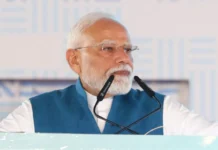
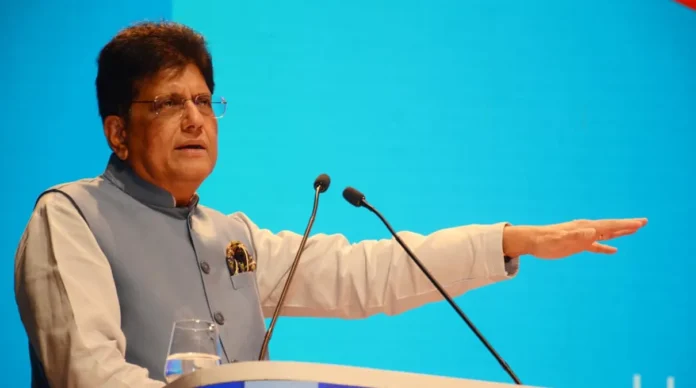
Berlin, October 23, 2026 – India’s Commerce and Industry Minister Piyush Goyal has warned that the European Union’s carbon border rules and higher duties on steel imports could increase costs for European consumers and weaken the competitiveness of the bloc’s industries. At the same time, he has proposed a tenfold expansion of India-Germany bilateral trade, from around €31 billion to €310 billion, urging businesses on both sides to identify opportunities in manufacturing, technology, energy and other sectors.
Speaking at the Berlin Global Dialogue on Thursday, October 22, Goyal criticised the EU’s Carbon Border Adjustment Mechanism (CBAM) and its tighter steel import restrictions. He argued that policies designed to protect domestic industries could have the unintended consequence of making production more expensive and creating additional barriers to international trade.
His comments came during an official visit to Germany and the Netherlands, accompanied by a delegation of around 100 Indian businesses and startups. The visit is intended to deepen commercial ties, encourage investment and strengthen industrial and technological cooperation.
Goyal’s Warning: Higher Trade Barriers Could Raise Costs
Goyal argued that Europe risks undermining its own competitiveness by increasing the cost of importing industrial materials.
“If you have put a CBAM on yourself, you put a 50% import duty to bring steel into your country, you are inviting disaster,” he said, according to media reports of the discussion.
He warned that higher input costs could feed into consumer prices and leave European manufacturers less competitive in global markets.
The minister also questioned the growing use of regulatory requirements that, in his view, can function as non-tariff barriers. He argued that trade restrictions may prompt other countries to introduce countermeasures, creating a cycle in which businesses face more complicated rules and higher costs.
Goyal’s remarks reflect India’s concerns about the impact of European climate and trade policies on exporters. However, the economic effects will depend on the products concerned, their embedded emissions, applicable duties and the ability of companies to adjust their supply chains.
What Is the EU’s Carbon Border Adjustment Mechanism?
The Carbon Border Adjustment Mechanism, commonly known as CBAM, is an EU policy intended to put a carbon cost on certain imported goods based on their embedded emissions. It is designed to complement the bloc’s emissions trading system and address the risk that production could shift to countries with less stringent carbon costs.
The mechanism entered its definitive phase on January 1, 2026. It covers carbon-intensive sectors including iron and steel, aluminium, cement, fertilisers, electricity and hydrogen, subject to the rules applicable to each product.
Under the system, covered importers face reporting and other compliance obligations, including the purchase and surrender of CBAM certificates where required. The precise financial impact on an exporter depends on factors such as the product’s emissions, applicable rules and any recognised carbon price already paid.
For Indian manufacturers, this means access to the European market may increasingly depend not only on price and product quality but also on emissions measurement, documentation and compliance.
Goyal has argued that the EU’s approach places an additional burden on producers in developing economies. European authorities, meanwhile, describe CBAM as a climate-policy tool intended to align the carbon costs of imported goods more closely with those borne by EU producers.
Steel Import Duties Add to the Pressure
Goyal also criticised the EU’s steel import restrictions, saying that higher duties could increase costs for European industries that depend on imported steel.
The reported 50% duty applies to steel imports exceeding relevant tariff-rate quota limits under the EU’s revised system; it should not be interpreted as a blanket 50% tariff on every steel shipment entering Europe.
Steel is a key input for industries ranging from construction and automobiles to machinery and infrastructure. Higher import costs can affect manufacturers’ purchasing decisions, although the ultimate impact depends on domestic supply, market prices, product categories and the availability of alternative sources.
For Indian exporters, the combination of carbon-related compliance requirements and tighter steel import rules presents a commercial challenge. Companies seeking to maintain access to European buyers may need to improve emissions data, demonstrate compliance and reassess their pricing and supply arrangements.
India’s Climate Argument and Export Concerns
Goyal said India accounts for about 17% of the world’s population but contributes approximately 3% to 3.5% of global carbon emissions, according to his remarks. He used the comparison to underline India’s position that climate responsibilities should reflect differences in countries’ development levels and circumstances.
The figures should be understood as the minister’s stated comparison; population share and emissions share can vary depending on the year, emissions measure and whether the calculation uses territorial or consumption-based accounting.
The broader policy disagreement centres on how to balance climate objectives with the competitiveness of developing-country industries. India has raised concerns about the burden that CBAM could place on exports such as steel, aluminium and cement. The actual cost will vary by product, emissions intensity and the rules governing the import.
Goyal also pointed to the possibility of expanding trade with partners that Indian businesses consider commercially attractive. His message was that exporters should diversify opportunities while seeking fair and workable trading arrangements.
India and Germany Target €310 Billion in Bilateral Trade
Alongside his criticism of European trade restrictions, Goyal put forward an ambitious proposal for India and Germany: increase bilateral trade from around €31 billion to €310 billion.
At an India-Germany business event in Berlin, he invited businesses from both countries to identify opportunities that could multiply the current trade relationship tenfold. He left the timeline for reaching the target to industry, rather than announcing a fixed deadline.
The proposal is intended to move the relationship beyond existing trade volumes by encouraging companies to combine their respective strengths, develop products together and expand commercial partnerships.
Potential areas of cooperation include advanced manufacturing, automobiles, infrastructure, renewable energy, technology, healthcare, pharmaceuticals, textiles and engineering goods. These sectors also featured in the broader business programme associated with the Indian delegation’s visit.
A target of €310 billion would represent a substantial expansion, not a confirmed forecast. Achieving it would require sustained investment, stronger supply-chain links, commercially viable projects and improved market access.
German Minister Calls for Less Red Tape
German Federal Minister for Economic Affairs and Energy Katherina Reiche also highlighted the need to reduce bureaucratic obstacles and accelerate cooperation between the two countries.
Reiche called for more joint projects and closer collaboration between Indian and German businesses. Reducing administrative delays on both sides, she indicated, would help companies move from discussions to investment and commercial activity.
The emphasis on joint ventures is significant because a larger trade relationship would not depend only on shipping more finished goods between the two countries. Joint manufacturing, technology development, research partnerships and local investment could also contribute to the expansion.
German companies looking to diversify production and supply chains may find opportunities in India’s manufacturing and consumer markets. Indian businesses, in turn, could seek access to German technology, industrial expertise and European distribution networks.
India-EU Free Trade Agreement: What Happens Next?
The proposed India-Germany trade expansion is closely linked to the anticipated India-EU Free Trade Agreement.
India and the European Union announced the conclusion of FTA negotiations on January 27, 2026, after a negotiating process that began in 2007, was suspended in 2013 and restarted in 2022.
Goyal said the agreement is expected to be signed before the end of 2026 and could become operational within four to five months after signing. That timetable remains an expectation rather than a confirmed implementation date.
The European Commission has published the negotiated text and advanced proposals for the agreement’s signature and conclusion. Formal approval steps still need to be completed before the pact can enter into force, including the relevant EU procedures and India’s required internal process.
Reiche noted the long duration of the negotiations. Goyal responded that although the talks had stretched over many years, the decisive progress had been made during the preceding 13 months.
Once implemented, the agreement could improve market access and create new opportunities for businesses on both sides. Its practical benefits, however, will depend on the final legal process, product-specific provisions, rules of origin and the ability of companies to meet regulatory requirements.
Why the Trade Debate Matters for Businesses
The discussions in Berlin highlight two connected challenges for Indian exporters.
The first is compliance with increasingly detailed climate and trade requirements in important overseas markets. The second is the need to develop alternative and additional commercial opportunities through investment, technology partnerships and expanded bilateral trade.
For steel and other carbon-intensive industries, emissions data and the cost of compliance may become increasingly important in deciding whether exports remain competitive. For companies exploring Germany, the potential opportunity extends beyond exports to joint manufacturing, research and long-term industrial partnerships.
The proposed €310 billion target offers a broad direction for business leaders, but it is not a guarantee of future trade volumes. The next steps will depend on concrete projects, investment decisions, regulatory clarity and the eventual implementation of the India-EU trade agreement.
Bottom Line
Piyush Goyal has delivered a two-part message from Berlin: he has challenged EU carbon and steel import policies that he believes could raise costs and restrict trade, while inviting Indian and German businesses to pursue a tenfold increase in bilateral trade to €310 billion.
The debate over CBAM and steel duties will continue to shape market access for carbon-intensive products. Meanwhile, the proposed trade target puts the focus on whether companies in India and Germany can turn political ambition into practical cooperation—through investment, joint ventures, technology and stronger supply chains.