US Secretary of State says tariffs and visa restrictions are not designed to target India, while signalling progress on a bilateral trade deal and greater energy cooperation
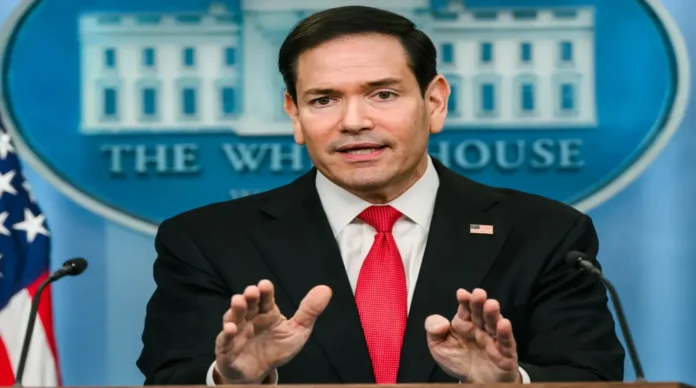
MUMBAI, October 22, 2026 — US Secretary of State Marco Rubio has sought to reassure India that Washington’s relationships with Pakistan and China will not undermine its strategic partnership with New Delhi, as trade tensions, visa restrictions and shifting global alliances continue to test bilateral ties.
In an interview with The Indian Express during his visit to India, Rubio rejected comparisons with the 1970s, when the administration of US President Richard Nixon and his national security adviser Henry Kissinger faced criticism over Washington’s close relationship with Pakistan. Rubio argued that the global landscape has changed fundamentally since the Cold War era and said the United States does not view its relationship with any country as coming at India’s expense.
His comments address several concerns in New Delhi: renewed US engagement with Pakistan’s military leadership, Washington’s approach to Beijing, tariffs linked to India’s purchases of Russian energy and tighter American visa rules. Rubio also said the two countries were close to completing a trade agreement, describing most of the work as finished.
The 60-Second Brief
- Pakistan and China: Rubio said US relations with neither country would come at the expense of its relationship with India.
- Tariffs: He said the measures were not intended to punish India, while acknowledging that trade restrictions could put pressure on bilateral ties.
- Visas: Rubio described tighter visa rules as part of a broader US policy change rather than a measure aimed specifically at Indian applicants.
- Trade deal: He said the agreement was close to completion, with most of the work done and finalisation expected within weeks.
- Energy cooperation: His visit to Reliance’s Jamnagar complex highlighted opportunities in traditional energy, new-energy manufacturing and related investment.
Why Rubio Rejected the Nixon-Kissinger Comparison
The comparison with the 1970s carries historical weight in India. During the Cold War, Pakistan played an important role in US diplomacy, including during the period when Washington was pursuing closer relations with China. That history continues to shape Indian perceptions of American engagement with Islamabad.
Asked whether the Trump administration’s renewed ties with Pakistan recalled that period, Rubio said the international environment was no longer comparable. The Cold War’s strategic calculations, he argued, did not describe today’s world.
He also defended maintaining communication with Pakistan, noting that the country possesses nuclear weapons. From Washington’s perspective, engagement can provide channels to discourage actions that might lead to conflict. Rubio suggested that such contact could, in some circumstances, help reduce risks rather than necessarily threaten India’s interests.
For India, however, the question extends beyond diplomatic access. New Delhi has long raised security concerns about Pakistan, including terrorism and regional instability. The significance of Rubio’s assurance will therefore depend on whether US engagement with Islamabad is accompanied by policies that India considers consistent with its own security interests.
The statement is a diplomatic reassurance, not a guarantee that the two countries will agree on every regional issue.
China: Washington Seeks Strategic Stability
Rubio also addressed concerns about the direction of US policy towards China. The Trump administration has pursued a mix of strategic competition, trade pressure and efforts to manage the risk of escalation.
Rubio argued that describing Washington as soft on China would be inaccurate. He said the United States intends to maintain strategic stability while continuing to challenge Chinese actions it considers contrary to American interests. He also warned that a US-China trade war could have serious consequences for the global economy, including India.
This creates a complex calculation for New Delhi. India and the United States share interests in areas such as Indo-Pacific security, critical technologies and supply-chain diversification. Yet India also has extensive commercial ties with the wider global economy and must account for the consequences of a prolonged US-China confrontation.
Rubio’s comments indicate that Washington wants to preserve room for engagement with Beijing while maintaining its strategic partnership with India. The practical effect will depend on how trade restrictions, technology controls and regional security policies are implemented.
Tariffs and Visa Restrictions: What Washington Is Saying
Rubio sought to separate US policy changes from the question of whether Washington values its relationship with India.
On tariffs, he said the measures were not designed to punish India. He linked the administration’s approach in part to its efforts to end the Russia-Ukraine war, while acknowledging that tariff policy can place strain on important partnerships. The issue is particularly sensitive because US measures connected to Russian energy purchases have raised concerns in India about trade costs and economic uncertainty.
His explanation does not mean that tariffs have no impact on Indian businesses. Even when a policy is not formally aimed at a particular country, higher duties or uncertainty over market access can affect exporters, investment decisions and supply chains.
Visa restrictions present a similar challenge. Rubio said the changes were part of a wider review of the US immigration system and were not directed specifically at Indians. He acknowledged that the impact may appear particularly significant in India because of the large number of Indian applicants using American visa programmes.
For Indian students, professionals and employers, the practical questions remain the rules that apply to each visa category, processing timelines and the ability to plan travel, education and employment with confidence.
India-US Trade Deal: ‘Weeks, Not Months’
One of the most consequential points in Rubio’s interview was his assessment of the pending bilateral trade agreement. He said the two sides were close to finalising the deal, with most of the work completed and the remaining issues largely involving the wording and interpretation of specific terms. He described the expected timeline as weeks rather than months.
The comments offer a signal of progress, but they do not mean that the agreement has already been concluded or entered into force. Until the two governments announce the final terms and explain the implementation process, businesses will still need to account for existing trade rules and any applicable tariffs.
A completed agreement could help companies on both sides plan exports, imports and investment with greater clarity. Its actual value, however, will depend on the final tariff arrangements, the sectors covered and how the provisions are put into practice.
Jamnagar Visit Highlights Energy and Technology Cooperation
Rubio’s India visit also included a stop at Reliance’s Jamnagar complex in Gujarat. According to the company statement described in the supplied report, Rubio and US Vice President JD Vance were briefed on Reliance’s new-energy gigafactories and data centres under development. Reliance chairman Mukesh Ambani welcomed the visitors and outlined plans to develop the site as a hub for deep technology, innovation and advanced manufacturing.
The discussions also covered the global energy outlook and opportunities for cooperation across traditional and emerging energy sectors.
Energy is an important area of potential alignment. India wants to diversify its energy sources and strengthen domestic manufacturing, while the United States is looking for markets and partners for its energy production and related investments. Rubio’s visit also brought attention to Reliance’s refining capabilities and possible opportunities involving Venezuelan crude oil.
The Jamnagar visit therefore placed the relationship in a practical business context. Alongside diplomatic assurances, energy infrastructure, advanced manufacturing and data-centre investment offer areas where cooperation can produce measurable commercial outcomes.
Election Commission Protests: Rubio Declines to Comment
Rubio also declined to comment on protests in India concerning the Election Commission, describing the matter as an internal issue for India. His response avoided taking a public position on a domestic political dispute while he was visiting the country.
The approach is consistent with a diplomatic distinction between bilateral cooperation and commentary on another country’s internal affairs. It does not, by itself, indicate a broader change in Washington’s position on electoral issues.
What Rubio’s Statements Mean for India-US Relations
Rubio’s message combines reassurance with an acknowledgement that disagreements remain. Washington says it wants to maintain its strategic partnership with India while preserving working relationships with Pakistan and China. It also argues that tariffs and visa restrictions are part of broader policies, not efforts to single out India.
For New Delhi, the next indicators will be concrete rather than rhetorical: the final terms of the trade agreement, how tariff measures are applied, the effect of visa changes on Indian applicants, and the extent of cooperation on energy, technology and regional security.
The relationship does not require India and the United States to agree on every issue. But a durable partnership will depend on both sides managing disagreements transparently and ensuring that their policy choices do not create avoidable uncertainty for businesses, students, workers or regional security.
The Bottom Line
Rubio has offered India a clear diplomatic assurance that US engagement with Pakistan and China will not be pursued at New Delhi’s expense. Whether that assurance translates into greater confidence will depend on what Washington does next on trade, visas, energy and regional security.