INVC NEWS | Entertainment and World News
Dateline: Mumbai | October 16, 2026
A notice directing Bollywood actor Imran Khan to leave India by October 28 has brought renewed attention to citizenship, immigration rules and the legal status of foreign nationals working in the Indian entertainment industry. The actor, who holds U.S. citizenship and an Overseas Citizen of India (OCI) card, is challenging the notice after participating in a protest in Mumbai.
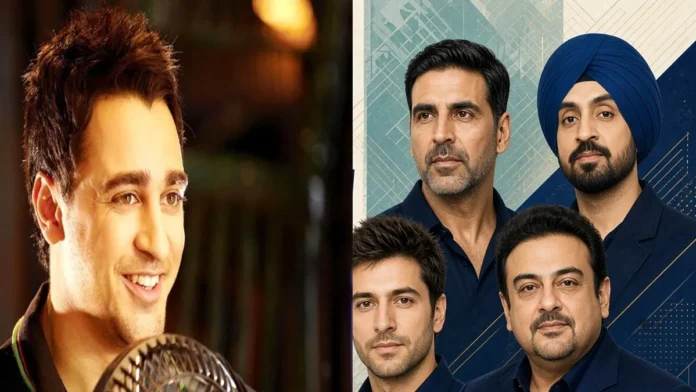
But Imran Khan is not the first entertainment figure whose nationality, visa or OCI status has become a public controversy. Akshay Kumar faced years of questions over his Canadian citizenship before becoming an Indian citizen in 2023. Singer Adnan Sami gave up Pakistani citizenship and became an Indian citizen in 2016. Kannada actor and activist Chetan Kumar Ahimsa faced a separate legal dispute over the cancellation of his OCI card.
Bangladeshi actors Ferdous Ahmed and Gazi Abdul Noor also faced action over their participation in political campaigning in India in 2019.
These cases involve different circumstances and legal rules. Some concern a change of citizenship, others involve immigration or visa conditions, and some centre on the rights and restrictions associated with OCI status.
1. Imran Khan: Notice to Leave India After Mumbai Protest
Imran Khan, known for films including Jaane Tu… Ya Jaane Na and I Hate Luv Storys, is at the centre of the latest controversy.
On October 10, 2026, the actor participated in a protest at Mumbai’s August Kranti Maidan calling for the resignation of Chief Election Commissioner Gyanesh Kumar. Police briefly detained him during the demonstration.
The Foreigners Regional Registration Office subsequently issued a notice directing him to leave India by October 28 over an alleged violation of immigration rules. The action followed a complaint by BJP leader Kirit Somaiya, who questioned the participation of a foreign national in the protest.
Imran Khan’s legal team has said it intends to challenge the notice before the Bombay High Court. His lawyer has argued that OCI cardholders are not expressly barred from participating in every form of protest.
The dispute raises a broader legal question: what restrictions apply to foreign nationals who live in India under OCI status, particularly when they take part in political demonstrations?
OCI status allows eligible foreign citizens of Indian origin to enjoy a range of privileges, including long-term entry and residence benefits. It does not confer Indian citizenship, voting rights or every political right available to Indian citizens.
The legality of the specific action against Imran Khan will depend on the applicable rules, the grounds cited in the notice and the outcome of any court proceedings. The notice itself should not be treated as a final judicial finding.
2. Akshay Kumar: From Canadian to Indian Citizenship
Akshay Kumar’s citizenship became a recurring topic of public debate during the 2019 general election.
Born in Amritsar, the actor had acquired Canadian citizenship earlier in his career. His nationality drew attention as his profile in Indian cinema grew, particularly when questions arose about his absence from voting in the 2019 election.
On August 15, 2023, Kumar announced that he had received Indian citizenship and shared an image of his citizenship document on social media.
The announcement resolved the central question about his nationality. Kumar had moved from Canadian citizenship to Indian citizenship, rather than retaining a Canadian passport alongside an Indian one.
India generally does not permit dual citizenship. Its Overseas Citizen of India scheme is a separate arrangement for eligible foreign citizens of Indian origin and is not equivalent to holding two nationalities.
Kumar’s case was therefore primarily about his change of citizenship and the public discussion surrounding it—not a visa violation or an order to leave India.
3. Diljit Dosanjh: Claims About U.S. Citizenship Need Careful Verification
Punjabi singer and actor Diljit Dosanjh has also appeared in public discussions about nationality and overseas connections. However, claims that he became a U.S. citizen in 2022 and consequently uses an American passport should not be presented as confirmed without reliable documentary or official evidence.
A celebrity’s international tours, overseas residence or professional work do not establish citizenship. Nationality is a specific legal status and should not be inferred from travel or career activity.
Any report about Dosanjh’s citizenship should therefore distinguish verified information from online speculation. Without reliable confirmation of a change in nationality, it would be inaccurate to place his case on the same footing as Kumar’s publicly announced change of citizenship or Sami’s documented naturalisation in India.
4. Adnan Sami: From Pakistani Citizenship to Indian Citizenship
Singer Adnan Sami’s citizenship journey is another prominent example of a celebrity changing nationality.
Born in London, Sami previously held Pakistani citizenship and moved to India in 2001. He later sought Indian citizenship after living and working in the country for years.
His Pakistani passport expired in 2015. On January 1, 2016, the Indian government granted him Indian citizenship, making him an Indian citizen under the country’s naturalisation process.
Sami’s case differed from Imran Khan’s current situation. Sami’s story concerned an application for and eventual grant of Indian citizenship. Imran Khan, by contrast, holds foreign citizenship and OCI status, and is contesting an immigration-related notice.
The two cases illustrate why a celebrity’s nationality cannot be understood simply by looking at where they were born, where they work or which country they are associated with professionally.
5. Chetan Kumar Ahimsa: OCI Card Cancellation Challenged in Court
Kannada actor and activist Chetan Kumar Ahimsa, also known as Chetan Kumar, is a U.S. citizen who has worked in India under OCI status.
In March 2023, the Indian government cancelled his OCI card, citing allegations related to his public statements and activities. Chetan challenged the decision in court.
On April 21, 2023, the Karnataka High Court stayed the cancellation while the matter proceeded. The court’s interim intervention meant the cancellation could not simply be treated as the final outcome of the dispute.
His case is important because an OCI card is not an Indian passport. It is a special immigration status available to eligible foreign citizens of Indian origin, offering certain travel, residence and other privileges subject to applicable conditions.
OCI status can be subject to restrictions and cancellation provisions under Indian law. But a contested cancellation and a court-ordered stay are separate procedural stages, and the legal status of the case must be described accurately.
Chetan’s dispute concerned the government’s action against his OCI status, rather than a straightforward switch between two nationalities.
6. Ferdous Ahmed: Visa Cancelled After 2019 Election Campaigning
Bangladeshi actor Ferdous Ahmed faced action in India during the 2019 Lok Sabha election campaign.
Ferdous, who worked in the Bengali film industry, was seen campaigning for Trinamool Congress candidate Kanhaiya Lal Agarwal in West Bengal’s Raiganj constituency. The participation of a foreign national in an Indian election campaign prompted a complaint and scrutiny of his immigration status.
The Union Home Ministry subsequently cancelled his business visa and issued a notice directing him to leave India.
The controversy centred on alleged violations of visa conditions linked to political campaigning. It was not a case in which Ferdous had acquired Indian citizenship and then lost it.
The distinction matters because foreign nationals in India are subject to the conditions attached to their visas and other immigration permissions.
7. Gazi Abdul Noor: Action Over Political Rally Participation
Bangladeshi actor Gazi Abdul Noor, also known as Gazi Abdun Noor, became involved in a similar controversy in 2019.
Noor, who was known for his role in the Bengali television series Rani Rashmoni, was reportedly seen at a political rally associated with Trinamool Congress candidate Saugata Roy in West Bengal.
The Union Home Ministry asked him to leave India after the episode came to official attention. Media reports said his visa had expired in July 2018 and that he had remained in India for several months afterward.
Authorities reportedly directed him to return to Bangladesh and apply for a fresh visa if he wished to come back.
As with Ferdous Ahmed, the issue involved immigration permission and participation in political campaigning, not a dispute over Indian citizenship.
What Is the Difference Between Citizenship, a Visa and OCI Status?
The cases demonstrate why the terms are often confused in public debate.
Citizenship establishes a person’s legal membership of a country. An Indian citizen has rights and responsibilities under Indian law, including political rights reserved for citizens.
A visa permits a foreign national to enter or stay in a country under specified conditions. The type of visa determines what activities are allowed, and a visa may be cancelled for violations under the applicable rules.
Overseas Citizen of India status provides eligible foreign citizens of Indian origin with certain long-term immigration privileges. Despite its name, OCI is not Indian citizenship and does not provide the full political rights of an Indian national.
These differences explain why Akshay Kumar’s citizenship change, Adnan Sami’s naturalisation, Chetan Kumar’s OCI dispute and the visa cases involving Ferdous Ahmed and Gazi Abdul Noor should not be grouped together as identical incidents.
What Happens Next in Imran Khan’s Case?
The immediate question is whether Imran Khan can secure legal relief from the notice directing him to leave India by October 28.
His proposed challenge before the Bombay High Court is likely to focus on the legal basis for the notice and the restrictions, if any, that apply to his participation in the protest as an OCI cardholder.
The court’s consideration of the matter will be important in clarifying how the relevant immigration rules apply to the circumstances of his case.
Until the legal issues are resolved, it is important to distinguish the government’s action from a final judicial determination of whether the actor violated the law.
The Bottom Line
The controversies involving Imran Khan, Akshay Kumar, Adnan Sami, Chetan Kumar Ahimsa, Ferdous Ahmed and Gazi Abdul Noor concern different aspects of citizenship and immigration law. They range from a change of nationality and an application for Indian citizenship to disputes over OCI status, visa conditions and political activity.
The most important lesson is that a celebrity’s nationality, immigration permission and political rights are separate legal questions. Accurate reporting requires examining each person’s documented status and the specific rules involved rather than treating every case as a citizenship controversy of the same kind.