A divisive conference decision has triggered an Israeli entry ban, criticism from Jewish organizations and opposition within the Greens. Here is what the policy says—and why its meaning faces fierce dispute.
By Team INVC | INVC NEWS
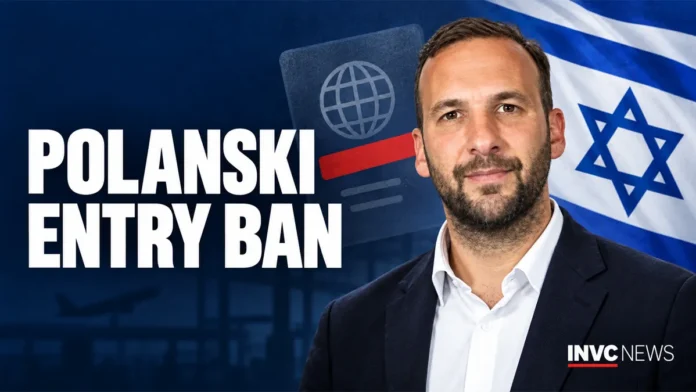
LONDON, United Kingdom | October 5, 2026 — The Green Party Israel dispute has escalated from a contested conference vote into an international political confrontation. Israel has barred Green leader Zack Polanski from entering the country after party members adopted an anti-Zionist policy that critics say threatens Jewish self-determination.
The decision leaves the Green Party of England and Wales defending its position on Palestinian rights while facing questions about the treatment of Jewish members. It also exposes divisions between the party’s conference and several of its elected representatives.
At the center of the controversy lies a disputed distinction: the Greens describe their policy as opposition to a political ideology; Israel and Jewish critics argue that its wording targets a right central to Jewish identity.
The Vote That Triggered the Dispute
Members approved the motion at the party’s conference in Brighton on October 4, with 1,022 votes in favor and 813 against, according to the Green Party’s official announcement.
The party said the decision formally established its anti-Zionist position. Its statement defines Zionism as an ethnonationalist political project and argues that opposition to Zionism should not automatically count as antisemitism.
The announcement also reaffirms support for Palestinian liberation, the right of return, the Boycott, Divestment and Sanctions movement, and a full arms embargo against Israel.
Most consequentially, it endorses a single democratic state throughout historic Palestine. That proposal raises fundamental questions about the future of Israel as a Jewish state and the political rights of both peoples.
Why Israel Announced an Entry Ban
Israeli Foreign Minister Gideon Sa’ar decided to bar Polanski from entering Israel, the Foreign Ministry announced, according to Reuters.
The ministry characterized the resolution as antisemitic under the International Holocaust Remembrance Alliance’s working definition. It argued that the policy denies Jewish people their right to self-determination.
That characterization represents Israel’s stated assessment of the resolution. The Green Party rejects the equation of its anti-Zionist position with hostility toward Jewish people.
The distinction matters when describing the controversy: members adopted an anti-Zionist policy, which Israel and other critics condemned as antisemitic.
What the IHRA Definition Actually Says
The IHRA framework includes denying Jewish people their right to self-determination among examples that may constitute antisemitism, taking the wider context into account.
However, it also states that criticism of Israel comparable to criticism of other countries does not constitute antisemitism. The working definition itself is non-legally binding.
Consequently, the dispute centers on whether the Greens’ policy challenges particular political arrangements or denies Jewish self-determination. Invoking the definition does not, by itself, establish a court finding against the party.
Polanski Did Not Participate in the Vote
ITV News reported that Polanski did not take part in the conference vote. He had left Brighton to campaign in the Holborn and St Pancras parliamentary by-election.
That fact complicates any suggestion that he personally cast the deciding vote. Nevertheless, as party leader, he faces responsibility for explaining the organization’s position and responding to its consequences.
The Green Party’s official statement emphasizes its opposition to racism and its commitment to equality, justice and human rights. Supporters frame the policy as an extension of those principles to Palestinians.
The Backlash Extends Inside the Party
The dispute has also divided Green politicians.
ITV reported that MPs Ellie Chowns, Sian Berry, Adrian Ramsay and Carla Denyer publicly rejected the motion. Their opposition shows that the conference decision does not represent a unanimous position across the party’s parliamentary ranks.
Members also rejected a proposed safeguard intended to prevent the policy from pressuring or disciplining people because of their affiliation with synagogues or other Jewish organizations that identify as Zionist, ITV reported.
That decision sharpened concerns about how the policy might affect participation in the party. It does not establish that the Greens have expelled members under the new motion.
INVC NEWS | BEYOND THE HEADLINE
The immediate consequence is an Israeli entry ban on Polanski. The broader test concerns how the Greens apply their policy while protecting Jewish members and maintaining their advocacy for Palestinian rights.
Readers should watch the party’s practical decisions as closely as its political statements. Its handling of membership concerns, internal dissent and future policy explanations will help determine whether it can address the divisions exposed in Brighton.
For now, the conference vote has settled the party’s formal position. It has intensified the argument over what that position means.