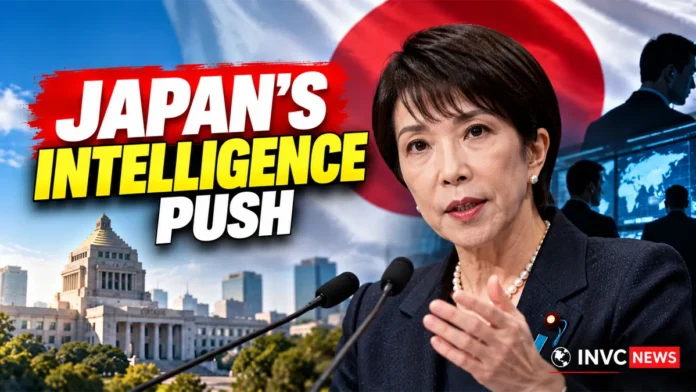
TOKYO, Japan | October 1, 2026 — Japan intelligence reform has entered a new phase as Prime Minister Sanae Takaichi pushes for stronger protection against cyberattacks, technology theft and foreign influence. A new National Intelligence Bureau already operates, while an expert panel has begun examining further changes, including a proposed foreign intelligence service. For readers following reports of a “Japanese CIA,” the distinction matters: Tokyo has strengthened its intelligence coordination, but that does not mean it has already launched a fully operational agency with the CIA’s overseas capabilities.
INVC NEWS | BEYOND THE HEADLINE
What happened. Why it matters. What comes next.
THE 60-SECOND BRIEF
- Japan launched its National Intelligence Bureau on July 31, 2026.
- It supports a National Intelligence Council chaired by the prime minister.
- A 17-member expert panel held its first meeting on September 28.
- Takaichi wants a national intelligence strategy and further reforms.
- A separate CIA-like foreign intelligence agency remains a future objective.
Why This Story Matters Beyond Espionage
Takaichi’s latest remarks connect intelligence reform to threats that extend beyond military secrets.
She identified cyberattacks, the illicit transfer of advanced technology involving foreign intelligence operatives, and disinformation as concerns.
These issues can affect businesses, research institutions and public confidence. A government may need to connect information held by diplomatic, defense, police and economic authorities to understand a developing threat.
The reform’s practical purpose is therefore to help national leaders receive a more complete assessment. Its effectiveness will depend on whether agencies share useful information promptly and whether decision-makers act on it.
What Japan Has Already Established
The National Intelligence Bureau replaced the Cabinet Intelligence and Research Office, according to analysis by the Center for Strategic and International Studies.
The new structure gives intelligence coordination a clearer legal foundation and a more prominent place in national decision-making.
Alongside the bureau, Japan established the National Intelligence Council. The prime minister chairs the council, which brings senior ministers into the process of setting intelligence priorities.
Japan consequently did not begin intelligence work from scratch. It already had organizations performing diplomatic, defense, police and security intelligence functions. The change strengthens coordination across that existing system.
What Changed on September 28?
Takaichi chaired the first meeting of a 17-member expert panel tasked with examining how Japan should strengthen its intelligence capabilities.
According to Anadolu reporting, the panel includes participants from academia, media, business and government.
The prime minister emphasized the need for a National Intelligence Strategy. She also argued that officials cannot understand complex threats without integrating information across several policy areas.
This meeting provides the latest development. The bureau’s establishment happened in July, rather than on October 1.
Why the “Japanese CIA” Description Needs Context
The CIA comparison refers principally to Japan’s ambition to develop a dedicated foreign intelligence capability.
That involves a different function from coordinating information already collected across government.
In her CSIS analysis, Japan specialist Deirdre Martin describes the bureau primarily as a coordination and assessment institution. She distinguishes its current role from recruiting foreign agents or conducting covert operations.
Anadolu reported that the Takaichi administration aims to establish an independent CIA-like agency by March 2028. That remains a reported target, rather than confirmation that such a service has begun operating.
Readers should therefore distinguish an institution already established from capabilities the government still intends to develop.
The Security Argument—and the Oversight Question
Supporters see stronger coordination as a way to improve early warning and cooperation with international partners.
However, concentrating intelligence authority also raises questions about accountability.
Writing for the Japan Institute of International Affairs, information-security professor Yoshiki Kobayashi argues that future expansion of foreign intelligence and counterintelligence functions could have more direct implications for civil liberties.
His analysis identifies parliamentary scrutiny, transparency and independent oversight as important considerations.
The debate consequently concerns both capability and control: what intelligence bodies can do, who authorizes their activities and how democratic institutions scrutinize them.
What Happens Next
Watch for the national intelligence strategy, proposals concerning counterespionage and clearer plans for the separate foreign intelligence service.
The government will also need to address specialist recruitment, training and retention as it develops additional capabilities.
Japan has already changed the structure through which intelligence reaches its political leadership. The next test is whether it can build effective new capabilities while establishing clear authority and credible oversight.