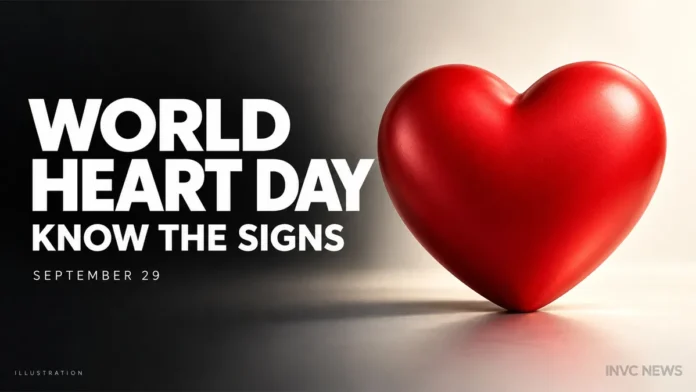
NEW DELHI, India | September 29, 2026 — World Heart Day 2026 carries a practical message: recognize urgent warning signs, but do not wait for symptoms before checking your heart health. Some heart attacks begin with mild discomfort rather than dramatic pain. Meanwhile, high blood pressure often causes no noticeable symptoms. Today’s awareness campaign offers an opportunity to understand when to seek emergency help and when to arrange a routine discussion about cardiovascular risk.
INVC NEWS | BEYOND THE HEADLINE
What happened. Why it matters. What comes next.
THE 60-SECOND BRIEF
- Suspected heart attack symptoms require emergency assessment.
- High blood pressure can remain unnoticed without measurement.
- Prevention includes managing risk factors and following appropriate medical care.
What World Heart Day Highlights
The World Heart Federation marks World Heart Day on September 29. Its 2026 “Don’t Miss a Beat” campaign emphasizes recognizing cardiovascular symptoms, improving prevention and strengthening access to care.
Cardiovascular disease includes several conditions affecting the heart and blood vessels. Consequently, no single symptom or home measurement can identify every problem.
Heart Attack Warning Signs: Act Promptly
Possible signs include:
- Pressure, squeezing, fullness or discomfort in the chest.
- Pain or discomfort in the arms, back, neck, jaw or upper stomach.
- Shortness of breath, with or without chest discomfort.
- Cold sweating, nausea or lightheadedness.
Symptoms may begin gradually, disappear and return, or occur together. They do not always resemble the dramatic collapse people see in films.
If you suspect a heart attack, call local emergency services immediately and request an ambulance. Do not wait for a routine appointment or drive yourself. Other conditions can cause similar symptoms, but an emergency assessment—not guesswork—should determine the cause.
Women Can Have Chest Pain Too
Chest pain or discomfort remains the most common heart attack symptom in women as well as men.
However, women may also experience breathlessness, nausea, back or shoulder discomfort, and unusual tiredness or weakness. Do not dismiss concerning symptoms as stress or indigestion without assessment.
The Risk You May Not Feel: High Blood Pressure
The World Health Organization notes that most people with hypertension do not notice symptoms. Feeling well therefore does not establish that blood pressure is normal.
Arrange a blood pressure check and ask a qualified clinician how to interpret the result. A clinician may recommend repeat measurements or monitoring to establish whether a raised reading persists.
If you already receive treatment, continue it as prescribed. Discuss concerns or side effects with your clinician rather than changing treatment independently.
Prevention Involves More Than One Number
Tobacco use, physical inactivity, an unhealthy diet and harmful alcohol use contribute to cardiovascular risk. Air pollution also matters.
Meanwhile, raised blood pressure, blood glucose and blood lipids can signal risks that require attention. A useful consultation considers these factors together with your medical and family history.
Practical steps include avoiding tobacco, choosing nutritious meals and building regular activity into daily life at a level appropriate for your health. However, lifestyle changes complement medical treatment when treatment is necessary.
Make Today’s Awareness Useful
Choose a specific next step: arrange an overdue check, review your prescribed medicines with your clinician, or discuss your family’s history of early heart disease.
Also, ensure family members know how to contact emergency services. Recognizing a warning sign matters most when people know what to do next.
INVC NEWS Bottom Line
Emergency symptoms need immediate action. Long-term prevention needs regular attention—even when you feel well. World Heart Day offers a reminder to address both.
This article provides general health information and does not replace individual medical assessment.