RAE BARELI, India | September 8, 2026 —
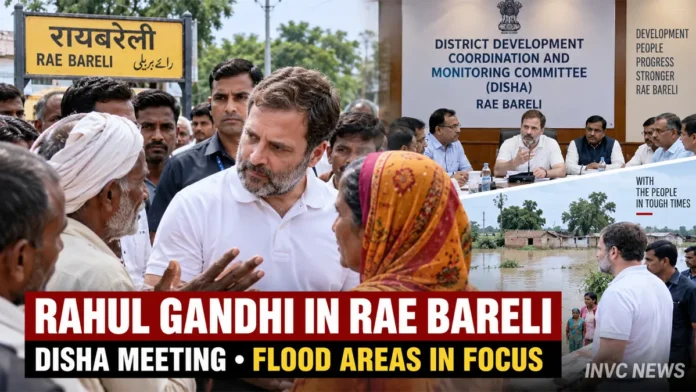
Rahul Gandhi Rae Bareli Visit begins Tuesday as the Leader of the Opposition in the Lok Sabha returns to his parliamentary constituency for a two-day tour focused on development projects, local issues and the situation in flood-affected areas.
Rahul Gandhi is scheduled to chair a meeting of the District Development Coordination and Monitoring Committee, or DISHA, during the visit. Officials have prepared department-wise reports on development schemes, pending projects and action taken on directions issued during earlier meetings.
The Rae Bareli MP is also expected to visit flood-affected areas in Shivgarh and Maharajganj, where he could interact with residents and assess damage caused by recent flooding.
The visit comes as political activity gradually intensifies in Uttar Pradesh ahead of the 2027 Assembly election, although Gandhi’s official programme is primarily centered on constituency development, local outreach and administrative reviews.
Rahul Gandhi to Review Development Projects at DISHA Meeting
The DISHA meeting will form one of the most important parts of Rahul Gandhi’s two-day schedule.
Officials from multiple departments are compiling detailed information on centrally sponsored schemes, local development works and projects that remain incomplete or require intervention.
The meeting is expected to examine the progress of infrastructure projects, welfare programmes and other schemes being implemented across Rae Bareli.
Officials have also prepared reports detailing what action departments have taken on instructions issued during the previous DISHA meeting.
Amethi MP Kishori Lal Sharma chaired the previous meeting.
By reviewing department-wise progress, Gandhi is expected to seek updates on projects that directly affect residents of his constituency and identify areas where implementation remains slow.
Flood-Hit Shivgarh and Maharajganj Areas Under Focus
Flood-related concerns are also expected to feature prominently during the visit.
Rahul Gandhi is expected to travel to affected areas in Shivgarh and Maharajganj to understand conditions on the ground.
During the proposed visits, he may meet affected families, hear their concerns and assess the extent of damage caused by flooding.
Such interactions could provide the Rae Bareli MP with direct feedback on relief measures, damaged roads, homes, agricultural losses and other problems facing residents.
The administration has been gathering relevant information from local departments ahead of the visit.
Meetings With Traders, Lawyers and Local Groups
Rahul Gandhi’s Rae Bareli programme goes beyond the formal administrative review.
He is scheduled to meet bullion traders at Prabhu Town in the city and later interact with office-bearers of the Central Bar Association.
Delegations representing sportspersons, medical professionals and chemists are also expected to meet him at the Bhuemau Guest House.
These interactions will give local groups an opportunity to raise sector-specific concerns directly with their Member of Parliament.
The outreach could also help Gandhi gather broader feedback on business conditions, public services, healthcare, sports infrastructure and other constituency-level issues.
₹3 Crore MPLADS Development Works Also on Schedule
On Wednesday morning, Rahul Gandhi is scheduled to inaugurate development works completed at an estimated cost of ₹3 crore through the Members of Parliament Local Area Development Scheme.
The programme is expected to take place at the Bhuemau Guest House before the DISHA meeting.
The MPLADS programme allows Members of Parliament to recommend development works aimed at creating durable community assets and addressing locally identified needs.
The latest inauguration is therefore likely to become another key development-focused element of Gandhi’s visit.
Administration Steps Up Security
Local authorities have made extensive security and logistical arrangements for the two-day tour.
Officials are coordinating traffic movement, security deployment and access at locations included in the programme.
The administration is also collecting data from different departments so that officials can present updated information during the development review.
The combination of a DISHA meeting, public interactions and possible visits to flood-hit areas is expected to keep the district administration engaged throughout the visit.
Rae Bareli Remains Central to Rahul Gandhi’s Uttar Pradesh Outreach
Rae Bareli continues to hold major political significance for Rahul Gandhi following his victory from the constituency in the 2024 Lok Sabha election.
As Leader of the Opposition, Gandhi has continued to combine national political responsibilities with constituency visits and local engagement.
His return to Rae Bareli comes only months after another two-day visit on May 19 and 20.
During that visit, Gandhi inaugurated a marriage hall constructed with MP funds at Thakurain Kheda in Bachhrawan. He also participated in public programmes and interacted with local residents.
The repeated visits underline the constituency’s importance in his political calendar.
Uttar Pradesh 2027 Adds Political Backdrop
Although Tuesday’s programme centers on development and constituency issues, the visit also comes against an increasingly active political backdrop in Uttar Pradesh.
The state is due to hold its next Assembly election in 2027.
Congress has been working to strengthen its organization and expand direct outreach across Uttar Pradesh, while other major political parties are also preparing for the next electoral contest.
Rae Bareli and neighboring Amethi remain especially important to Congress because of their long political association with the party.
However, it would be premature to describe every constituency-level engagement as an election campaign. Gandhi’s scheduled activities during this visit are focused largely on local development, public feedback and administrative monitoring.
Development and Public Feedback at Center of Two-Day Visit
Rahul Gandhi’s Rae Bareli visit will ultimately be judged by the issues that emerge from the DISHA meeting and his interactions with local residents.
Pending infrastructure projects, implementation of government schemes, flood-related problems and constituency development are likely to dominate discussions.
The expected visits to flood-affected areas could also bring attention to the difficulties facing families recovering from recent damage.
With administrative reviews, development inaugurations and meetings with local groups packed into the two-day schedule, Gandhi’s visit places Rae Bareli’s local governance issues firmly in focus.