By Team INVC | INVC NEWS
Published: September 1, 2026 |11 : 38 AM IST
NEW DELHI, India | September 1, 2026 —
International passengers flying out of India have one less airport formality to worry about from today.
Starting September 1, 2026, travellers departing India on international flights will no longer need to get their boarding passes stamped at immigration counters.
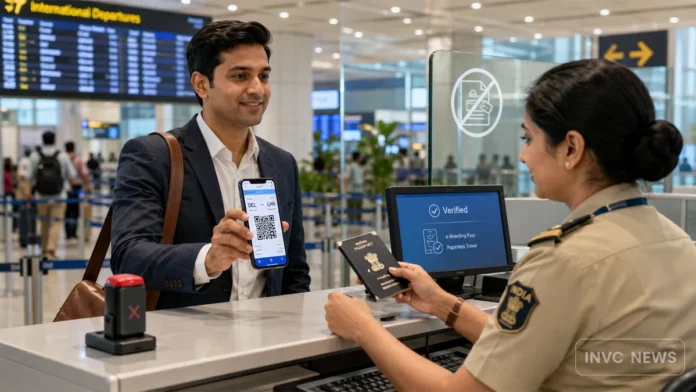
Under the revised process introduced by the Bureau of Immigration, passengers can present an e-boarding pass on their smartphone during immigration clearance. Travellers who prefer a physical boarding pass can continue carrying one, but immigration officers will no longer stamp it.
The change is designed to make international departures faster, reduce paperwork and remove an extra physical step from the airport journey.
For millions of Indians who travel abroad for holidays, business, education or employment, the new boarding pass rule could make the immigration process noticeably simpler.
What Changes at Indian Airports From September 1?
Until now, international passengers departing from India could be required to present a physical boarding pass at immigration, where an immigration officer would stamp the document after clearance.
That physical stamping step has now been discontinued.
From September 1:
- E-boarding passes can be shown on smartphones.
- Physical boarding passes will continue to be accepted.
- Immigration officers will no longer stamp boarding passes.
- Passengers still need to complete applicable immigration formalities.
- Passport and visa requirements remain unchanged.
The key change is therefore not the removal of immigration clearance itself.
It is the removal of the boarding-pass stamping requirement.
Do You Still Need a Printed Boarding Pass?
Not necessarily.
International passengers can now present an eligible electronic boarding pass directly on their smartphone during immigration clearance.
This means travellers who have checked in online and received a digital boarding pass may no longer need to print the document simply for immigration stamping.
However, passengers can still carry a paper boarding pass if they prefer.
Airlines may also issue physical boarding passes depending on their check-in procedures, destination requirements or individual passenger circumstances.
Therefore, the new rule gives travellers greater flexibility rather than banning printed boarding passes.
Will Physical Boarding Passes Still Be Accepted?
Yes.
Passengers carrying a physical boarding pass can continue to use it.
The difference is that immigration authorities will no longer place an immigration stamp on the boarding pass.
This distinction is important because some travellers may mistakenly assume that physical boarding passes are no longer valid.
They remain acceptable.
The reform simply removes the mandatory stamping process.
Does This Mean Your Passport Will No Longer Be Checked?
No.
The new rule relates specifically to boarding-pass stamping.
International passengers must still comply with passport, visa and immigration requirements applicable to their journey.
Travellers should continue carrying:
- A valid passport
- Required visa or travel authorisation
- Boarding pass
- Any destination-specific documents
- Supporting travel documents where required
Passengers should not interpret the boarding-pass change as the end of immigration checks.
Also Read – : India to Introduce e-Passports From June 2026, Making International Travel Faster and More Secure
Why Has India Stopped Stamping Boarding Passes?
The move is part of a broader effort to digitise and simplify airport immigration procedures.
Authorities had received feedback that requiring physical boarding passes and stamping them was causing unnecessary inconvenience to international travellers.
There were also instances in which boarding-pass information became difficult to read because of improper or unclear stamping.
Removing the stamp can reduce paper handling while making passenger processing more efficient.
It also aligns with the wider shift toward digital boarding passes, biometric identification and automated immigration systems.
What About Fast Track Immigration Travellers?
Passengers enrolled in the Fast Track Immigration – Trusted Traveller Programme, or FTI-TTP, can also use digital processes at designated e-gates.
The government’s FTI-TTP programme uses biometric authentication to provide faster immigration clearance for eligible travellers.
Registered passengers can scan their boarding pass and passport at an e-gate and complete biometric verification.
The programme is currently available at multiple Indian airports and is designed to make immigration processing faster and more secure.
Travellers should remember that DigiYatra registration and FTI-TTP registration are separate systems.
Being registered for DigiYatra does not automatically enrol a passenger in the Fast Track Immigration programme.
International Travel Is Becoming More Digital
The boarding-pass change fits into a much broader transformation of air travel in India.
Airlines already allow passengers to check in online and receive boarding passes electronically.
Indian airports have increasingly adopted automated entry, biometric systems and digital travel processes.
At the same time, India has expanded its e-Passport programme, which uses an embedded electronic chip to improve travel-document security and compatibility with modern border systems.
Also Read – : India’s New Baggage Rules 2026: One Laptop Duty-Free, Lower Customs Duty on Electronic Gadgets
For frequent international travellers, these changes could gradually reduce dependence on printed paperwork at different stages of the airport journey.
What International Flyers Should Do Before Leaving for Airport
Despite the simplified boarding-pass procedure, passengers should continue preparing their documents carefully.
Before travelling, check:
Passport validity: Make sure the passport meets the destination country’s validity requirements.
Visa status: Verify that the visa, electronic travel authorisation or other entry permission is valid.
Airline check-in: Complete online check-in where available and save the boarding pass on the phone.
Battery backup: If relying entirely on an e-boarding pass, keep the phone adequately charged.
Offline copy: Saving a screenshot or PDF of the boarding pass can be useful if airport connectivity is weak.
Destination rules: Some countries may require return tickets, hotel bookings, proof of funds or other supporting documents.
Keeping a physical backup of important travel documents can still be sensible even as airport procedures become more digital.
What Happens if Your Phone Stops Working?
The new system makes digital boarding passes easier to use, but passengers do not have to depend entirely on their phones.
A physical boarding pass remains valid.
Therefore, travellers worried about battery failure, damaged phones or technical problems can still carry a printed boarding pass or obtain one from the airline where available.
The important change is that the paper boarding pass will not require an immigration stamp.
Will This Make Airport Immigration Faster?
Removing one manual step could help improve passenger flow, particularly during busy international departure periods.
However, actual immigration waiting times will still depend on several factors, including:
- Passenger volumes
- Number of immigration counters operating
- Document checks
- Airport infrastructure
- Security requirements
- Eligibility for automated immigration
The new rule should make the procedure simpler, but passengers should not assume that they can arrive later at the airport.
International travellers should continue following the reporting times recommended by their airline.
Also Read – : DGCA Introduces 48-Hour Free Cancellation Rule for Airline Tickets — New Conditions Explained
The Bottom Line for International Travellers
For passengers flying abroad from India from September 1, 2026, the change is straightforward:
You can show your e-boarding pass at immigration, and your boarding pass no longer needs to be stamped.
If you prefer paper, a physical boarding pass is still acceptable.
But passport, visa and immigration requirements continue to apply.
The reform may appear small, yet for millions of international passengers it removes another piece of paperwork from the departure process and moves Indian airports one step closer to a more digital travel experience.