
US vice president says visa programmes must not be misused to undercut American wages; H-1B rules remain at the centre of the wider immigration debate
HENDERSONVILLE, North Carolina | October 20, 2026 | INVC NEWS
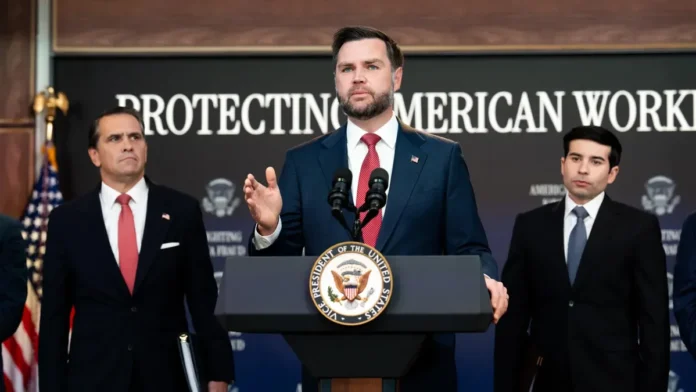
US Vice President JD Vance has warned companies against using immigration programmes to replace American workers with lower-paid foreign employees, declaring that the Trump administration will not tolerate practices that undermine domestic employment opportunities.
Speaking at a Republican campaign rally in Hendersonville, North Carolina, on Monday, October 19, Vance said the administration wanted to prevent companies from exploiting visa programmes to reduce labour costs at the expense of American workers. The rally was part of Republican campaigning ahead of the November 3 midterm elections.
“What I am most proud of is that we will never allow big companies to abuse visa programmes to replace hardworking American workers in North Carolina with people who are essentially working in something close to indentured servitude,” Vance said, according to the remarks provided for this report.
He argued that immigration policy should protect employment opportunities for US citizens and prevent employers from using foreign labour as a way to suppress wages.
“American jobs should go to American citizens, not to people who do not have the legal right to work here,” Vance said.
H-1B Visa Programme in Focus
Vance did not explicitly name the H-1B visa programme in the remarks described above, nor did he announce a new H-1B restriction during the rally. However, his comments come amid an intensifying debate in Washington over employment-based immigration and the hiring of skilled foreign professionals.
The H-1B programme allows eligible US employers to hire foreign professionals temporarily for specialised occupations, including jobs in information technology, engineering, medicine and scientific research. Visa holders are authorised to work under the programme’s applicable rules and conditions.
The broader debate centres on whether some employers misuse employment-based immigration to reduce labour costs or replace existing workers. Critics of certain hiring practices argue that companies should not be allowed to use visa arrangements to weaken wages or displace American employees.
Employers and supporters of skilled immigration, meanwhile, argue that international recruitment can help businesses fill specialised roles and compete in sectors where technical expertise is in high demand.
Vance has previously directed criticism at employers over their use of employment-based immigration. In recent remarks on the H-1B controversy, he said his criticism was aimed at companies and the visa system rather than at foreign workers themselves. The debate has also drawn attention to the administration’s actions affecting employment-based green-card sponsorship programmes.
Administration Says American Workers Must Come First
Vance presented the issue as part of the Trump administration’s broader economic and immigration agenda. He said immigration programmes should not become a mechanism for companies to replace domestic employees simply because foreign workers can be hired at lower costs.
His comments also connected immigration enforcement with the administration’s stated goals of protecting manufacturing communities, strengthening domestic industry and supporting wage growth.
North Carolina has a significant manufacturing base, and employment, industrial investment and the future of local communities have become important themes in the state’s political debate.
Vance criticised earlier trade and immigration policies, arguing that they had harmed manufacturing communities in North Carolina and elsewhere in the United States. He said the administration wanted government policy to prioritise American workers and domestic economic interests.
However, his remarks did not establish a new nationwide prohibition on hiring foreign professionals. Any changes to specific visa programmes or employment rules would depend on separate policy or regulatory action.
Legal Foreign Workers and Unauthorised Employment Are Different
Vance’s statement also highlights an important distinction in US immigration policy: foreign nationals who are authorised to work under valid immigration status are not in the same legal position as people working without authorisation.
H-1B visa holders, for example, can legally work for their sponsoring employers under the programme’s conditions. Employers must comply with applicable immigration and labour requirements, including rules governing wages and employment.
The policy question raised by Vance is whether companies are following those requirements and whether enforcement is sufficient to prevent abuse. His remarks placed responsibility on employers and corporate practices rather than explicitly calling for a blanket ban on foreign professionals.
For workers and businesses, the distinction matters because a political warning does not automatically change existing visa eligibility, employment authorisation or sponsorship rules.
Vance Links Immigration to Economic Policy
Vance also claimed that the administration’s tougher immigration measures had sharply reduced unauthorised border crossings and changed migration trends. He further asserted that net migration had turned negative for the first time in 50 years.
That claim should be assessed against official migration estimates and the relevant measurement period. Net migration refers to the difference between the number of people entering and leaving a country; it is not the same as the number of border crossings or the number of people removed from the country.
The administration has presented tighter immigration enforcement as part of a wider strategy to protect domestic employment and strengthen economic conditions for American workers. The effects on labour supply, employers and economic growth remain important issues in the broader policy debate.
Midterm Campaign Adds Political Significance
Vance’s remarks came during Republican campaigning ahead of the November 3, 2026, midterm elections. Immigration, employment and the cost of living remain prominent subjects in the US political debate.
By focusing on the alleged misuse of visa programmes, Vance sought to connect immigration enforcement with the economic concerns of American workers. His comments also reflect a wider policy discussion about how the United States should balance domestic employment protections with businesses’ demand for specialised skills.
For foreign professionals, including workers from India employed in the US technology sector, the key distinction is between political rhetoric and formal policy changes. Vance’s latest remarks signal the administration’s position on employer conduct, but they do not by themselves introduce a new H-1B visa ban.
What happens next: Companies, workers and prospective visa applicants will be watching for any formal changes to employment-based immigration rules, enforcement practices or sponsorship requirements. Until such measures are announced, existing programme rules remain the relevant framework for determining who may legally work in the United States.