New Delhi, August 19, 2026
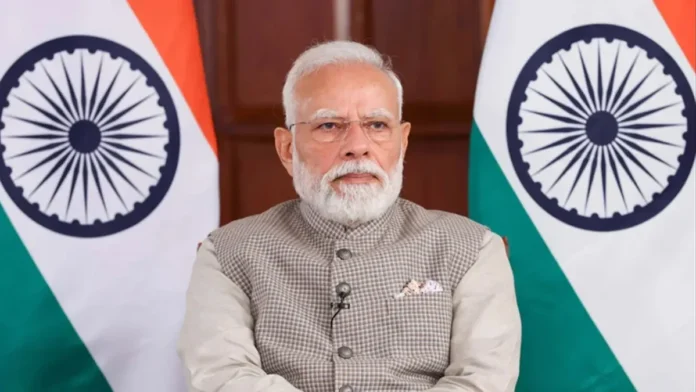
PM Modi Sanskrit Subhashitam on Wednesday carried a message centered on benevolence and the welfare of others, as Prime Minister Narendra Modi continued sharing traditional Sanskrit wisdom through his social media platform X.
The Prime Minister’s latest post emphasized that the true fulfillment of human life lies in using one’s physical abilities, wealth, intelligence and words for actions that contribute to the well-being of other living beings.
The Prime Minister’s Office said the Subhashitam highlighted the importance of benevolent actions and working for the welfare of others.
The post comes as PM Modi has shared a series of Sanskrit teachings over recent days, touching on themes including courage, self-respect, perseverance, unity and collective progress.
What Does PM Modi’s Sanskrit Verse Mean?
The Sanskrit Subhashitam shared by the Prime Minister conveys the idea that human life achieves its fullest purpose when individuals use the resources available to them for the benefit of others.
Its message can broadly be understood as:
The fulfillment of human life lies in continuously working for the welfare of others through one’s physical strength, financial resources, intellect and speech.
The teaching places service and benevolence at the center of meaningful human conduct.
Rather than limiting responsibility to financial charity, the verse presents a wider idea of contribution — suggesting that a person can help others through physical effort, material resources, knowledge, thoughtful advice and constructive words.
Message Goes Beyond Financial Charity
One of the most significant aspects of the verse is its broad interpretation of service.
A person does not necessarily need substantial wealth to contribute to society.
Someone can help another individual through knowledge, physical assistance, encouragement or responsible communication.
The teaching therefore presents social welfare as something that can be practiced through everyday conduct rather than only through large charitable contributions.
The PMO described the verse as highlighting benevolent actions and the welfare of others.
PM Modi Shared Message on Self-Respect a Day Earlier
The Wednesday post follows another Sanskrit Subhashitam shared by Prime Minister Modi on Tuesday, August 18.
That teaching focused on self-respect, courage and steadfastness.
Its central message was that a person should remain firm in difficult circumstances rather than abandoning principles or surrendering self-respect.
The PMO explained that the verse underscored the importance of living with self-respect and courage while remaining steadfast in one’s ideals and values.
The teaching suggested that genuine strength lies not simply in overcoming an opponent but in remaining committed to truth, patience and personal dignity even under pressure.
Tuesday’s Message Focused on Courage and Principles
The August 18 Subhashitam conveyed a strong message about human character.
According to the interpretation shared through the Prime Minister’s official communication, individuals should remain courageous and preserve their dignity rather than compromise fundamental principles because of difficult circumstances.
The message linked perseverance with personal integrity.
In practical terms, it encouraged people to stand firm when confronted with obstacles rather than abandoning their values merely because the easier path may be more convenient.
Monday’s Sanskrit Verse Highlighted Unity
A day earlier, on Monday, August 17, Prime Minister Modi had shared another Sanskrit Subhashitam focusing on collective resolve, unity and mutual cooperation.
PM Modi said that a country moves forward through the strength of collective determination and unity, describing that spirit as an important foundation for India’s progress and prosperity.
The teaching called for people to share common aspirations, remain connected through a spirit of unity and work cooperatively for the progress of society.
Collective Resolve as a Foundation for Progress
The August 17 message linked individual behavior with national progress.
Its broader idea was that social advancement becomes easier when people move toward shared objectives rather than working against one another.
The teaching emphasized harmony of purpose and cooperation.
PM Modi connected that principle directly with India’s development and prosperity, arguing that collective resolve and unity strengthen the country’s ability to move forward.
Three Days, Three Themes
Taken together, the Sanskrit teachings shared between August 17 and August 19 emphasize three distinct but related ideas.
August 17: Unity, collective resolve and cooperation.
August 18: Self-respect, courage and commitment to principles.
August 19: Benevolence, service and the welfare of others.
The sequence presents personal character and social responsibility as complementary values.
The first focuses on working together, the second on remaining strong in one’s principles, and the third on using personal resources and abilities to help others.
Wednesday’s Verse Focuses on Four Ways to Serve
The latest PM Modi Sanskrit Subhashitam is particularly notable because it identifies several ways in which individuals can contribute to society.
Physical Ability
People can use their time and physical capabilities to assist others.
Helping an elderly person, participating in community service or supporting people during difficult circumstances are everyday examples of such action.
Wealth and Resources
Those who possess financial resources can support people in need or contribute to legitimate public-welfare initiatives.
The principle emphasizes responsible use of wealth rather than accumulation alone.
Intelligence and Knowledge
Knowledge can itself become a form of public service.
Teaching, mentoring, offering useful advice or applying professional expertise to solve problems can benefit individuals and communities.
Words and Communication
The verse also gives importance to speech.
Constructive words can encourage, educate and unite people, while irresponsible communication can create conflict.
That makes thoughtful communication part of the broader idea of social responsibility expressed by the teaching.
August 14 Message Remembered Partition Victims
Before the recent sequence of Sanskrit posts, Prime Minister Modi marked Partition Horrors Remembrance Day on August 14 by remembering those affected by Partition.
He paid tribute to people who endured displacement and suffering but later contributed to India’s progress.
The Prime Minister also called for strengthening the national spirit of harmony and unity.
That post was specifically connected with Partition Horrors Remembrance Day and should be distinguished from the Sanskrit Subhashitam posts shared on subsequent days.
PM Modi Emphasized Courage of Partition Survivors
In his August 14 message, PM Modi recalled the resilience of people affected by Partition and highlighted their ability to rebuild their lives despite extraordinary hardship.
The post emphasized courage, determination and contribution to national progress.
He also urged citizens to strengthen harmony and unity, themes that later appeared again in his August 17 message on collective resolve.
Sanskrit Wisdom Becomes a Series of Public Messages
Prime Minister Modi has increasingly used short Sanskrit Subhashitams to communicate philosophical and ethical themes on social media.
Subhashitams are traditionally concise Sanskrit verses that convey lessons concerning conduct, morality, wisdom, leadership, relationships or social responsibility.
Because the teachings are expressed in compact poetic form, they are often accompanied by explanations that connect their traditional meaning with contemporary life.
The recent posts have covered both individual character and collective responsibility.
From Personal Strength to Social Responsibility
The progression of the latest messages also creates a broader theme.
Self-respect without concern for others can become self-centered.
Service without personal courage can become difficult to sustain.
And collective progress requires both individual integrity and willingness to cooperate.
Wednesday’s message therefore adds the idea of service to the themes of courage and unity emphasized earlier in the week.
A Message Centered on Human Purpose
At the heart of the August 19 post is a simple proposition: personal success alone does not represent the complete purpose of human life.
According to the traditional teaching shared by PM Modi, fulfillment comes when personal abilities are also used for the benefit of others.
Wealth is only one element.
Strength, intelligence and speech are equally important resources.
That broad definition means almost everyone has something they can contribute.
PM Modi’s Latest Subhashitam in Focus
The PM Modi Sanskrit Subhashitam shared Wednesday ultimately places benevolence at the center of personal conduct.
Its message is not limited to government, politics or institutions.
Instead, it addresses individual responsibility and argues that people can create social value through what they do, what they possess, what they know and what they say.
After emphasizing unity on Monday and courage on Tuesday, PM Modi’s Wednesday post turns attention toward service — presenting the welfare of others as one of the ways human life can achieve meaningful fulfillment.