WASHINGTON, August 12, 2026 —
Rubio Predicts Cuba Will Begin an ‘Irreversible’ Transformation Before Trump Term Ends
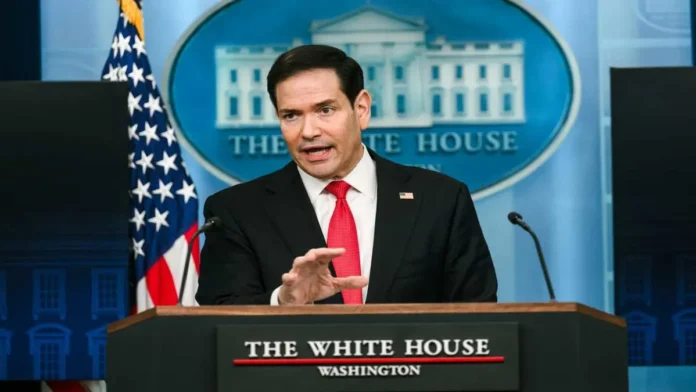
Marco Rubio on Cuba delivered one of the Trump administration’s clearest statements yet about its expectations for the communist-governed island, with the US secretary of state predicting that Cuba will move toward a fundamentally different future before the administration leaves office.
Rubio said he was confident that Cuba would enter a path of change that would be difficult to reverse. However, he cautioned that transforming a political system that has remained entrenched for nearly seven decades would require time.
His remarks came during an interview on The Katie Miller Podcast, a transcript of which was released Tuesday by the US Department of State.
Rubio did not identify specific measures the administration planned to take or provide a detailed timetable for the political transformation he predicted.
Rubio Says Change Cannot Happen Overnight
The Cuban American secretary of state, who has long taken a tough position toward Havana’s government, compared a possible transition in Cuba with the political changes that followed decades of communist rule in Eastern Europe.
Rubio argued that a system that has developed deep institutional roots over approximately 70 years cannot be removed and replaced with an entirely new structure overnight.
Such a transformation, he said, would have to proceed through a transitional process before reaching its intended destination.
Rubio pointed to Eastern European countries as examples of how long sweeping political change can take. He said several countries in the region needed between three and five years to develop into the political systems recognized today.
Poland, he added, offered perhaps the clearest example of that transition.
His comparison suggested that Washington does not expect an immediate transformation in Cuba, even as the administration continues to treat the island as a significant foreign policy priority.
No Specific US Measures Outlined
Although Rubio expressed confidence about Cuba’s future direction, he did not explain what diplomatic, economic or other policy steps the Trump administration might pursue to advance its objectives.
He acknowledged that no outcome could be guaranteed but said Cuba remained important to Washington because developments on the island directly affected US national interests.
Rubio said he believed Cuba would move significantly along the path he described before the administration’s term ended. He also argued that such progress was necessary, given the priority the administration had assigned to Cuba.
The remarks presented the desired transformation as a strategic American objective rather than solely a reflection of Rubio’s personal background or his family’s connection to the island.
‘I Work for the United States’
Rubio acknowledged that Cuba held personal significance for him, but he emphasized that his policy position was based on his responsibilities as a US official.
“I care about Cuba,” Rubio said, while stressing that he works for the United States and must approach the issue through the lens of American interests.
He said Washington would benefit from a Cuba that was secure, stable and more closely aligned with the United States.
Rubio extended the same argument to Venezuela, indicating that he viewed stability and closer cooperation in both countries as beneficial to US national security and regional interests.
His comments did not amount to an announcement of a new Cuba policy. Instead, they outlined the administration’s broader political objective while leaving unanswered how Washington intends to pursue it.
Cuba and the United States have experienced decades of strained relations shaped by ideological conflict, economic restrictions and competing regional priorities. Rubio’s latest remarks indicate that Havana will remain a central issue for the administration, although the specific course of future US action remains unclear.