Tehran/Washington | August 3, 2026
Iran Rejects Trump Hormuz Claim as tensions between Washington and Tehran remain high following U.S. President Donald Trump’s announcement that a proposed military strike had been postponed in favor of diplomacy. Iranian officials and state-affiliated media have firmly denied Trump’s assertion that an agreement had been reached to reopen the Strait of Hormuz, insisting that no such deal exists.
The developments come as both sides continue to exchange sharply different narratives over the status of regional negotiations and possible future talks.
Iran Denies Trump’s Claims on Strait of Hormuz
President Trump recently stated on his social media platform, Truth Social, that Iran and several Middle Eastern countries had requested the United States to suspend military action and that both sides had broadly agreed on key elements of a potential settlement.
According to Trump, the proposed framework included:
- Immediate and unconditional reopening of the Strait of Hormuz.
- Progress toward ending concerns over Iran’s nuclear program.
- A broader diplomatic agreement aimed at reducing regional tensions.
However, Iranian authorities have rejected those claims.
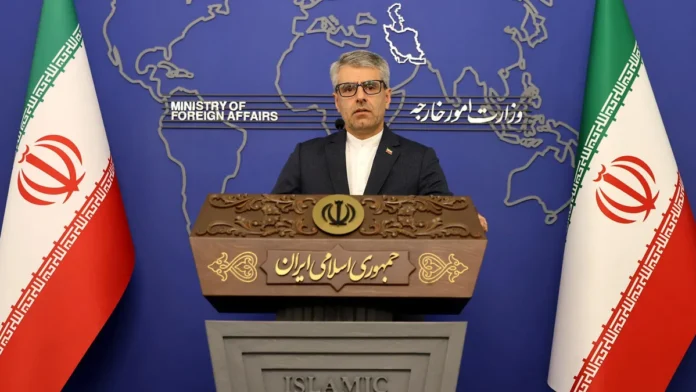
Iranian Foreign Ministry spokesperson Esmaeil Baghaei said no agreement has been reached regarding the reopening of the strategic waterway and emphasized that the Strait of Hormuz would not automatically return to its pre-conflict status.
Iranian Media Criticize Trump
Several Iranian media outlets responded strongly to Trump’s remarks.
State-affiliated and semi-official news agencies portrayed the U.S. decision to postpone military action as a strategic retreat rather than a diplomatic breakthrough.
The semi-official Fars News Agency described Trump’s move as evidence that Washington had backed away from its threats, while Mehr News Agency rejected Trump’s assertion that Tehran had requested a halt to military operations.
Iranian media maintained that no formal request had been made to suspend U.S. military action.
Saudi Arabia Raised Regional Security Concerns
According to reports, Saudi Crown Prince Mohammed bin Salman expressed concern during discussions with Trump that a large-scale U.S. strike on Iran could trigger retaliatory attacks against Gulf energy infrastructure.
Such an escalation, Saudi officials reportedly warned, could severely disrupt global energy markets and regional stability.
Trump acknowledged that concerns expressed by Gulf allies influenced his decision to delay military action and continue pursuing diplomatic efforts.
Oman Talks Near Final Stage
Iran confirmed that negotiations with Oman regarding maritime arrangements are progressing.
Foreign Minister Abbas Araghchi reportedly informed Iran’s cabinet that discussions have reached an advanced stage.
However, Iranian officials stressed that negotiations with Oman concern maritime management and regional security—not an unconditional reopening of the Strait of Hormuz.
Baghaei also clarified that any future maritime arrangement would have to respect the security interests of both countries.
Will US-Iran Talks Resume?
Trump said he expects indirect negotiations between Washington and Tehran to resume soon through mediators, although he did not identify who would participate in the discussions.
Regional diplomatic sources indicate that ongoing mediation efforts include proposals covering:
- Restoration of U.S.-Iran negotiations.
- Safe navigation through the Strait of Hormuz.
- Measures to reduce military escalation across the region.
Iran, however, has not officially confirmed any finalized negotiation framework.
Conflicting Narratives Continue
The latest exchange highlights the deep gap between Washington’s and Tehran’s public positions.
While Trump presented the postponed military operation as an opportunity for a comprehensive diplomatic breakthrough, Iranian officials insist that:
- No agreement exists on reopening the Strait of Hormuz.
- No request was made for the United States to halt military action.
- Negotiations remain ongoing without any finalized settlement.
As diplomatic contacts continue through regional intermediaries, uncertainty remains over whether the two sides can translate preliminary discussions into a formal agreement.