Washington, D.C., United States | July 25, 2026
US Export Controls China
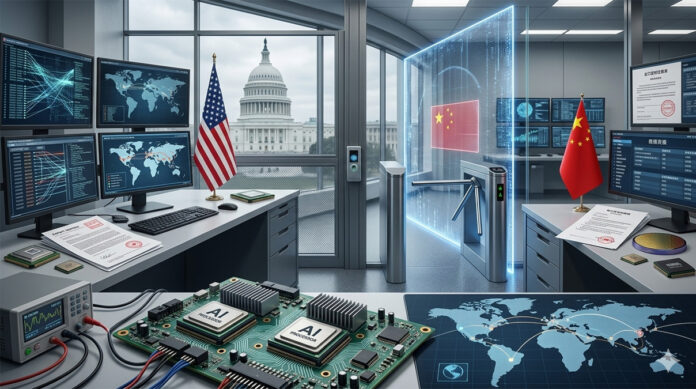
The nominee to lead U.S. export administration at the Department of Commerce’s Bureau of Industry and Security (BIS) has pledged to strengthen export controls to ensure that America’s most sensitive technologies do not support the military modernization or strategic ambitions of adversarial nations, particularly China.
Appearing before the U.S. Senate Banking Committee, Abby Warren, President Donald Trump’s nominee for Assistant Secretary for Export Administration, said export controls have become one of Washington’s most important national security tools amid intensifying global competition in artificial intelligence (AI) and advanced semiconductors.
Export Controls Are Critical to National Security
During her confirmation hearing, Warren emphasized the BIS’s role in safeguarding America’s technological leadership.
“The Bureau of Industry and Security plays a critical role in protecting the United States’ national security, economic security, and unmatched technological achievement and scientific innovation,” Warren told lawmakers.
She added that export controls are essential to ensuring that sensitive American technologies, products, and expertise are not used to strengthen the military capabilities of U.S. adversaries.
Focus on AI and Advanced Chips
Warren said emerging technologies are transforming global competition and require a modern, adaptable regulatory framework.
She stressed that export controls should remain effective as technologies evolve, particularly in areas such as:
- Artificial Intelligence (AI)
- Advanced semiconductor technologies
- Dual-use technologies with both civilian and military applications
- Strategic computing infrastructure
According to Warren, close coordination with U.S. allies and international partners will be essential to maintaining an effective export control system.
Republican Senators Highlight China Challenge
Introducing Warren, Senator Ted Cruz said the United States remains in a strategic race with China for leadership in artificial intelligence.
He argued that effective export control policies are necessary to:
- Protect U.S. technological leadership.
- Strengthen national security.
- Prevent China from gaining access to advanced American technologies.
Committee Chairman Tim Scott echoed those concerns, saying export controls help prevent sensitive U.S. technologies from falling into the hands of adversaries while ensuring America remains competitive in the global AI race.
Commitment to Work With Congress and Allies
Warren said that, if confirmed, she would faithfully implement laws passed by Congress and work closely with:
- Congress
- International allies and partners
- Industry stakeholders
- Federal agencies
- BIS enforcement officials
She pledged to ensure export controls remain both effective and enforceable while advancing U.S. national security interests.
Questions Over Semiconductor Restrictions
During the hearing, Senator Catherine Cortez Masto expressed concern that relaxing export restrictions on advanced semiconductor technologies could accelerate China’s AI capabilities.
Responding to questions, Warren said her approach would be guided by the Export Control Reform Act and existing U.S. law.
She said export restrictions should be imposed where significant national security concerns exist while also considering broader economic impacts.
Monitoring Evolving Technology
Warren acknowledged that technology evolves rapidly and said export regulations must evolve alongside it.
“Technology is constantly changing. We have to stay current, and if confirmed, I will make sure both my staff and I continually monitor these developments.”
She emphasized that BIS must remain flexible in responding to emerging technological advances.
Review of Reported Chip Export Loopholes
Later in the hearing, Senator Jack Reed asked Warren about reports alleging that Chinese-owned companies imported advanced NVIDIA and AMD chips before a regulatory loophole was closed.
Warren said she was not aware of any specific loophole but committed to reviewing existing regulations if confirmed.
She also pledged to work with BIS enforcement officials to ensure export control rules are implemented rigorously.
Growing Strategic Role of BIS
The Bureau of Industry and Security (BIS) has become one of the U.S. government’s principal agencies overseeing export controls on:
- Advanced semiconductors
- AI hardware
- High-performance computing technologies
- Dual-use commercial and military technologies
Recent U.S. administrations have expanded restrictions on technology exports to China, arguing that such measures are necessary to protect national security and preserve America’s technological advantage.
Key Highlights
- BIS nominee Abby Warren pledged to strengthen U.S. export controls on sensitive technologies.
- AI, advanced semiconductors, and dual-use technologies remain central to U.S. national security policy.
- Warren promised to work closely with Congress, international partners, and industry stakeholders.
- Republican lawmakers described export controls as essential to maintaining America’s technological edge over China.
- Senators questioned whether existing semiconductor restrictions are sufficient to prevent advanced technology from reaching China.
- Warren said she would review current regulations and ensure they remain effective as technology evolves.