New Delhi | July 29, 2026
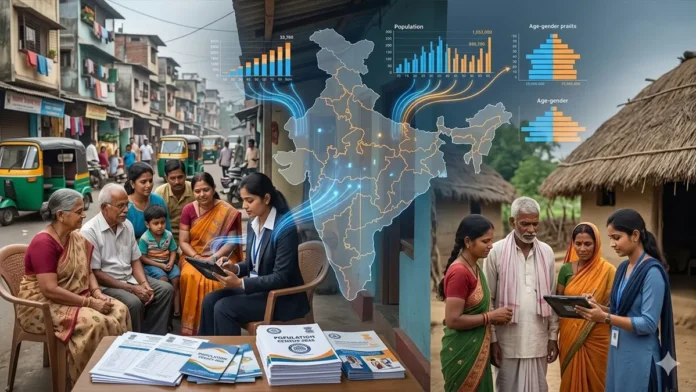
India is preparing to conduct its first nationwide caste census since 1931, with the government entering the final phase of planning for one of the country’s largest-ever demographic data collection exercises. Officials are now drafting the final questionnaire after completing a nationwide pre-trial survey earlier this month, while specialized training for census enumerators is also set to begin.
The caste enumeration will form part of the second phase of the Population Census 2026 and is expected to collect demographic, social, economic, and caste-related information from more than 1.4 billion people across the country.
The exercise will be carried out under the supervision of the Office of the Registrar General & Census Commissioner of India (RGI), the statutory authority responsible for conducting India’s decennial Census, under the administrative oversight of the Ministry of Home Affairs (MHA).
Questionnaire Being Finalized After 15-Day Pre-Trial Survey
Officials have begun analyzing the findings of a 15-day pre-trial exercise conducted from July 6 to July 20, which was designed to test how respondents identify and describe their caste.
Unlike conventional surveys, participants were not restricted to a predefined list of caste categories. Instead, they were asked to self-identify their caste, allowing officials to study the diversity and complexity of responses before preparing the final questionnaire.
According to officials, the pilot exercise highlighted the challenge of standardizing thousands of self-reported caste descriptions into a reliable national database. The final questionnaire will be designed to improve consistency while preserving the accuracy of respondents’ answers.
Enumerator Training to Focus on Data Accuracy
The Registrar General & Census Commissioner of India is preparing nearly 3.2 million training manuals, each spanning approximately 210 pages, in 19 Indian languages.
These manuals will provide detailed guidance on:
- Census procedures and field operations
- Legal provisions governing census work
- Rights and responsibilities of enumerators
- Methods for accurately recording responses
- Quality assurance and verification procedures
- Standardized collection of caste-related information
Officials say the training programme is intended to ensure uniform data collection practices across the country and improve the reliability of the final census results.
Digital Census Infrastructure Expected to Simplify Field Work
Officials believe that advances in digital mapping and household databases will make door-to-door enumeration more efficient than in previous decades.
However, collecting caste information remains one of the most complex aspects of the exercise because respondents may identify themselves using different community names, regional classifications, or sub-castes. The pre-trial findings are now being examined to determine how such responses can be classified without compromising data quality.
More Than 1.4 Billion People to Be Covered
The caste census will cover India’s entire population of more than 1.4 billion people.
In addition to caste information, enumerators will collect data on:
- Population demographics
- Social indicators
- Economic characteristics
- Cultural information
- Migration patterns
- Household details
According to the Office of the Registrar General & Census Commissioner of India, the information collected will contribute to updated national demographic statistics and support evidence-based policymaking across multiple sectors.
The data will also complement official statistical information published by the Ministry of Statistics and Programme Implementation (MoSPI), which is responsible for producing India’s official socio-economic statistics.
Why the 2026 Caste Census Is Significant
The upcoming exercise marks the first time since the 1931 Census that caste data for the entire population will be collected nationwide.
Experts say the updated information could provide policymakers with a more comprehensive understanding of India’s demographic composition and social structure. The data may also support future planning for welfare schemes, resource allocation, social development programmes, and academic research.
Government notifications and official updates related to census operations are expected to be published through the Press Information Bureau (PIB) and other official government platforms.
Key Highlights
- India is preparing for its first nationwide caste census since 1931.
- A 15-day pre-trial survey helped officials test caste-related questions before nationwide implementation.
- The final questionnaire is being drafted based on responses collected during the pilot exercise.
- Around 3.2 million training manuals in 19 languages are being prepared for census personnel.
- More than 1.4 billion people will be covered under the Population Census 2026.
- Digital mapping and updated household databases are expected to improve field operations.
- The census will generate updated demographic, social, economic, cultural, migration, and caste-related statistics for India.