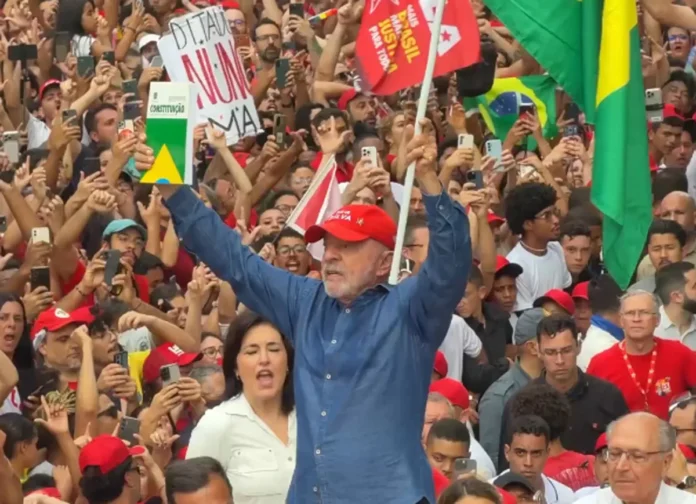
Brasília , Brazil , October 26, 2026: Brazilian President Luiz Inácio Lula da Silva has won reelection after defeating right-wing Senator Flávio Bolsonaro in a closely contested presidential runoff, securing a historic fourth, non-consecutive term in office. The result strengthens the position of Brazil’s left-wing leadership and deals a setback to the Bolsonaro political movement, which has maintained close ideological ties with US President Donald Trump.
Lula won approximately 51.8% of valid votes, compared with about 48.2% for Flávio Bolsonaro, according to the reported election results. The outcome reverses the first-round result, in which Bolsonaro finished ahead of the incumbent, and marks an unprecedented comeback in Brazil’s modern presidential elections.
The vote, held on Sunday, October 25, will have implications beyond Brazil’s domestic politics. As Latin America’s largest country and one of the region’s biggest economies, Brazil plays an important role in debates over trade, climate policy, social welfare and relations with Washington.
Lula Turns Around First-Round Defeat
The presidential contest remained competitive after the first round on October 4, when Flávio Bolsonaro secured approximately 47.03% of valid votes, compared with Lula’s 45.16%.
Neither candidate won an outright majority in the initial vote, forcing a runoff between the two leading contenders. Bolsonaro entered the second round with an advantage of approximately 2.3 million votes, but Lula subsequently overturned that lead.
The final result highlights the ability of the incumbent president to mobilize support during the closing weeks of the campaign. It also demonstrates the continuing strength of Lula’s political base, particularly among voters who support social welfare programs and his broader economic agenda.
At 80, Lula has now secured another presidential term after previously governing Brazil from 2003 to 2010 and returning to power in 2023. His latest victory extends one of the most consequential political careers in modern Brazilian history.
Why the Brazil Election Matters to Donald Trump
The result carries significance for the United States because Lula has emerged as a prominent critic of Trump’s policies and approach to international relations.
Lula has emphasized national sovereignty, multilateral cooperation, social development and Brazil’s independent role in global affairs. His government has also sought to maintain diplomatic and economic relationships across a broad range of countries rather than align exclusively with Washington.
Flávio Bolsonaro, the son of former Brazilian President Jair Bolsonaro, represents a different political direction. His campaign drew on conservative positions associated with his father’s movement and a political outlook more closely aligned with Trump and the American right.
The election therefore became part of a wider regional debate over whether Latin American countries should strengthen ties with Washington’s conservative political camp or maintain governments that prioritize left-wing economic and social policies.
However, the result does not automatically determine the future of US-Brazil relations. Trade, investment, security, environmental policy and diplomatic negotiations will continue to shape the relationship regardless of the political differences between the two leaders.
Left Versus Right: What Was at Stake?
The election reflected deep divisions within Brazilian society over economic management, public security, environmental protection and the role of government.
Lula’s political platform has emphasized social assistance, workers’ interests and measures intended to reduce poverty and inequality. His supporters view these priorities as central to Brazil’s development and the protection of vulnerable communities.
Flávio Bolsonaro campaigned on a conservative agenda associated with his father’s political movement. His candidacy appealed to voters seeking a tougher approach to crime, a more conservative social direction and a shift away from the policies of the incumbent administration.
The result keeps Brazil under left-wing leadership at a time when right-wing political movements have made gains in parts of Latin America. It also preserves Lula’s influence in regional discussions on climate change, economic integration and relations with major global powers.
Yet the narrow margin indicates that Brazil remains politically divided. Lula’s victory does not mean that support for the right has disappeared. The substantial vote share secured by Bolsonaro suggests that the opposition will remain a significant force in national politics.
Voter Turnout and the Mandatory Voting System
Brazil has a large electorate, with approximately 159 million registered voters eligible to participate in the 2026 election. Voting is compulsory for most citizens aged 18 to 70, although exemptions apply to certain categories, including some younger and older voters and people who are illiterate.
Despite the requirement, millions of eligible voters did not cast ballots. Officially reported figures put abstention in the second round at approximately 19.2%, equivalent to around 30.5 million voters.
The turnout figures underline the challenge facing political parties in a highly polarized election. Mobilizing supporters, addressing public concerns and maintaining voter engagement remain important factors in Brazil’s electoral politics.
The first-round and runoff turnout figures should not be confused: abstention was higher in the first round, when more than 33 million registered voters did not participate.
What Lula’s Victory Means for Latin America
Brazil’s political direction matters across Latin America because of its economic size, population and diplomatic influence.
Lula’s reelection is likely to strengthen the position of left-wing governments and leaders seeking closer regional cooperation on social development, climate policy and economic integration. It also provides continuity for Brazil’s current approach to international diplomacy.
For Trump’s allies in the region, the outcome represents a setback. However, Latin American politics remains diverse, and developments in individual countries will depend on local economic conditions, public security concerns, party competition and voter priorities.
The result could also influence discussions within regional organizations and international forums, where Brazil has traditionally played an important role.
What Happens Next?
Lula’s next term will bring significant challenges. His administration will need to address the cost of living, public security, economic growth and the sustainability of social programs while working with a politically divided country.
Relations with Washington will require careful management, particularly where trade, tariffs, environmental policy and diplomatic priorities differ. At the same time, Brazil will have opportunities to deepen economic partnerships with other international partners.
The strength of the opposition, the composition of Congress and the government’s ability to deliver on its campaign commitments will help determine whether the election victory translates into lasting political support.
The Bottom Line
Lula’s victory over Flávio Bolsonaro is more than a domestic electoral result. It preserves left-wing leadership in Latin America’s largest economy, extends Lula’s political legacy and delivers a setback to the Bolsonaro movement and the wider conservative political camp associated with Donald Trump.
The close result also makes one point clear: Brazil remains sharply divided over its economic and political future. Lula’s challenge now is to turn his electoral mandate into tangible results while navigating domestic divisions and a complicated international environment.