By Team INVC | INVC NEWS
Published: October 9, 2026 | 11 : 37 AM IST
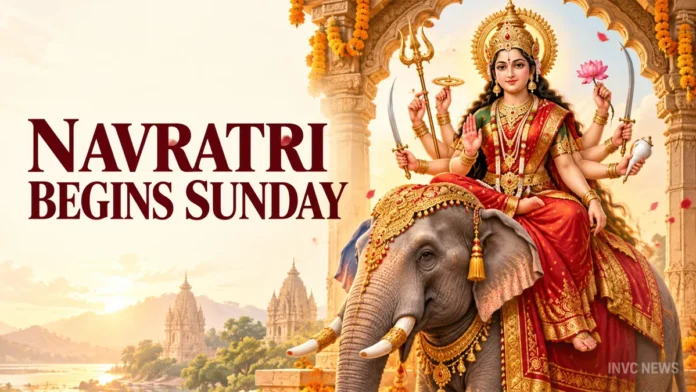
DELHI, India | October 9, 2026 — The lamps, flowers and kalash may be ready, but one detail deserves a second look before Sunday’s prayers: the festival calendar. Shardiya Navratri 2026 begins on October 11, bringing the traditional belief that Goddess Durga will arrive on an elephant. However, families planning Ghatasthapana, Kanya Puja and the final rituals should check the dates carefully.
The celebration reaches Vijayadashami on October 20. Meanwhile, Drik Panchang’s Delhi calendar places Durga Ashtami and Maha Navami on October 19, with Saptami appearing on October 17 and 18.
That distinction matters. A calendar day and a lunar tithi do not always move together. Consequently, counting forward from the opening Sunday can lead families to choose the wrong day for a particular ritual.
For devotees, this year’s Navratri combines an auspicious arrival tradition with a practical reason to save the puja schedule.
Why Durga’s Elephant Arrival Carries Special Meaning
According to the traditional weekday-based interpretation of the goddess’s arrival, a Sunday or Monday start signifies an elephant, or gaja, as her ceremonial arrival vehicle.
Devotees associate the elephant with rain, abundance and prosperity. Therefore, the belief adds a hopeful note to the opening of this year’s festival.
This symbolism belongs to religious tradition. It does not establish a weather forecast or guarantee a financial outcome. Instead, it expresses the hopes that devotees bring to their prayers: nourishment, stability and well-being for their families.
The seasonal arrival vehicle also differs from Durga’s familiar lion imagery. It represents a particular Navratri tradition rather than a change to the goddess’s established iconography.
Ghatasthapana on October 11: Delhi’s Puja Windows
Ghatasthapana, also called Kalash Sthapana, marks the beginning of Navratri worship. Families install the sacred vessel and begin their prayers to Goddess Durga.
For Delhi, Drik Panchang lists these windows on Sunday, October 11:
- Morning Ghatasthapana muhurat: 6:19 AM–10:12 AM IST
- Abhijit muhurat: 11:44 AM–12:31 PM IST
However, readers should use these timings specifically for Delhi. Sunrise and local calculations can change the recommended window in another city.
Before setting an alarm or arranging a priest’s visit, confirm the muhurat in a location-specific panchang. Families who follow an established temple or household tradition should also confirm which window their priest recommends.
A timing forwarded without a city name can create avoidable confusion. Therefore, share the location alongside the date and time.
The Calendar Detail Families Should Not Miss
The phrase “ten days of celebrations” can describe the period from October 11 through Vijayadashami on October 20. However, it should not imply ten separate Navdurga forms or ten complete days of the same ritual schedule.
Navratri centers on the nine forms of Goddess Durga. Lunar tithis determine the placement of important observances, while Vijayadashami brings the wider festive period to its culmination.
In the Delhi schedule, Saptami appears on two successive dates, October 17 and 18. Durga Ashtami and Maha Navami then appear together on October 19.
This explains why families should avoid assuming that the eighth calendar day must automatically serve as their Ashtami puja date.
Dates Worth Saving Before the Festival Begins
Sunday, October 11: Navratri begins with Ghatasthapana.
Saturday–Sunday, October 17–18: Saptami appears across both dates in the Delhi calendar.
Monday, October 19: The calendar lists Durga Ashtami, Mahagauri Puja, Sandhi Puja and Maha Navami.
Tuesday, October 20: The schedule lists Navami Homa, Navratri Parana, Durga Visarjan and Vijayadashami.
Although this provides a useful planning guide, individual rituals may require a more precise time. In particular, families arranging Kanya Puja, a homa or fasting completion should confirm the relevant tithi and their customary practice.
Prepare the Puja Space Before Sunday Morning
A little preparation can make the opening prayers calmer. Gather the kalash, coconut, flowers, lamp, incense and other items that your household tradition requires before the chosen muhurat begins.
Similarly, decide who will handle the daily offerings and prayer arrangements. If your family maintains an akhand jyot, choose a stable place for the lamp and arrange appropriate supervision.
For Kanya Puja, plan invitations and food preparation in advance. However, confirm the ritual date first, especially if relatives follow different regional customs.
The most useful festival reminder this year carries three details together: the October 11 start, the correct local Ghatasthapana window and the October 19 Ashtami–Navami schedule for Delhi.
Saving those details now can prevent a last-minute rush—and sharing them with family can keep everyone’s preparations on the same calendar.