By Team INVC | INVC NEWS
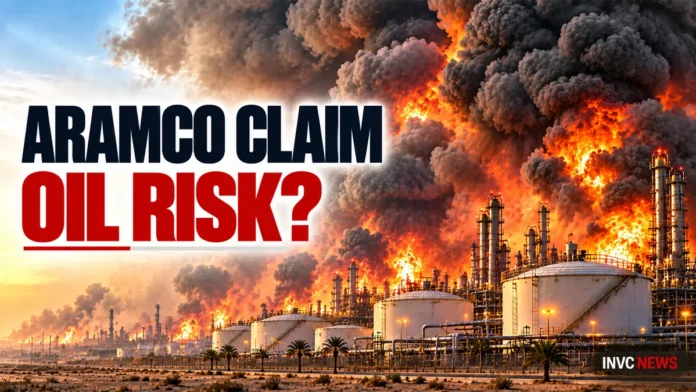
RIYADH, Saudi Arabia | October 4, 2026 — The Houthi Aramco attack claim has raised fresh questions about Saudi energy security. Yemen’s Houthis said they targeted an Aramco facility in Riyadh with ballistic missiles and drones on October 3. Reuters separately reported a witness account of fire and smoke nearby. However, a Saudi-led coalition spokesman disputed the targeting claim. The immediate question for oil consumers is whether the incident disrupted operations or supplies. The reports reviewed for this story do not establish such a disruption.
THE 60-SECOND BRIEF
- The reported incident dates to Saturday, October 3.
- Houthi spokesman Yahya Saree claimed the operation caused fires.
- Coalition spokesman Turki al-Maliki called the group’s account “misleading.”
- A verified operational assessment remains essential to judging the consequences.
- Neither dramatic images nor a claim of responsibility measures lost oil supply.
- Any impact on Indian fuel costs depends on subsequent market and pricing developments.
What Happened
Saree presented the claimed operation as retaliation for Saudi attacks on Yemen’s capital, Sanaa, and other provinces.
Anadolu reported his statement and the coalition’s response. Al-Maliki accused the Houthis of seeking to divert attention from losses in Yemen.
The competing accounts leave important questions open. They do not provide a shared explanation of the incident, a verified damage assessment or a confirmed recovery timeline.
At the time of Reuters’ report, Aramco had not immediately answered its request for comment.
Consequently, the available evidence supports reporting an attack claim and observed fire. It does not support declaring that the incident disabled a refinery or halted exports.
Why It Matters
Energy infrastructure can attract immediate attention because damage may affect operations beyond the location of an incident.
However, the consequences depend on what happened to the facility. A contained fire and a prolonged shutdown have different implications for supply.
INVC NEWS’s assessment is that readers should focus on operating status, the affected equipment and the duration of any interruption. Those details would help establish whether the incident creates a local operational problem or a broader supply concern.
Without them, a prediction of a deeper oil crisis remains speculative.
What Each Side Says
The Houthis say their operation achieved its objective. The coalition challenges their account of targeting Riyadh.
Neither statement independently settles the cause of the fire or its industrial consequences.
The distinction matters because a military claim, an official rebuttal and a company’s operational assessment serve different purposes. An operational statement would need to explain whether the facility continues working and whether customers face any delivery changes.
Readers should therefore assess each account against the specific question it answers.
Could This Deepen the Oil Crisis?
It could add to concerns about infrastructure security. Yet a confirmed supply loss requires further evidence.
Three developments would make the oil-market implications clearer: a company statement identifying interrupted operations, a measurable reduction in output or deliveries, and an estimate of how long recovery would take.
Markets can also react to uncertainty before a supply loss becomes clear. Such a reaction, however, would need current price evidence and careful attribution.
This report does not establish a price increase caused by the Riyadh incident.
Similarly, it does not establish a shortage. A threat to infrastructure and a documented reduction in available oil are distinct developments.
Numbers That Matter
October 3, 2026: The date of the claimed operation and reported fire.
October 4, 2026: The date of this INVC NEWS report.
No confirmed output-loss figure: The reviewed reports do not quantify oil production lost because of the incident.
No confirmed restoration deadline: They also do not establish a shutdown period.
The absence of those figures limits any assessment of the supply impact. It does not prove that damage occurred or that operations escaped damage.
The Bigger Picture
Reuters reported on October 2 that Saudi Arabia was considering an offensive against the Houthis. Officials cited protection of Saudi oil facilities as one concern.
That context explains why the Riyadh claim deserves attention. It also makes verification especially important as rival parties describe military developments.
For India, the relevant connection runs through international energy prices, shipping costs and exchange rates. However, the incident alone does not determine what consumers will pay for petrol, diesel or LPG.
What Happens Next
The most useful next update would identify the cause of the fire and the facility’s operating status.
Any subsequent company disclosure should clarify damage, interrupted activity and repair requirements. Separately, delivery information could show whether customers face a supply effect.
Those developments would provide a stronger basis for assessing the economic consequences than repeated claims about military success.
INVC NEWS Bottom Line
The Riyadh incident raises an energy-security question, while the coalition disputes the Houthi account. The available reports do not confirm a resulting oil-supply loss. The next decisive evidence will concern what happened at the facility and whether its operations changed.