
By Team INVC | INVC NEWS
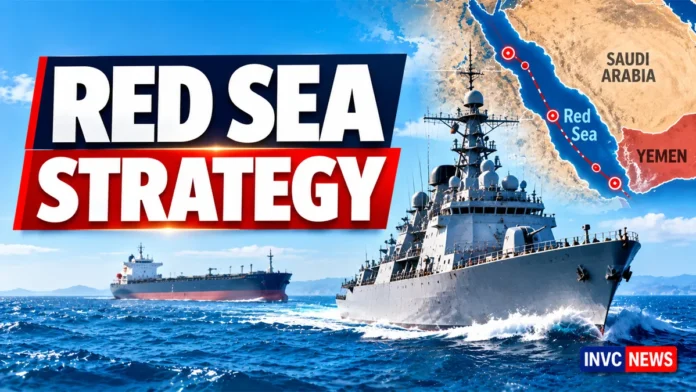
RIYADH, Saudi Arabia | October 3, 2026 — Saudi Arabia is preparing an offensive against Houthi forces in Yemen, putting the security of a major international shipping corridor at the center of its next military move. Regional and Western officials familiar with the preparations say Riyadh is weighing a concentrated coastal assault around Bab el-Mandeb against a wider campaign across multiple fronts. The choice carries stakes well beyond Yemen: renewed fighting could reshape shipping security, disrupt cargo movements and put additional pressure on civilians living near the battle zones.
INVC NEWS | BEYOND THE HEADLINE
Riyadh Weighs a Coastal Push Against a Wider Campaign
Officials told Reuters that Yemeni ground forces would lead the operation with Saudi air support. The broader option could include Al-Bayda, Marib, Taiz and Al-Jawf.
The officials gave no firm launch date. Saudi and Yemeni government spokespeople, the Houthis and the US military did not immediately respond to requests for comment.
That leaves the central decision unresolved: how far Riyadh intends to take the campaign.
A focused coastal push would concentrate on access to the shipping corridor. A wider offensive would expand the battlefield and demand coordination across several areas. The difference would shape both the military challenge and the consequences for people on the ground.
The Fight for the Coast Has Global Stakes
Bab el-Mandeb links the Red Sea with the Gulf of Aden and serves the route connecting Asia with the Mediterranean through the Suez Canal.
For shipping companies, the immediate question is straightforward: can vessels cross safely and keep their schedules?
When security deteriorates, operators must weigh the risks of continuing a voyage against the costs of delaying or rerouting it. Those decisions can affect cargo delivery, freight expenses and the working capital businesses tie up in goods at sea.
A military operation aimed at securing the coast would therefore face two tests. It would have to achieve its territorial objectives and convince commercial operators that the passage offers dependable protection.
Coastal Gains Alone Would Not End the Maritime Threat
The US Maritime Administration warns that Houthi threats include missiles, drones, explosive boats and vessel seizures. Its advisory also identifies expanded coastal and island control as a factor that strengthens the group’s ability to locate and attack passing ships.
The challenge consequently extends beyond capturing territory. Shipping crews need protection against attacks that can reach vessels offshore.
For Riyadh, any advance would need to translate into a sustained reduction in those threats. For commercial operators, updated security assessments would matter more than declarations of victory.
Indian Trade Faces a Practical Exposure
Indian businesses moving goods through the Red Sea–Suez corridor have a direct reason to follow the next developments.
Exporters need reliable sailing schedules to meet customer commitments. Importers need predictable arrivals to manage inventories. If operators change routes or delay cargoes, businesses may have to adjust delivery dates and financing arrangements.
However, the effect will depend on individual shipments. A company’s carrier notice, freight quotation and insurance terms will show its actual exposure.
The next useful evidence will come from shipping activity: whether vessels maintain passage, whether operators revise schedules and whether transport costs change.
Yemen’s Civilians Face the Immediate Cost of Escalation
For families near the front lines, a wider campaign would bring a more immediate concern than global freight rates: the ability to remain safe and reach essential supplies.
Ports, roads and coastal settlements support civilian life as well as commerce. Any expansion of fighting would put humanitarian access, medical services and displacement under closer scrutiny.
Military claims must therefore face a broader assessment. Control of a strategic area would tell only part of the story. Conditions for civilians—and their access to food, water and care—would determine another crucial part.
The Next Decision Will Define the Campaign
Riyadh’s choice between a limited coastal operation and a broader offensive will establish the scale of its next move.
An official announcement, verified ground developments and fresh maritime advisories will provide the clearest signals. Shipping companies will then judge whether security has improved enough to support reliable passage.
Saudi Arabia’s reported preparations raise the prospect of a consequential new phase in Yemen’s conflict. The decisive outcome will come at sea and on land: whether the operation reduces threats to trade while protecting the civilians who live along the route.