NEW YORK, United States | September 26, 2026 —
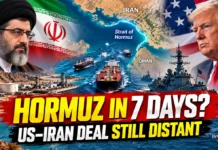
Iran has put forward a seven-day diplomatic roadmap that could reopen the Strait of Hormuz, restart nuclear negotiations and create a path toward ending months of hostilities with the United States.
Iranian Foreign Minister Abbas Araghchi outlined the proposal on the sidelines of the United Nations General Assembly in New York, saying Tehran had already transmitted the framework to Washington through intermediaries.
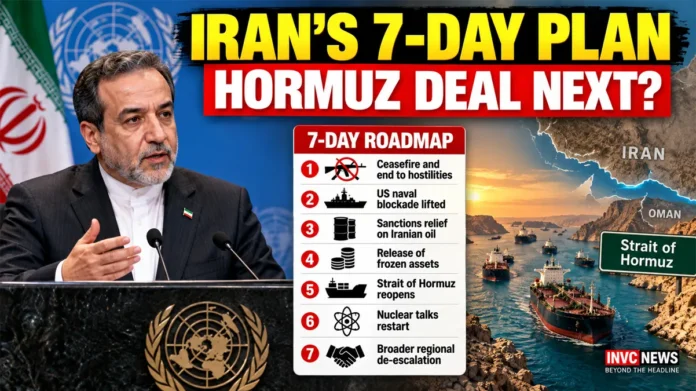
Under the proposal described by Iran, the seven-day countdown would begin after the United States accepts a series of conditions.
If the process moves forward as Tehran proposes, the Strait of Hormuz would reopen at the end of the seventh day.
The plan could have major consequences not only for the Iran-US confrontation but also for global oil prices, shipping costs and energy supplies.
THE 60-SECOND BRIEF
Iran has proposed a seven-day roadmap to the United States.
Tehran says the plan could lead to the reopening of the Strait of Hormuz on Day 7.
Iran wants the United States to ease or end its naval blockade.
The proposal also seeks relief from sanctions affecting Iranian oil and the release of frozen Iranian assets.
Hostilities across relevant regional fronts would have to stop under the proposed framework.
Talks over Iran’s nuclear programme would restart.
The proposal has been transmitted to Washington through intermediaries.
The United States has not publicly accepted the full framework.
What Has Iran Proposed?
Foreign Minister Abbas Araghchi said Iran has presented a plan under which specific actions would take place over seven days.
The timetable would not begin automatically.
According to Araghchi, it would start after Washington accepts the proposed framework.
Iran would then move toward reopening the Strait of Hormuz by the end of the seventh day.
Tehran also wants negotiations with Washington to resume.
The proposal broadly draws on commitments included in an earlier memorandum between Iran and the United States that failed to produce a lasting settlement.
What Iran Wants From the United States
Reports describing the Iranian proposal indicate several major conditions.
Iran wants the United States to lift or ease the naval blockade affecting Iranian ports.
Tehran is also seeking sanctions relief connected to Iranian oil exports.
Another element involves the release of Iranian assets frozen abroad.
Iran also wants an end to military attacks and broader hostilities covered by the proposed settlement.
These conditions would form part of a phased process rather than a single immediate action.
What Iran Is Offering
Iran’s central offer is the reopening of the Strait of Hormuz.
The waterway has become one of the most important pressure points in the conflict because of its role in global energy transportation.
Tehran says that if its conditions are accepted and the timetable proceeds, the Strait could reopen at the end of seven days.
Iran has also indicated that it would return to talks over its nuclear programme.
That makes the proposal broader than a shipping arrangement.
It combines maritime security, sanctions, regional hostilities and nuclear diplomacy into one framework.
Why the Strait of Hormuz Matters
The Strait of Hormuz is one of the world’s most important energy corridors.
Oil and liquefied natural gas shipments from major Gulf producers depend heavily on the route.
Any restriction on traffic can quickly affect:
Global crude oil prices
LNG supplies
Marine insurance costs
Freight rates
Shipping schedules
Fuel prices
Regional import and export flows
Recent disruption has already forced shipping companies and energy traders to reassess routes, insurance exposure and delivery schedules.
That is why even the possibility of reopening the Strait can move global markets.
Oil Markets React to Diplomatic Signals
Oil prices have already reacted to reports that Iran could reopen Hormuz within a week under an agreement.
Recent reporting showed Brent crude falling below the psychologically important $100-per-barrel level after the Iranian proposal emerged.
The market reaction reflects a simple calculation.
If normal commercial shipping through Hormuz resumes, fears of a severe supply disruption could ease.
However, traders remain cautious because the proposal still depends on political and military decisions by both sides.
Is the Strait of Hormuz Reopening Now?
No.
This is the most important distinction.
Iran has offered a pathway toward reopening the Strait.
It has not announced an unconditional immediate reopening.
The seven-day timetable would begin only if Tehran and Washington reach agreement on the proposed conditions.
Until that happens, shipping risks remain.
Does the Plan Mean the War Is Ending?
Not yet.
The proposal represents a diplomatic opening rather than a completed peace agreement.
Several difficult issues remain unresolved.
Washington would have to decide whether it accepts Iran’s conditions.
Both sides would also need to agree on the sequencing of military de-escalation, sanctions relief and maritime measures.
Any wider regional ceasefire provisions would require additional coordination.
Therefore, claims that the conflict has already ended would be premature.
Regional Ceasefire Is Part of the Bigger Picture
The proposal is not limited to direct US-Iran military activity.
Reports describing the framework say Iran wants hostilities to end across multiple connected fronts.
That could include fighting involving Lebanon and other areas affected by the wider regional confrontation.
This significantly increases the diplomatic complexity.
A Hormuz agreement could potentially be negotiated between Tehran and Washington more narrowly.
A broader regional settlement involves additional governments, armed groups and security interests.
Nuclear Talks Could Restart Immediately
Iran’s nuclear programme remains another central part of the proposal.
Tehran has indicated that comprehensive nuclear negotiations could resume as part of the framework.
The nuclear issue has repeatedly shaped relations between Iran and the United States.
Any renewed talks would have to address longstanding disagreements over enrichment, sanctions relief, inspections and verification.
For that reason, reopening Hormuz could become the first visible step in a much larger diplomatic process.
Why Iran Is Making the Offer at the UN
The timing matters.
Iran’s delegation is in New York for the United Nations General Assembly, where ministers, diplomats and intermediaries from multiple countries are gathered in one place.
This creates opportunities for indirect discussions even when direct high-level talks remain politically difficult.
Qatar and other regional mediators have played roles in carrying messages between Washington and Tehran.
Iran has said its delegation has authority to pursue diplomatic discussions during the UN gathering.
Washington Has Not Accepted the Full Plan
The biggest unanswered question remains the US response.
Iran has presented the proposal through intermediaries, but there is no confirmed agreement on the full seven-day framework.
The two sides continue to disagree over sanctions, military pressure, regional security and the nuclear programme.
That means diplomacy has reopened a door, but it has not yet produced a deal.
What Could Happen During the Seven Days?
If Washington accepts the Iranian framework, the proposed sequence could involve several steps.
Military de-escalation would begin.
Measures related to the US naval blockade would follow.
Sanctions and Iranian assets would enter negotiations or implementation stages.
Nuclear discussions could restart.
Maritime arrangements would then move toward normalisation.
Under Iran’s proposal, the Strait of Hormuz would reopen by the end of the seventh day.
The exact sequencing remains subject to negotiation and has not been jointly confirmed by both governments.
Why This Matters for India
India has a direct economic interest in stability around the Strait of Hormuz.
The country imports a large share of its crude oil requirements.
Disruption in Gulf energy flows can raise international oil prices, shipping costs and insurance premiums.
Those pressures can eventually affect India’s import bill, fuel markets, inflation and corporate transportation costs.
A sustained reopening of Hormuz would therefore matter far beyond West Asia.
The Biggest Obstacles
Several issues could still derail the proposal.
The United States and Iran remain far apart on important security questions.
Trust between the two governments is extremely limited.
Both sides also accuse each other of violating previous understandings.
Regional conflicts create another layer of uncertainty.
Even if negotiators agree on the principle of de-escalation, implementing each step in the correct sequence could prove difficult.
What Happens Next
Attention now turns to Washington’s response.
Diplomats will watch for signs that the United States is prepared to engage with the seven-day framework or negotiate a modified version.
Any confirmation of direct or indirect talks could immediately affect oil markets and shipping expectations.
Conversely, rejection of the plan or fresh military escalation could quickly reverse hopes of de-escalation.
The next few days could therefore determine whether Iran’s seven-day proposal becomes a negotiating framework or another failed diplomatic initiative.
INVC NEWS Bottom Line
Iran has offered a seven-day route toward reopening the Strait of Hormuz and restarting nuclear diplomacy, but the Strait is not reopening automatically. Tehran’s proposal depends on US acceptance of conditions involving military de-escalation, the naval blockade, sanctions and frozen Iranian assets. If both sides agree, Hormuz could reopen at the end of the seven-day timetable. Until then, this remains a diplomatic proposal rather than a completed settlement.
What happened. Why it matters. What comes next.