MUMBAI, India | August 24, 2026 —
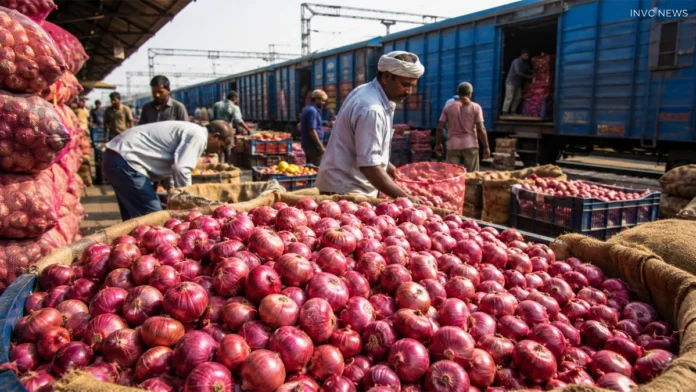
Onion Prices Surge Nearly 50% has quickly become one of the biggest kitchen-budget stories of the week, with the all-India average retail onion price rising to around ₹42 per kg and the government beginning a fresh intervention through special onion trains popularly referred to as “Kanda Express.”
The move is aimed at easing supply pressure in high-price markets ahead of the festival season, especially in cities where onion prices have climbed well above the national average. The latest intervention is expected to move onions from Nashik to major consumption centres including Delhi, Chennai, Kochi and Guwahati.
For households, the question is simple: Will onion prices now come down, or will pyaz remain expensive through the festive period?
Why Onion Prices Are Rising So Fast
The current surge is not a small seasonal fluctuation. Onion prices have risen sharply on both a yearly and monthly basis, reflecting a tighter market and pressure on supplies.
The all-India average retail onion price has touched around ₹42/kg, which is roughly 45% higher than a year ago and about 19% above last month’s level. That kind of rise matters because onion is not a luxury item—it is a daily-use kitchen staple across urban and rural India.
In practical terms, many households may not notice inflation through one single expensive purchase. They feel it through repeated grocery bills. Onion falls squarely in that category.
The price spike appears to be driven by a mix of factors:
- lower or uneven arrivals in some markets
- weather-related disruptions in the supply chain
- higher transport and handling pressure
- strong demand from major urban consumption centres
- festival-season stocking and retail tightness
This is exactly the kind of food-inflation story that quickly turns into a broader pocketbook issue.
What Is ‘Kanda Express’ and Why Has the Government Started It?
“Kanda” means onion in Marathi, and the term Kanda Express is being used for special onion transport movement meant to push supplies rapidly into markets where prices are elevated.
The government’s logic is straightforward.
If prices are rising because demand is outpacing available market arrivals in key cities, then faster and larger supply movement can help cool wholesale pressure and, eventually, retail rates. By sending onion consignments from the Nashik belt, one of India’s most important onion hubs, to high-price destinations, the Centre is trying to improve availability before the festival rush intensifies further.
Delhi is one of the key markets to watch. Onion prices there have moved much higher than they were a year ago. Chennai, Kochi and Guwahati also matter because regional price spikes often hit consumers hard when logistics become tight.
The intervention is important not only because of the transport itself, but because it signals that the government sees the onion market as sensitive enough to require active management.
Will Onion Prices Actually Come Down Now?
That is the most important question for readers—and the honest answer is: possibly, but not immediately everywhere.
A supply push like Kanda Express can help in three ways:
- It can improve physical availability in high-price markets.
- It can reduce panic buying or speculative tightness.
- It can signal to traders that the government is prepared to intervene.
However, onion prices do not always fall overnight simply because a government measure begins.
Retail prices depend on several layers:
- mandi arrivals
- wholesale trading patterns
- local logistics
- city-wise demand
- weather conditions
- retailer margins
So while the special movement could soften prices in the coming days, the extent of relief may vary by city.
Consumers in some places may first see prices stop rising further before seeing any meaningful drop.
Why Onion Inflation Matters More Than It Looks
Onions have a strong psychological and political effect in India because they are a daily-use food item with highly visible prices. When onion prices jump, consumers notice it immediately.
A rise in onion prices can also feed wider concerns about food inflation. Even if other staples remain relatively stable, a sharp rise in vegetables can create the perception that household expenses are becoming harder to manage.
That matters in a festival-heavy period, when spending is already rising because of travel, gifts, sweets, groceries and family events.
If pyaz remains costly through this phase, the pressure will not be limited to home kitchens. Restaurants, caterers, snack sellers and small food businesses could also feel the squeeze.
Which Cities Could Benefit the Most?
The cities expected to receive onions through this intervention are not random choices.
They are large or strategically important consumption centres where elevated prices can quickly affect a large number of consumers.
Delhi
Delhi is usually one of the most closely watched retail markets because price spikes there get immediate public attention. If supplies improve meaningfully, Delhi could be one of the first places where the effect becomes visible.
Chennai and Kochi
Southern markets can face sharper swings when transport or sourcing gets tight. Additional supply could help stabilize prices if local arrivals remain uneven.
Guwahati
The North-East often feels supply pressures differently due to distance and logistics. A targeted intervention here can be especially significant if market availability has been constrained.
Could Prices Rise Again Even After This Step?
Yes, that risk still exists.
A transport intervention can ease immediate pressure, but it does not eliminate all the variables affecting onion prices. If heavy rains disrupt movement, if arrivals remain below expectations, or if festival demand accelerates more sharply than expected, prices may stay elevated or turn volatile again.
This is why the next few days will matter more than the announcement alone.
Market watchers will track:
- mandi arrivals
- wholesale onion rates
- retail city-wise movement
- the speed of government supply distribution
- whether fresh arrivals improve consistently
If wholesale pressure eases, consumers could begin to see relief at the retail level. If not, the intervention may simply prevent prices from rising even faster.
What Consumers Should Watch This Week
For ordinary readers, the onion story is less about policy language and more about a few practical questions:
- Is the retail price in your city still rising?
- Has your local market stabilized?
- Are organized retail outlets offering cheaper onions than neighborhood stores?
- Does the price fall after government supplies begin reaching major mandis?
Those are the real indicators of whether Kanda Express is working.
The other point to remember is that price relief in wholesale markets does not always reach consumers immediately. There can be a lag between improved supply and visible retail benefit.
Onion Prices Surge Nearly 50%: The Bottom Line
The latest onion-price spike has turned into a major consumer story because it affects everyday spending, not just market sentiment.
With the all-India average retail onion price near ₹42/kg and significantly higher in some cities, the government has moved to respond through Kanda Express supply operations from Nashik to key markets such as Delhi, Chennai, Kochi and Guwahati.
That should help improve availability and may cool prices in the coming days.
But whether pyaz becomes meaningfully cheaper before festivals will depend on how quickly supplies reach retail channels, whether mandi arrivals improve, and whether weather or logistics create fresh disruptions.
For now, the intervention offers a clear message: the government wants to prevent onion inflation from becoming a bigger consumer flashpoint.