WASHINGTON, United States | August 21, 2026
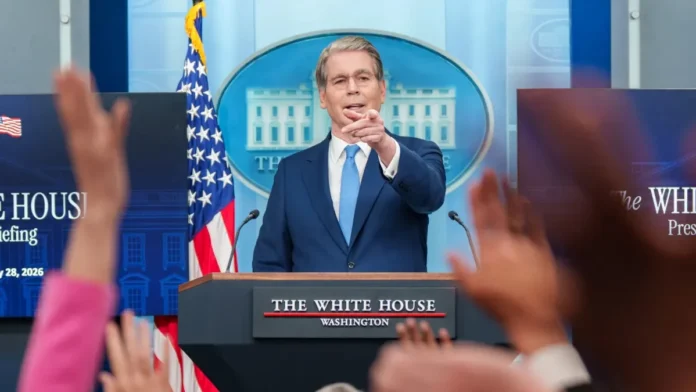
US sanctions on Iran are set for a dramatic escalation after Treasury Secretary Scott Bessent said Washington plans to impose what he described as the “toughest sanctions in history” on Tehran, while calling on China and U.S. allies to support a widening economic pressure campaign.
Bessent said the United States intends to use intense economic pressure against Iran as Washington seeks to weaken Tehran’s ability to finance its government and military activities. He indicated that the administration views economic measures as an important tool alongside its broader strategy in the Middle East.
The Treasury secretary said more details about the planned measures would be presented at a news conference on Monday.
The announcement puts renewed attention on Iran’s oil exports, international financial connections and trading relationships at a time when tensions surrounding the Strait of Hormuz are already affecting global energy markets.
China Emerges as Key Focus of US Iran Strategy
China is likely to be central to the effectiveness of Washington’s next sanctions push because of its position as a major buyer of Iranian crude.
Bessent urged Beijing to cooperate with the United States and emphasized China’s own interest in maintaining stability in the Middle East and ensuring reliable energy flows.
The prospect of tougher enforcement also raises the possibility of greater scrutiny of companies, financial institutions, refiners and shipping networks involved in transactions connected to Iranian oil.
China, however, pushed back against Washington’s approach. Beijing’s diplomatic representatives argued that sanctions and pressure would not resolve the crisis and called instead for diplomatic efforts.
That disagreement could turn the Iran crisis into another significant source of friction between Washington and Beijing.
Strait of Hormuz Remains Critical to Global Oil Markets
The sanctions announcement comes as uncertainty surrounding the Strait of Hormuz continues to influence global energy markets.
The narrow waterway between Iran and Oman is one of the world’s most strategically important energy corridors. Any prolonged disruption to shipping through the region can quickly affect crude prices, freight costs and energy-importing economies.
Bessent said reopening and stabilizing the Strait of Hormuz would be in China’s interests because Beijing depends heavily on energy supplies from the Middle East.
For major oil-importing economies, including India, developments in the Gulf are particularly important because sustained increases in crude prices can feed into inflation, transportation costs and currency pressures.
Washington Turns Up Economic Pressure on Tehran
The United States has maintained extensive sanctions against Iran for years, targeting sectors including oil, banking, shipping and entities Washington says help Tehran generate revenue.
The U.S. Treasury has also repeatedly targeted what it describes as Iran’s “shadow fleet” and international networks used to transport and sell Iranian petroleum.
The latest comments from Bessent suggest Washington is preparing to intensify that strategy considerably.
Rather than relying only on direct restrictions against Iranian entities, a wider economic campaign could increase pressure on overseas companies and financial institutions that continue significant business with Tehran.
However, the exact scope of the next sanctions package remains unclear and will be important when Bessent provides additional details Monday.
Iran Rejects US Economic Pressure
Iran has rejected Washington’s escalating economic threats.
Iranian Foreign Minister Abbas Araghchi criticized the U.S. approach and argued that economic coercion would not achieve Washington’s objectives.
Tehran has repeatedly maintained that sanctions have failed to force it to abandon its strategic policies and has accused the United States of using economic measures as a form of political pressure.
The competing statements indicate that neither side is currently signaling a major retreat.
Why the New US Sanctions Could Matter for India
For India, the biggest immediate issue is not direct bilateral trade with Iran but the potential impact on global energy prices.
India imports most of the crude oil it consumes. A prolonged increase in international oil prices can raise the country’s import bill, increase pressure on the rupee and contribute to inflation.
Higher crude prices can also affect transportation, aviation, manufacturing and other industries in which fuel or petrochemical inputs represent significant costs.
The situation therefore makes the U.S.-Iran confrontation an important economic story for Indian consumers and financial markets, rather than solely a geopolitical dispute thousands of miles away.
What Happens Next?
The next major development is expected Monday, when Bessent is due to provide further details about Washington’s sanctions strategy.
Markets will be watching for answers to several key questions: which Iranian industries and entities will be targeted, whether Washington expands secondary sanctions, how aggressively restrictions on Iranian oil buyers will be enforced, and whether China chooses to cooperate or challenge the measures.
The answers could determine whether Washington’s latest economic offensive remains primarily a U.S.-Iran confrontation or develops into a broader dispute affecting China, international energy trade and global markets.