New Delhi , India, August 19, 2026
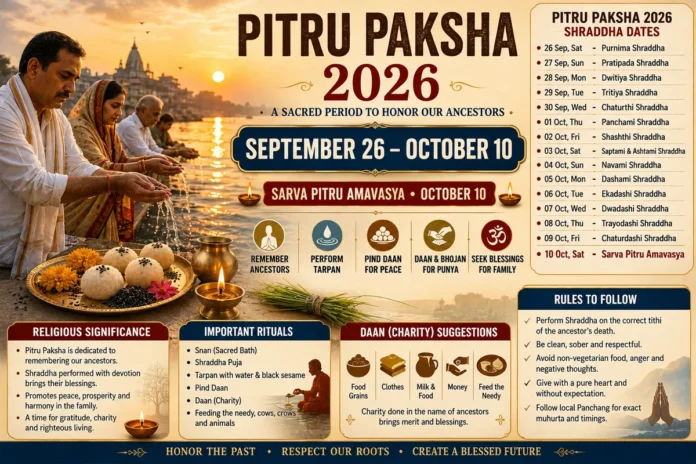
Pitru Paksha 2026 will begin on September 26 with Purnima Shraddha and conclude on October 10 with
, marking an important period in the Hindu calendar dedicated to remembering departed ancestors through Shraddha, Tarpan, Pind Daan and charity.
According to astrologer Pandit Ajay Kaushik, Pitru Paksha is traditionally regarded as a sacred period for expressing gratitude to one’s ancestors and performing rituals for their remembrance and spiritual peace.
Hindu tradition holds that Shraddha performed with devotion during this period honors deceased family members and seeks the blessings of the Pitras, or ancestors.
The observance culminates on Sarva Pitru Amavasya, regarded as the most significant day of Pitru Paksha, particularly for families who do not know the exact lunar death Tithi of an ancestor or were unable to perform Shraddha on the appropriate day. Drik Panchang likewise identifies Sarvapitri or Mahalaya Amavasya as the final and most significant day of the period.
When Does Pitru Paksha 2026 Begin and End?
For India-based Panchang calculations, the principal dates are:
Pitru Paksha begins: Saturday, September 26, 2026
Pitru Paksha ends: Saturday, October 10, 2026
Final observance: Sarva Pitru Amavasya
Purnima Shraddha is listed for September 26 in New Delhi-based calculations.
Sarva Pitru Amavasya falls on October 10, with Amavasya Tithi beginning on the night of October 9 and ending on the evening of October 10 in New Delhi.
Because Shraddha is determined by the relevant lunar Tithi during prescribed ritual periods rather than simply by the civil date, local Panchang calculations should be checked before performing a specific Tithi Shraddha.
Pitru Paksha 2026 Shraddha Calendar
The Shraddha period proceeds through the lunar Tithis from Purnima toward Amavasya. The broad sequence is:
- September 26: Purnima Shraddha
- September 27: Pratipada Shraddha
- September 28: Dwitiya Shraddha
- September 29: Tritiya Shraddha
- September 30 onward: Chaturthi and subsequent Tithi Shraddhas according to the applicable Aparahna calculation
- October 3: Ashtami Shraddha is observed in New Delhi-based calculations
- October 4: Navami Shraddha
- October 5: Dashami Shraddha
- October 6-9: Ekadashi through Chaturdashi-related Shraddha observances, depending on the prevailing Tithi
- October 10: Sarva Pitru Amavasya
Drik Panchang specifically lists Ashtami Shraddha on October 3, while Amavasya Shraddha falls on October 10.
Important: Intermediate Shraddha dates can appear differently in simple festival calendars because Shraddha selection is based on the Tithi prevailing during the appropriate afternoon ritual period. Families planning a specific Shraddha should therefore consult a local Panchang or knowledgeable priest.
Why Is Pitru Paksha Considered So Important?
Pitru Paksha is traditionally dedicated to deceased ancestors.
The word “Shraddha” is associated with performing an offering with reverence and faith.
During this period, families remember parents, grandparents and earlier generations and may perform:
Shraddha — ritual remembrance and offerings
Tarpan — offerings of water, often with black sesame
Pind Daan — symbolic food offerings for ancestors
Daan — charity
Bhojan — feeding people as part of the observance
Traditional texts and regional customs differ in the precise procedure, but remembrance, gratitude and charity remain central themes.
On Which Date Should an Ancestor’s Shraddha Be Performed?
According to traditional practice, Shraddha is generally performed on the same lunar Tithi on which the family member died.
For example, if an ancestor died on Panchami Tithi, Panchami Shraddha is traditionally chosen during Pitru Paksha.
The Gregorian date of death is not the main determining factor.
It is the Hindu lunar Tithi associated with the death that is traditionally followed.
Drik Panchang also describes Shraddha as a Tithi-based observance for deceased relatives.
What If the Death Tithi Is Not Known?
This is where Sarva Pitru Amavasya becomes especially significant.
Families who do not know an ancestor’s exact death Tithi may traditionally perform collective Shraddha, Tarpan or Pind Daan on Sarva Pitru Amavasya.
It is also commonly observed for ancestors whose Shraddha could not be completed on their corresponding Tithi.
Drik Panchang describes Sarvapitri Amavasya as the most significant and final day of Pitru Paksha and notes that a Shraddha may be performed on this day when it could not be done earlier.
Sarva Pitru Amavasya 2026 Date and Timing
Sarva Pitru Amavasya: Saturday, October 10, 2026
For New Delhi:
Amavasya Tithi begins: Around 9:35 p.m. on October 9
Amavasya Tithi ends: Around 9:19 p.m. on October 10
A traditional Kutup Muhurat for Amavasya Shraddha is listed around midday, although the exact local ritual time should be checked for the city where the ceremony will be performed.
Best Time to Perform Shraddha
Shraddha is traditionally not treated like an ordinary morning Puja.
The Aparahna period, or afternoon portion of the day, is generally regarded as particularly important for Pitru Paksha Shraddha.
Traditional Panchang calculations commonly identify:
Kutup Muhurat
Rohina Muhurat
Aparahna Kaal
as appropriate periods for Shraddha-related rites.
For example, Purnima Shraddha calculations include specific Kutup, Rohina and Aparahna windows.
This is another reason readers should not determine the Shraddha date only by checking which Tithi is present at sunrise.
How Is Shraddha Traditionally Performed?
Customs vary by region and family lineage, but a simple traditional sequence may include:
- Bathe and wear clean clothes.
- Clean the place where the ritual will be performed.
- Remember the deceased ancestors with respect.
- Offer water mixed with black sesame during Tarpan.
- Prepare Pind offerings according to family tradition.
- Offer food with prayers for the ancestors.
- Feed eligible recipients according to local or family custom.
- Offer food to animals or birds where this forms part of the family tradition and can be done safely.
- Donate food, clothes or essential items to people in need.
- Conclude the ritual with prayers for peace and family harmony.
Families who traditionally use a priest for Shraddha should follow their established family procedure.
What Is Pind Daan?
Pind Daan is one of the most recognized Pitru Paksha practices.
Traditionally prepared Pinds may use ingredients such as rice, sesame, barley, milk, honey or ghee, depending on regional custom.
The offerings symbolically represent reverence for deceased ancestors.
In parts of North India, Pind Daan is especially associated with pilgrimage centers such as Gaya, Prayagraj, Kashi and Badrinath. Drik Panchang notes the strong importance of Pind Daan in Uttar Pradesh, Bihar, Rajasthan and Haryana and highlights Gaya among the important locations.
What Is Tarpan?
Tarpan involves offering water while remembering departed ancestors.
Black sesame, Kusha grass and water may be used according to traditional practice.
The ritual is normally performed with the names or lineage of ancestors in mind.
In Bengal, Odisha and Assam, Tarpan is an especially prominent form of Pitru Paksha observance, including ritual bathing and water offerings on Mahalaya Amavasya.
What Should Be Donated During Pitru Paksha?
Charity is widely associated with Shraddha observances.
Depending on personal means, families may donate:
- Food grains
- Rice
- Pulses
- Fruits
- Clothes
- Footwear
- Utensils
- Money
- Milk or other food products
- Useful household necessities
Providing meals to people in need is also regarded as a meaningful form of Daan.
Pandit Ajay Kaushik advises that charity should be performed respectfully and according to one’s capacity rather than as a display of wealth.
Should Food Be Offered to Crows?
In several regional traditions, food is symbolically offered to crows during Pitru Paksha.
The practice is connected with traditional beliefs surrounding messengers of the ancestors.
Some communities also traditionally offer portions of food to cows and dogs.
Such customs differ considerably between regions and families and should be followed respectfully and without harming animals.
What Should Be Avoided During Pitru Paksha?
Many Hindu households observe a restrained lifestyle during Pitru Paksha.
Depending on family tradition, people may avoid:
- Major celebratory ceremonies
- Lavish festivities
- Unnecessary arguments
- Intoxicants
- Disrespect toward elders
- Wasting food
- Cruelty toward animals
- Ostentatious behavior during Shraddha rituals
Some families also avoid weddings, housewarming ceremonies or other major auspicious celebrations during this period.
These are religious and cultural traditions rather than legal requirements, and practices can differ by community.
Can New Items Be Purchased During Pitru Paksha?
There is no single practice followed by every Hindu community.
Some households avoid major celebratory purchases during Pitru Paksha, while others do not consider ordinary daily purchases prohibited.
People should follow their family or regional tradition rather than treating every popular internet restriction as a universal religious rule.
Why Is Feeding the Needy Important?
One of the broader themes of Shraddha is gratitude.
By offering food or support to others in memory of deceased ancestors, families connect remembrance with charity.
Traditional belief holds that an offering made sincerely in the name of ancestors carries spiritual merit.
Even outside ritual interpretation, providing useful food and essential items to people in genuine need makes the observance socially meaningful.
Regional Traditions Differ Across India
Pitru Paksha is observed differently across the country.
In North India, Pind Daan is especially prominent.
In Maharashtra and Gujarat, Mahalaya Shraddha and special food offerings form part of regional customs.
In Bengal, Odisha and Assam, Tarpan during Mahalaya carries particular importance.
In South India, related ancestral rites are often referred to as Pitru Karma, and local offerings and ritual procedures differ from northern customs.
These differences do not necessarily represent conflicting traditions; they reflect India’s diverse ritual practices.
Why October 10 Is Important in 2026
The final day, October 10, is particularly important because it is Sarva Pitru Amavasya.
This day traditionally offers families an opportunity to remember all deceased ancestors collectively.
It becomes especially relevant when:
- the precise death Tithi is unknown;
- Shraddha was missed earlier;
- several ancestors are being remembered collectively; or
- the family traditionally performs one principal annual Shraddha during Pitru Paksha.
Pitru Paksha 2026: Key Dates at a Glance
Beginning: September 26, 2026
Opening observance: Purnima Shraddha
Main period: Late September through October 10
Final day: October 10, 2026
Final observance: Sarva Pitru Amavasya / Mahalaya Amavasya
Main rituals: Shraddha, Tarpan, Pind Daan and Daan
Best ritual period: Generally Kutup, Rohina and Aparahna periods according to the local Panchang
Religious Significance According to Pandit Ajay Kaushik
According to Pandit Ajay Kaushik, Pitru Paksha should primarily be seen as a period of gratitude toward previous generations.
He says that families may use the period to remember the values, sacrifices and contributions of their ancestors while performing traditional Shraddha rites.
Religious belief associates properly performed Shraddha with the blessings of ancestors and peace, prosperity and harmony within the family.
These outcomes belong to faith and religious tradition and should not be interpreted as guaranteed material results.
Pitru Paksha 2026: The Central Message
Pitru Paksha 2026 begins September 26 and reaches its culmination with Sarva Pitru Amavasya on October 10.
For devotees, the fortnight is less about celebration and more about remembrance, gratitude, responsibility and charity.
Whether performed through Tarpan at home, Pind Daan at a sacred site, food donation or a traditional family Shraddha, the underlying purpose remains the same: remembering those who came before and honoring their place in the family lineage.
Because Shraddha dates depend on lunar Tithi and local Aparahna calculations, families planning ceremonies should confirm the applicable Panchang for their city before fixing the ritual date.
Quick Take
When does Pitru Paksha 2026 begin?
September 26, 2026.
When does it end?
October 10, 2026.
When is Sarva Pitru Amavasya?
Saturday, October 10.
What are the main rituals?
Shraddha, Tarpan, Pind Daan, charity and feeding people in need.
What if the ancestor’s death Tithi is unknown?
Traditionally, Shraddha can be performed on Sarva Pitru Amavasya.
Does the Shraddha date vary by city?
Yes. Tithi and ritual windows vary by location, so a local Panchang should be checked.