
UNITED NATIONS, NEW YORK, August 18, 2026 —
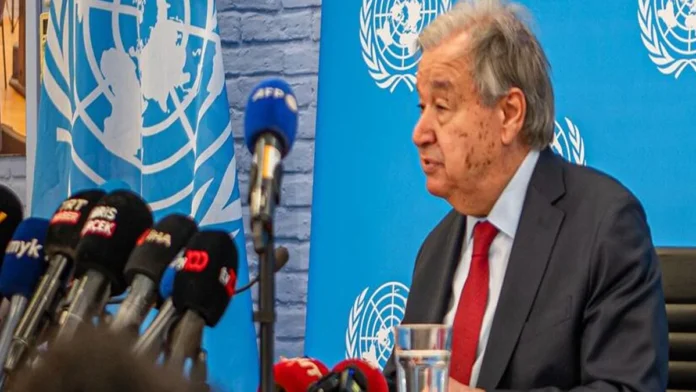
US-Iran Talks should resume as soon as possible to prevent another dangerous military escalation, United Nations Secretary-General António Guterres has urged after the 60-day negotiating window between Washington and Tehran expired without a final agreement.
US-Iran Talks should resume as soon as possible to prevent another dangerous military escalation, United Nations Secretary-General António Guterres has urged after a 60-day negotiating window for a broader agreement between Washington and Tehran expired without a final settlement.
The UN chief’s appeal comes as relations between the United States and Iran remain deeply strained over Tehran’s nuclear program, sanctions, maritime access and control of the strategically important Strait of Hormuz. The June 17 memorandum between the two sides committed them to work toward a final deal within a maximum of 60 days, but that period has now ended without the broader agreement envisioned in the document.
UN spokesperson Stéphane Dujarric said Guterres’ position remains that there is no military solution to the conflict and that diplomacy is the only sustainable way forward. He called on Washington and Tehran to return to negotiations toward a peaceful and durable settlement while also lowering increasingly confrontational rhetoric.
UN Pushes Diplomacy After 60-Day Deadline Runs Out
The June 17 memorandum established a framework aimed at ending military hostilities and opening negotiations on a broader settlement involving Iran’s nuclear program, sanctions and regional security issues.
The agreement stated that the two countries would negotiate toward a final deal within 60 days, with the possibility of an extension by mutual consent.
That deadline expired on Monday, August 17, with the two sides still far apart on several core issues. Current reporting indicates that no extension has been agreed and the United States has ruled out simply extending the interim arrangement in its existing form.
The UN is now seeking to prevent the diplomatic deadlock from producing another wider round of military confrontation.
Guterres: No Military Solution to US-Iran Conflict
Guterres’ message centers on de-escalation.
According to Dujarric, the Secretary-General wants both governments to return to negotiations quickly and work toward a settlement capable of lasting beyond a temporary ceasefire or tactical pause.
The UN is also concerned about the tone of recent public statements from both sides.
Dujarric said lowering the rhetoric is important alongside renewed negotiations, reflecting concern that increasingly aggressive language could make diplomatic compromise more difficult and increase the possibility of renewed military action.
Trump Says Iran Wants a Deal — But Not the Deal Washington Wants
U.S. President Donald Trump said Monday that Iran wants an agreement with Washington but is unwilling to accept the kind of deal he considers necessary.
Trump did not provide details suggesting that a breakthrough was imminent.
The central U.S. position remains that Iran must not obtain a nuclear weapon, while disagreements over sanctions, maritime security and the Strait of Hormuz continue to complicate negotiations.
Washington has also resisted Iranian demands that would effectively give Tehran a stronger role in controlling passage through the Strait of Hormuz.
Iran Nuclear Program Remains at Center of Dispute
Iran’s nuclear program remains one of the most difficult issues dividing the two countries.
The June memorandum included Iran’s commitment not to develop nuclear weapons while leaving detailed arrangements over enriched material and verification to subsequent negotiations.
Those broader negotiations have made little progress.
Trump has repeatedly said that preventing Iran from possessing a nuclear weapon remains a fundamental U.S. objective, while Tehran has continued to demand sanctions relief and other guarantees as part of any permanent settlement.
Strait of Hormuz Has Become a Major Sticking Point
Beyond the nuclear dispute, the Strait of Hormuz has emerged as one of the biggest obstacles to a broader agreement.
The waterway is strategically important because, before the current conflict severely disrupted shipping, roughly one-fifth of the world’s traded oil and liquefied natural gas moved through it.
The United States has demanded that the Strait be fully reopened to international shipping.
Iran, meanwhile, has sought a greater role in determining how vessels transit the waterway and has been discussing a possible arrangement with neighboring Oman.
The dispute has therefore grown beyond a bilateral U.S.-Iran issue and now has direct implications for global energy markets, shipping costs and regional security.
Iran and Oman Work on a Hormuz Arrangement
Iran says it has made progress with Oman on a plan governing transit through the Strait.
According to details made public Monday, Tehran said an understanding had been reached regarding the route ships could use, with both countries working toward a joint statement.
Earlier proposals discussed a system under which maritime traffic could use routes managed by Iran and Oman.
Washington has opposed any arrangement it believes would effectively legitimize Iranian control over the strategic waterway or allow Tehran to impose new restrictions on international shipping.
Trump Claims US Has ‘Total Control’ Over Hormuz
Trump has taken an increasingly forceful position on the Strait of Hormuz.
The White House has publicly described U.S. naval forces as maintaining extensive operational control in the area and has emphasized continued military pressure on Iran.
The president has also spoken provocatively about U.S. control of the waterway.
Such claims are politically and diplomatically sensitive because the Strait lies between Iran and Oman and remains an international maritime passage of enormous strategic importance.
For that reason, the UN’s latest appeal focuses not only on restarting negotiations but also on reducing rhetoric that could worsen tensions.
Trump Also Turns Up Pressure on Oman
Tensions have also expanded to include Oman.
Trump has criticized Oman over its discussions with Iran on a possible Strait of Hormuz arrangement and has issued threats against Muscat if its actions conflict with Washington’s objectives in the waterway.
That has added another layer of risk because Oman has historically played an important role as a diplomatic intermediary between Iran and Western governments.
If relations between Washington and Muscat deteriorate, one of the region’s most useful channels for indirect diplomacy could become harder to use.
Why the June 17 Agreement Failed to Produce a Final Deal
The June memorandum was ambitious.
It sought to stop hostilities, create conditions for reopening maritime trade, address sanctions and begin negotiations on Iran’s nuclear program.
But several provisions became disputed almost immediately.
The United States and Iran accused each other of failing to fully implement key commitments, particularly around the U.S. blockade of Iranian ports and Iran’s handling of the Strait of Hormuz.
The original agreement therefore failed to develop into the comprehensive peace arrangement envisaged within the 60-day period.
Iran Warns It Could Adopt More Offensive Posture
The diplomatic stalemate is becoming more dangerous because Tehran has warned that it could take a more offensive military posture if diplomacy fails.
Iranian officials have said additional military measures could follow if Washington does not honor what Tehran regards as its obligations under the earlier agreement.
That threat is one reason the UN is emphasizing the urgency of renewed talks.
A fresh escalation around the Strait of Hormuz could rapidly affect not only the two countries but also Gulf states, commercial shipping and energy markets worldwide.
Global Oil Market Also Watching US-Iran Talks
The geopolitical dispute is already influencing oil markets.
The conflict and uncertainty surrounding shipping through Hormuz have disrupted normal energy flows and added risk premiums to crude prices.
Any credible return to negotiations could therefore have economic consequences beyond diplomacy.
If Washington and Tehran reach a workable arrangement on shipping and reduce military activity, oil-market pressure could ease.
A new military escalation, however, could once again threaten shipping and push energy costs higher.
Can Negotiations Still Restart?
Yes, although there is currently no confirmed timetable for formal negotiations.
Diplomatic channels have not disappeared entirely.
There have been reports of indirect contacts and back-channel communication involving intermediaries, while regional governments continue working to prevent another major escalation.
The talks between Iran and Oman also show that negotiations over specific issues such as maritime transit have not completely stopped.
The larger question is whether those limited discussions can be turned into direct or indirect negotiations capable of resolving the nuclear, sanctions and security disputes together.
UN Sees Diplomacy as the Only Sustainable Exit
For Guterres, the immediate objective is to move both sides away from military confrontation and back toward diplomacy.
The expiration of the 60-day deadline does not itself prevent a new agreement from being negotiated.
But with both governments taking harder public positions and the Strait of Hormuz still at the center of the dispute, the window for a relatively orderly diplomatic solution could narrow if tensions continue rising.
The latest UN intervention is therefore aimed at preventing the collapse of the June framework from becoming the starting point for another round of warfare.
For now, US-Iran Talks remain stalled—but the UN’s message is clear: a durable settlement will have to come through negotiations rather than military escalation.







Comments are closed.