TEHRAN, Iran, Aug. 16, 2026
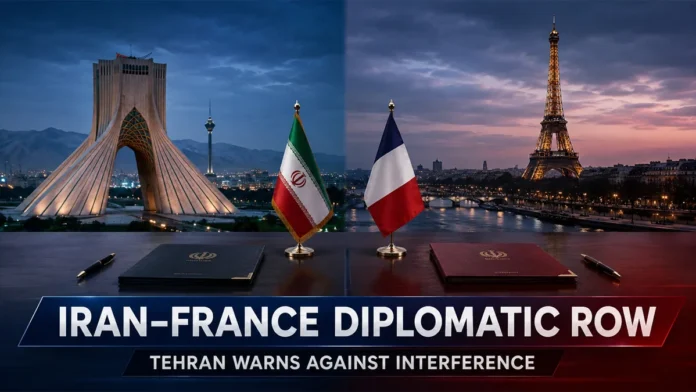
Iran-France diplomatic dispute tensions intensified after Iran’s Intelligence Ministry accused two French diplomats of participating in an unauthorized meeting in Tehran and warned Paris against what it described as interference in the country’s internal affairs.
The allegations concern an incident in July that France characterized differently. French officials said two embassy employees were detained, questioned and mistreated while carrying out legitimate professional duties.
Neither government has publicly released independent evidence that conclusively establishes what happened during the meeting.
Iran alleges diplomats attended secret meeting
In a statement issued Saturday, Iran’s Intelligence Ministry said the two diplomats were found at what it described as a secret meeting place while security personnel were executing a judicial order involving two suspects.
The ministry linked those suspects to a wider investigation into alleged foreign infiltration and interference. It claimed the diplomats had violated Iranian laws and departed from their diplomatic responsibilities.
Iranian authorities said the officials’ identities were verified before the matter was referred to the Foreign Ministry. The diplomats were then transferred to diplomatic police, according to Tehran’s account.
The ministry warned that Iran would not permit foreign diplomatic personnel to undertake activities it considers unlawful or interventionist. It said an appropriate response could follow if similar conduct occurs again.
The Iranian government has not publicly disclosed the complete evidence underlying its allegations. Iran’s published account of the allegations
France alleges detention and mistreatment
France has rejected Iran’s characterization of the incident.
French Foreign Minister Jean-Noël Barrot said on July 20 that the two embassy officials had been detained for several hours, questioned and prevented from communicating freely with the French mission. He also alleged that one of the diplomats was physically mistreated.
Barrot said the officials were responsible for programs supporting Iranian civil society, including initiatives involving artists and scientists. Both diplomats were subsequently reported safe and expected to return to France.
Paris described the episode as serious and unacceptable. France also summoned Iran’s chargé d’affaires following the incident and warned that diplomatic consequences could follow.
Iran denied that its security personnel had mistreated the diplomats and maintained that the officials were questioned because of what Tehran called unusual conduct.Araghchi raises objections with French counterpart
Iranian Foreign Minister Abbas Araghchi later discussed the incident with Barrot by phone. Araghchi reportedly objected to the diplomats’ activities, describing their conduct as inconsistent with accepted diplomatic rules.
France maintained that the officials were performing authorized duties and that Iranian authorities knew they were members of the French diplomatic mission.
The disagreement therefore extends beyond the circumstances of the temporary detention. It also concerns whether the diplomats’ contacts in Tehran constituted ordinary diplomatic engagement or prohibited involvement in Iran’s domestic affairs.
Latest warning raises diplomatic pressure
The Iranian Intelligence Ministry’s latest statement has revived the dispute nearly a month after the original incident.
Tehran is demanding an explanation from France and alleges that material examined during its investigation points to a broader foreign influence operation. These accusations remain claims by Iranian authorities and have not been independently substantiated.
France, meanwhile, has not accepted Iran’s account and continues to characterize the treatment of its officials as a breach of diplomatic protections.
Neither side has announced a break in diplomatic relations. However, the public exchange of accusations could place further pressure on already strained Iran-France relations and complicate future diplomatic and cultural engagement.
What happens next?
Any further action could be handled through formal diplomatic channels, including the summoning of envoys, official protests or restrictions affecting diplomatic personnel.
As of Aug. 16, neither government had publicly announced new punitive measures directly resulting from Iran’s latest warning.
The central claims remain disputed: Iran alleges unlawful interference, while France says its officials were conducting legitimate work and were improperly detained. Until additional evidence or an agreed diplomatic account emerges, both positions should be treated as allegations made by the respective governments.