New Delhi , Aug. 16, 2026
PM Modi Remembers Atal Bihari Vajpayee
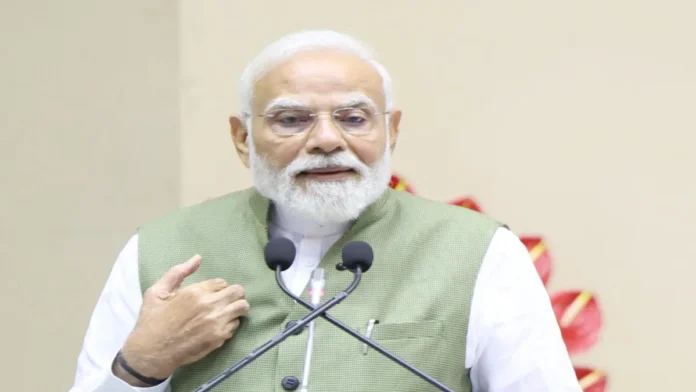
Atal Bihari Vajpayee Death Anniversary tributes were led by Prime Minister Narendra Modi on Sunday as the nation remembered the former prime minister, Bharat Ratna recipient and one of India’s most influential political leaders.
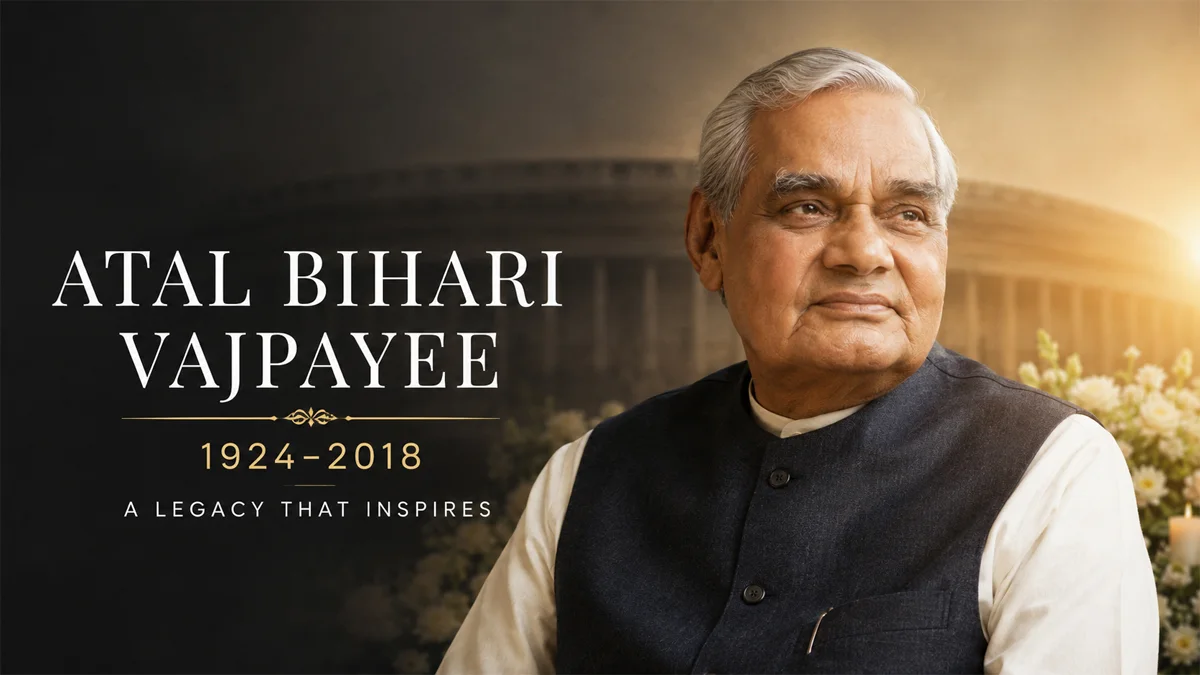
Vajpayee died on August 16, 2018, at the age of 93. On his eighth death anniversary, PM Modi described him as an extraordinary statesman whose vision, leadership and commitment to public service continue to influence the country.
In a social media tribute, the prime minister said Vajpayee had dedicated his life to serving India. He added that the former leader’s words and work inspired generations, while his leadership helped strengthen the nation.
“His focus on good governance and public welfare will always continue to guide us,” PM Modi said in his remembrance message.
Senior political leaders also paid homage to Vajpayee and recalled his contributions to democratic politics, national security, infrastructure development and governance.
What Did PM Modi Say About Atal Bihari Vajpayee?
PM Modi remembered Vajpayee as an exceptional political leader blessed with remarkable foresight. He said the former prime minister devoted his life to the country and left behind a legacy shaped by service, leadership and concern for ordinary citizens.
The prime minister highlighted three central aspects of Vajpayee’s public life:
- His dedication to national service
- His emphasis on good governance and public welfare
- His ability to inspire people through both words and action
PM Modi said Vajpayee’s leadership strengthened India and would continue to guide future generations. (Official tribute coverage)
Amit Shah Pays Tribute to Vajpayee
Union Home Minister Amit Shah also paid tribute to Vajpayee, describing him as a patriotic statesman who dedicated every moment of his life to serving the nation.
Shah recalled the strategic decisions taken during Vajpayee’s years in office, including the 1998 Pokhran nuclear tests and India’s response during the 1999 Kargil War. He said those developments demonstrated India’s strength to the world.
The home minister also highlighted Vajpayee’s commitment to value-based politics, good governance and Antyodaya, the principle of ensuring that development reaches the most disadvantaged people.
According to Shah, Vajpayee combined decisive national leadership with a political philosophy centered on public welfare. His personality and leadership, he said, would continue to inspire Bharatiya Janata Party workers engaged in nation-building.
Rajnath Singh Recalls Vajpayee’s Democratic Legacy
Defence Minister Rajnath Singh remembered Vajpayee’s contribution to Indian democracy, national development and public life.
Singh said Vajpayee enriched the country’s democratic traditions through his ideas and actions. He described national interest and public service as the central purposes of Vajpayee’s politics.
The defence minister said Vajpayee worked throughout his life with a “Nation First” approach. Under his leadership, Singh added, India made important gains in strategic capability, economic development and infrastructure.
He credited Vajpayee with helping India become stronger and more confident while providing a new direction for national development.
Singh said Vajpayee’s ideals, personality and commitment to serving the country would continue to inspire citizens and political workers.
A Three-Time Prime Minister
Atal Bihari Vajpayee served as India’s prime minister on three occasions.
His first government was formed in May 1996 but lasted only 13 days after it became clear that it did not have sufficient parliamentary support.
Vajpayee returned as prime minister in March 1998. That government remained in office for approximately 13 months before losing a confidence vote in April 1999.
He took office for a third time in October 1999 after the National Democratic Alliance secured a parliamentary majority. He then completed a full five-year term, remaining prime minister until May 2004.
Vajpayee became the first non-Congress prime minister to complete a full term in office. His ability to lead a diverse coalition was widely considered one of the defining features of his political career.
Pokhran Nuclear Tests and Kargil War
Two major national security developments marked Vajpayee’s tenure.
In May 1998, India conducted a series of nuclear tests at Pokhran in Rajasthan. The tests established India as a declared nuclear-armed state and resulted in international sanctions and intense diplomatic pressure.
The following year, India fought the Kargil War after detecting intrusions across the Line of Control. The conflict ended after Indian forces regained key positions.
Vajpayee also pursued diplomatic engagement with Pakistan, including his historic bus journey to Lahore in February 1999. The resulting Lahore Declaration sought to reduce tensions and strengthen measures intended to prevent accidental or unauthorized nuclear conflict.
Focus on Infrastructure and Connectivity
Vajpayee’s administration introduced several major infrastructure and connectivity initiatives.
The Golden Quadrilateral project was launched to improve highway connections among Delhi, Mumbai, Chennai and Kolkata. His government also introduced the Pradhan Mantri Gram Sadak Yojana, which sought to provide reliable all-weather road connectivity to eligible rural communities.
The initiatives became central elements of his development record and contributed to long-term improvements in national and rural transportation.
His government also advanced telecommunications reforms during a period when mobile services were expanding rapidly across India.
Vajpayee’s Place in Indian Politics
Born in Gwalior on December 25, 1924, Vajpayee had a parliamentary career spanning more than five decades. He was elected to the Lok Sabha multiple times and also served in the Rajya Sabha.
Before becoming prime minister, he served as India’s external affairs minister from 1977 to 1979. He was also one of the founding leaders of the Bharatiya Janata Party and became its first national president in 1980.
Beyond politics, Vajpayee was known as a poet, writer and powerful Hindi orator. His speeches were often recognized for combining political conviction with wit, restraint and respect for parliamentary traditions.
He maintained cordial personal relationships with leaders from rival parties, helping him earn recognition as a statesman capable of working across political divisions.
Awarded Bharat Ratna in 2015
Vajpayee was awarded the Bharat Ratna, India’s highest civilian honor, in 2015.
The award recognized his decades of public service and his contributions to parliamentary democracy, foreign policy and national development.
His birthday, December 25, is observed as Good Governance Day in India, reflecting the importance attached to governance and administrative accountability in his political legacy.
Vajpayee died at the All India Institute of Medical Sciences in Delhi on August 16, 2018. His memorial, Sadaiv Atal, serves as the principal location for official tributes on his birth and death anniversaries.
A Legacy That Continues to Inspire
The tributes from PM Modi, Shah and Singh emphasized different dimensions of Vajpayee’s public life—from good governance and social welfare to national security and infrastructure.
Their messages shared a common theme: Vajpayee’s influence extends beyond his years in office. His approach to parliamentary debate, coalition leadership and national service remains a reference point in Indian politics.
On his eighth death anniversary, the former prime minister was remembered not only as a political leader but also as a statesman, poet and democratic figure whose words and work continue to resonate across generations.