
New York | August 5, 2026
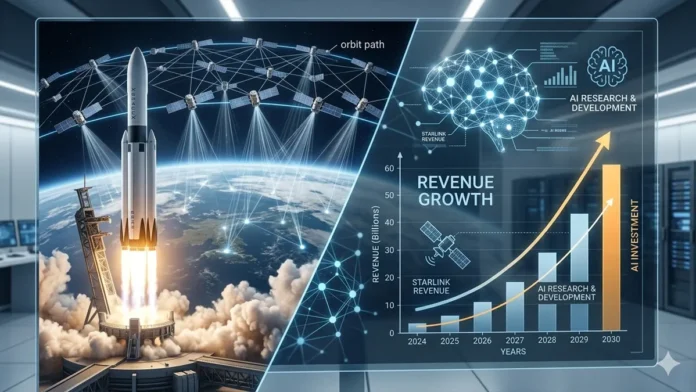
Elon Musk’s SpaceX reported a first-quarter net loss of $541 million following its public market debut, but the company outperformed Wall Street expectations as revenue surged more than 90% year-over-year, driven primarily by the rapid expansion of its Starlink satellite internet business.
Despite the quarterly loss, investors focused on strong revenue growth and SpaceX’s continued investments in artificial intelligence, reusable rocket technology, and satellite communications.
SpaceX Reports Smaller-Than-Expected Loss
For the quarter ending in June, SpaceX posted:
- Net Loss: $541 million
- Loss Per Share: $0.09
- Revenue: $7.8 billion
The reported loss was significantly lower than analysts’ expectations, while revenue more than doubled compared with the same period last year.
Starlink Becomes SpaceX’s Biggest Revenue Driver
SpaceX said its Connectivity Division, led by Starlink, was the company’s largest source of revenue during the quarter.
The satellite internet service experienced rapid customer growth, with subscribers doubling to approximately 12 million worldwide.
Revenue from the connectivity business increased 66% year-over-year.
Speaking to analysts, Elon Musk said:
“It’s not impossible that Starlink could eventually provide internet service to the majority of the world.”
Heavy Spending on Artificial Intelligence
SpaceX substantially increased its investment in artificial intelligence (AI) and infrastructure during the quarter.
According to the company:
- Capital expenditure and research & development (R&D) spending increased from less than $3 billion a year ago to approximately $18 billion.
- Management expects capital spending to remain elevated over the next two quarters.
Chief Financial Officer Brett Johnson said the higher investment reflects the company’s long-term growth strategy.
Investors Remain Cautious
Although SpaceX delivered stronger-than-expected financial results, investors remain concerned about several factors, including:
- Rising AI and infrastructure spending
- Valuation after the company’s IPO
- Upcoming expiration of the IPO lock-up period, allowing insiders to sell shares
- Ambitious revenue and space exploration targets outlined by Elon Musk
Following the earnings release, SpaceX shares initially rose about 9% during regular trading before giving up most of those gains in after-hours trading.
Musk Raises Long-Term Revenue Target
Elon Musk defended the company’s aggressive investment strategy, arguing that higher spending would accelerate future growth.
According to Musk, SpaceX could now achieve $1 trillion in annual revenue by 2030, one year earlier than the company’s previous target of 2031.
Starship Development Continues
Executives also provided updates on the Starship reusable rocket program.
Recent test missions successfully deployed satellites into space, and Musk said SpaceX plans to test full reusability later this month by attempting to catch both the returning booster and spacecraft using the launch tower’s mechanical arms.
The reusable Starship system remains central to NASA’s Artemis program, which aims to return astronauts to the Moon.
SpaceX President Gwynne Shotwell said the company is targeting 2028 for a crewed lunar landing.
Insider Share Sales May Increase Volatility
Analysts expect continued volatility in SpaceX shares as the IPO lock-up period begins to expire later this week.
More than 900 million additional shares are expected to become eligible for trading, potentially more than doubling the publicly available share float.
Additional insider shares are scheduled to be released gradually over the coming months.
Outlook
Despite reporting a quarterly loss, SpaceX continues to benefit from strong demand for Starlink, expanding AI investments, and progress in reusable launch technology. However, investors will be closely watching whether the company’s significant spending translates into sustainable profitability and whether ambitious long-term growth targets can be achieved.